This event has been ended!
6 nejčastějších nedorozumění ve výchově
6 most common misunderstandings in education
Event by: Montessori centrum Brno, Batole v pohodě
Location: Ječná 29a, Ječná 29a, Brno-Řečkovice a Mokrá Hora
Tickets: Get tickets
About event
6 most common misunderstandings in respectful upbringing of toddlers:
1️⃣ Everything can be agreed with a toddler verbally.
⁉️ The development of speech is turbulent in toddlers and their brain has a huge capacity with which is learning a language or languages. However, this does not mean that they use language in the same way as we do. Little children are mainly what they do. If they are engaged in something or are very interested in something, their attention is fully directed in that direction and our words, instructions, prohibitions or other messages may not reach them at all. In general, with toddlers, most communication should be about what the child is doing or seeing. Non-verbal guidance is also suitable - for example, accompanying the child by the hand or getting down to his height and showing him what we want to draw his attention to.
2️⃣ The child can decide about everything
by himself .
⁉️ The ability to make decisions is something that children learn and relies on some imagination of what the decision will lead to. Little experience, immature imagination and not yet developed ability to control emotions and impulses are the reasons why a child cannot make decisions easily and responsibly about many things. It is appropriate to give him a choice at first from a smaller number of options and only in certain situations. With age, the situations and variants of choice may increase.
3️⃣ I have to take care of the toddler in everything.
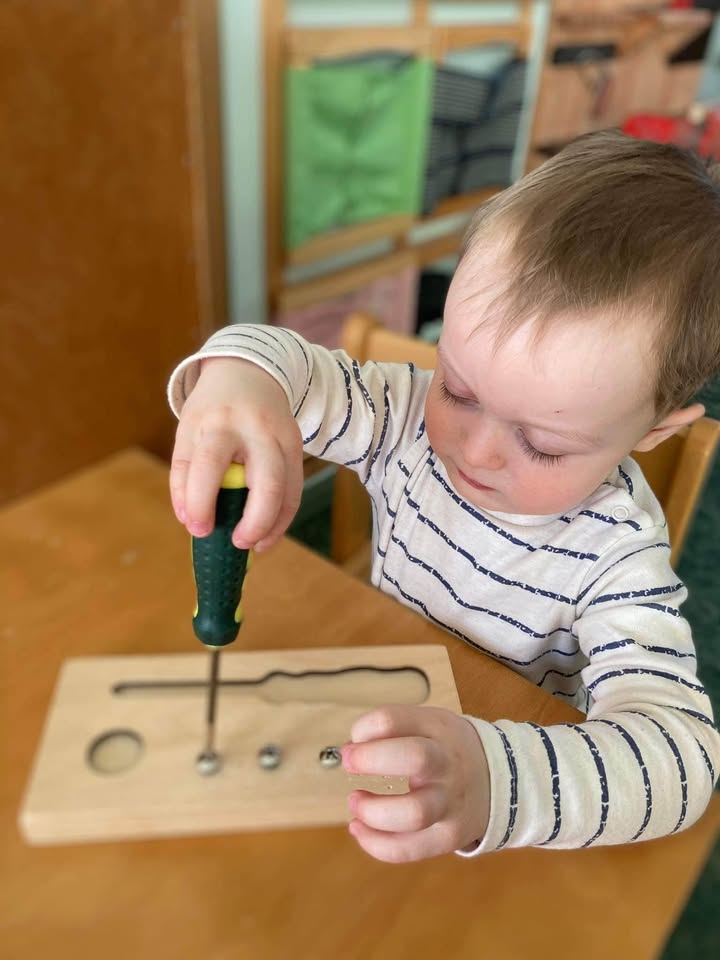
⁉️ Although the child is completely dependent on our care after birth, his psychomotor skills have a huge pace of development. At the age of half a year, she tries to make her first movements, but at the age of a year she is able to carry many things, assist with dressing and try to participate in many activities. We still have a lot to do, but we don't have to do everything for the child. Let's not jump on them automatically in everything and always think about what we can involve him in: for example, if we have to give him shoes that he can bring himself, etc. "Any unnecessary help is an obstacle to a child's development." Marie Montessori
4️⃣ I will not allow my child to cry or get angry.
⁉️ For a small baby, crying is one of the few means of communication and our task is to fulfill the need immediately and quiet the crying . With a toddler, however, the scale is already wider, there is more communication, and crying and rage also serve as an expression of emotions, which life cannot do without. It is not always necessary to avoid everything that can cause displeasure and emotions in a child. However, it is important to accept all emotions and help the child to go through them.
communication, then he simply answers as he thinks. "Shall we go get dressed?" – “No!” Now what if we really need to go? In situations where there is no choice, it is better to calmly announce: "You need to go get dressed." And then go together, or even help to get there - by the parent himself starting, leading the toddler there, doing something funny, or maybe showing what needs to be picked up first.
6️⃣ My child knows best what he needs at any moment.
⁉️ What a toddler wants at a certain moment may be what he needs at the moment, but you definitely cannot rely on that. Sometimes he still wants to play on the playground, but we can see that he is tired and we need to get him to lunch or bed. Other times, he may scream that he wants a cookie, but his need may be to eat or do a meaningful activity. Let's distinguish when it is a need and when it is an impulse. The judgment is up to us adults.
Applications on the website:
https:/ /www.montessori-brno.cz/montessori-nabidka/pro-rodice/montessori-prednasky/
1️⃣ Everything can be agreed with a toddler verbally.
⁉️ The development of speech is turbulent in toddlers and their brain has a huge capacity with which is learning a language or languages. However, this does not mean that they use language in the same way as we do. Little children are mainly what they do. If they are engaged in something or are very interested in something, their attention is fully directed in that direction and our words, instructions, prohibitions or other messages may not reach them at all. In general, with toddlers, most communication should be about what the child is doing or seeing. Non-verbal guidance is also suitable - for example, accompanying the child by the hand or getting down to his height and showing him what we want to draw his attention to.
2️⃣ The child can decide about everything
by himself .
⁉️ The ability to make decisions is something that children learn and relies on some imagination of what the decision will lead to. Little experience, immature imagination and not yet developed ability to control emotions and impulses are the reasons why a child cannot make decisions easily and responsibly about many things. It is appropriate to give him a choice at first from a smaller number of options and only in certain situations. With age, the situations and variants of choice may increase.
3️⃣ I have to take care of the toddler in everything.
⁉️ Although the child is completely dependent on our care after birth, his psychomotor skills have a huge pace of development. At the age of half a year, she tries to make her first movements, but at the age of a year she is able to carry many things, assist with dressing and try to participate in many activities. We still have a lot to do, but we don't have to do everything for the child. Let's not jump on them automatically in everything and always think about what we can involve him in: for example, if we have to give him shoes that he can bring himself, etc. "Any unnecessary help is an obstacle to a child's development." Marie Montessori
4️⃣ I will not allow my child to cry or get angry.
⁉️ For a small baby, crying is one of the few means of communication and our task is to fulfill the need immediately and quiet the crying . With a toddler, however, the scale is already wider, there is more communication, and crying and rage also serve as an expression of emotions, which life cannot do without. It is not always necessary to avoid everything that can cause displeasure and emotions in a child. However, it is important to accept all emotions and help the child to go through them.
communication, then he simply answers as he thinks. "Shall we go get dressed?" – “No!” Now what if we really need to go? In situations where there is no choice, it is better to calmly announce: "You need to go get dressed." And then go together, or even help to get there - by the parent himself starting, leading the toddler there, doing something funny, or maybe showing what needs to be picked up first.
6️⃣ My child knows best what he needs at any moment.
⁉️ What a toddler wants at a certain moment may be what he needs at the moment, but you definitely cannot rely on that. Sometimes he still wants to play on the playground, but we can see that he is tired and we need to get him to lunch or bed. Other times, he may scream that he wants a cookie, but his need may be to eat or do a meaningful activity. Let's distinguish when it is a need and when it is an impulse. The judgment is up to us adults.
Applications on the website:
https:/ /www.montessori-brno.cz/montessori-nabidka/pro-rodice/montessori-prednasky/