This event has been ended!
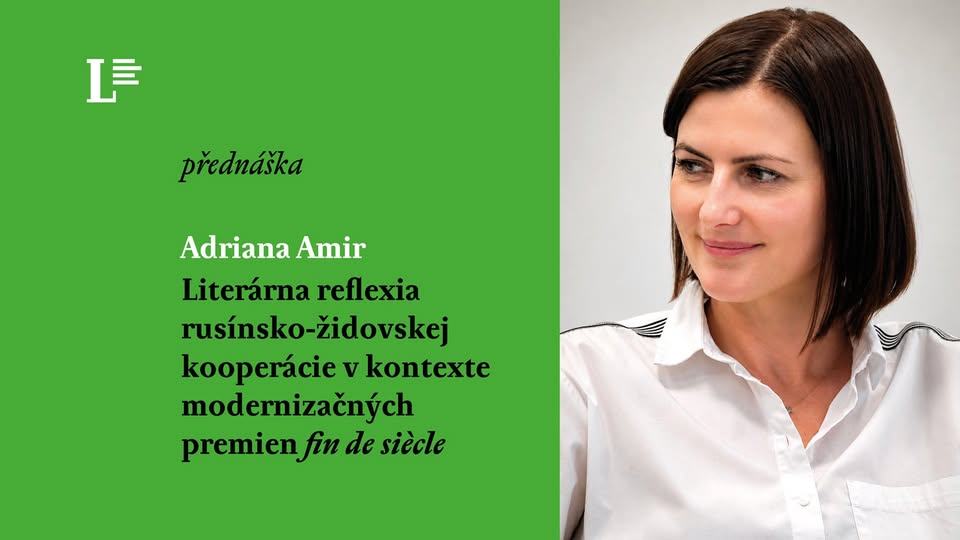
Adriana Amir – Literárna reflexia rusínsko-židovskej kooperácie v kontexte ...
Adriana Amir – Literary reflection of Ruthenian-Jewish cooperation in the context of ...
Event by: Ústav pro českou literaturu AV ČR
Location: The Institute for Czech Literature, v.v.i., Na Florenci 1420/3, Praha 1
About event
The Institute for Czech Literature of the Academy of Sciences of the Czech Republic and the Center for the Study of the Holocaust and Jewish Literature of the Faculty of Arts of the University of Warsaw take the liberty of inviting you to a lecture by Adriana Amir (University of Prešov in Prešov). The lecture will take place on June 16, 2026 from 4 p.m. in the lower hall of the Prague building of the Institute for Czech Literature of the Academy of Sciences of the Czech Republic (Na Florenci 3, Prague 1), admission is free and without registration.
Annotation:
Adriana Amir – Literary reflection of Ruthenian-Jewish cooperation in the context of fin de siècle modernization changes
The region of the Northeastern Carpathians presented at at the turn of the 19th and 20th centuries, a unique multicultural space defined by the coexistence of Ruthenians, Slovaks, Hungarians, Jews, Germans and Roma. A key element of the local social structure became a specific Ruthenian-Jewish symbiosis formed after waves of migration from Galicia, which represented a dominant economic force in remote areas of Upper Hungary. However, fin de siècle modernization processes exposed these traditional ties to new transformative pressures. The reflection of these transformations in the literary work of Greek Catholic priests serves as a probe in the search for a balance between historical cooperation, ethnic diversity and the course of emerging social conflicts.