This event has been ended!
BRM1000 Mozarts Kugeln 2025
BRM1000 Mozart's balls 2025
Event by: Slovakia Randonneurs
Location: Tyršovo nábrežie, Tyršovo nábrežie, Bratislava - Petržalka
Tickets: Get tickets
Meetups, Sports
About event
The thousand is already a good distance and in order to offer something new in our Brevet this time we will go beyond Slovakia on the turn to Salzburg. (227km of 422km)
ℹ️Parameters Brevet: length 1030km, elevation 14000 meters with coefficient 13.7, i. Very demanding. For a 1000km or more Brevet, the time limit is calculated with a diameter of 13.3km/h, or for the BRM1000 it is 75+2 hours.
Those who go to 1000ku should already know very well their skills and limits from previous rides and at least once, but ideally several times, they have taken 600km or more. 75 hours are more than three days and therefore three nights. While 600ku can still be done without sleep, it will only succeed in the thousands of the best, which is explicitly trained for such performances. I personally do not recommend driving without sleeping on such a long and demanding route. So, if you do not compare yourself to people like Björn Lenhard or Christoph Strasser. Otherwise, it has the potential to turn out very badly and you do not enjoy the ride. We are all different and therefore provide a generally functioning recipe is almost impossible. One option may be, for example, to sleep the first and second night at least 4-5 hours (about km 300 and km 600) with a place of overnight around midnight and start early in the morning around 5pm. This maximizes driving during the day. This is eg. He worked on Brevet-E B-Hard (1200km) in Bosnia. An alternative can be driving across the first night and then a longer break during the second night, which I used at the Hungarian BRM1000 where I only slept once, but in more than 8 hours in a piece. Much depends on the physical condition while driving, the difficulty of the route and other conditions such as the weather, preparation, rest during the days before driving and so on. Places for overnight it is good to agree in advance. See in the case of bikepacking style, which also has its advantages and disadvantages. Those who go to Austria regularly know that AT is a pretty special country. On the one hand, it offers a very dense transport network with high -quality roads, paths and cycles, making it ideal for planning routes outside heavy traffic through nature with beautiful views. On the other hand, there are also many things that make long distance driving compared to other countries make it difficult. The absence of gas stations with open non-stop shops, which we are used to in our country is just one of them. Increasingly, pumps are converted to self -service pumps, which usually lack toilets or at least some food machine. It should also be borne in terms of the fact that the shops are closed on Sunday and most of them close on Saturday relatively early. In small villages it is problematic at all to find a trade and in extreme cases you will not even meet a person ...
Therefore, the planning must not be underestimated. I recommend that you always have a meal with which you can last all night and not rely on something on the way. It is advisable to study and note the places of public water mains near the route, especially on the sections through which you are likely to go at night. Like all our Brevet, this route leads to the maximum possible extent outside the main moves. In addition, it is necessary to ensure that the lamps are not discharged while driving at night, have spare batteries and power bank. The challenge is also the right clothes for night driving rugged terrain. During the day, temperatures may be about 30 degrees, but night temperatures may drop below 10C. In addition, it is necessary to plan the place for refreshments correctly and count on the fact that after 10 pm most locals close. I recommend to have cash with you.
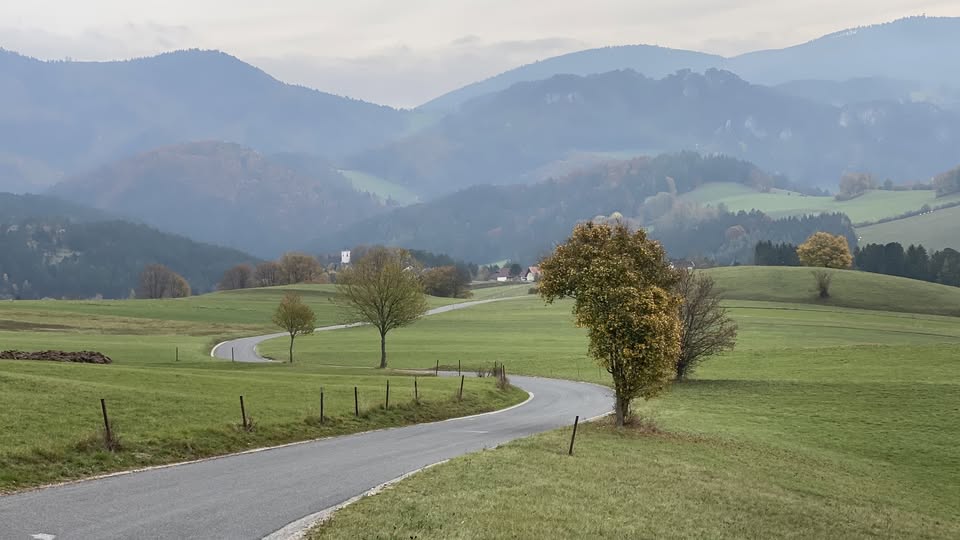
In addition to good physical fitness, mental preparation is also essential. About 50km leads the route through Germany and ideally all passes through the day. In any case, it is important to know that in Germany, flashing bicycles are forbidden. Hochkoenigstrasse and its surroundings overlooking the three thousand; Hirschbichlpass; Koenigssee; Rossfeld Panoramastrasse; Salzburg; lakes Mondsee, Attersee and Traunesse with ORT Castle; crossing through KIENTAL; On the infinite Austrian rural Upland and others. We will leave Slovakia after 5 kilometers. The first 90 kilometers are relatively flat, which will start to start the time in the group and warm up (+500Vm, -400Vm). From Mattersburg (CP1) we will experience the first climb towards Hochwolkersdorf with views of the Forchtenstein Castle and later on Schneeberg and the surrounding mountains. -1200VM). B24 is the first class road (Budenstrasse), but traffic is OK but you can meet with bikers. There are several tunnels, water tanks and super views on the route. Who will plan two overnight stays, so this section will probably be the first. There are relatively few places with accommodation directly on the route. Having a sleeping bag with a mat is certainly an advantage. On the other hand, it will have to be dragged with you all the way ...
The next day will be the most demanding. The relaxation path through the valleys here will disrupt the output below Dachstein. Unobtrusively we get here at 1200mnm from where there will be more than 30 kilometer descent to the Salzach River. It would be a pity to blow this part at night, because the views of the surrounding 2-3 thousand are worth it. Through Hochkoenigstrasse, we get into the German Berchtesgaden National Park through the Hirschbichlpass mountain pass with minimal car traffic and we will find ourselves on the shore of Lake Koenigsee, which is directly surrounded by two thousand (60km +1000Vm). From there the route through Rossfeld Panoramastrasse, which represents the hardest ascent on the entire route. From the lake to the top it is 20 kilometers, an average 6% and +1200 meters. By the way, at the top of Kehlstein there is an eagle nest. If you feel extra strength in your legs, you can climb it. Up to the parking lot under the Orlul Nest it is an additional 6 kilometers with an 11% average ascent 🙈
from the highest point to the center of Salzburg it is only 30 kilometers (+123Vm, -1200Vm). There will certainly not be a problem with the night around, but don't keep it at the last minute. After 600 kilometers and more than 9000VM, we turn it back to Bratislava in Salzburg. There is no need to worry about long and steep climbs. All climbs will be just steep or long 😋 steepest to about km611 after passing through Glasenbach, 3km with 8.6% and the longest the last to a kilometer 885 with a length of 17km but for only a 2% cant. Everything in between will be relative Easy, but also quite intensely up/down and at 300 kilometers it will be a total of +4300Vm, -4100Vm. Before Mondsee, we will diversify the crossing over the distressed Strub and between Attersee and Traunesse crossing through Kiental. On the banks of the ATTERSEE will be a checkpoint at the ORT lock, which is surrounded by the water of the lake. From there, the 'Austrian Upland' route leads on side roads through cities like Bad Hall, Steyr, Purgstall, Hainfeld or Berndorf. It could only make the weather more difficult. The finish must arrive until 8:30 on Tuesday morning to make it within the time limit. But even if someone misses it, it will still be considered super performance and I hope that even as an unforgettable experience.
See you at the start!
ℹ️Parameters Brevet: length 1030km, elevation 14000 meters with coefficient 13.7, i. Very demanding. For a 1000km or more Brevet, the time limit is calculated with a diameter of 13.3km/h, or for the BRM1000 it is 75+2 hours.
Those who go to 1000ku should already know very well their skills and limits from previous rides and at least once, but ideally several times, they have taken 600km or more. 75 hours are more than three days and therefore three nights. While 600ku can still be done without sleep, it will only succeed in the thousands of the best, which is explicitly trained for such performances. I personally do not recommend driving without sleeping on such a long and demanding route. So, if you do not compare yourself to people like Björn Lenhard or Christoph Strasser. Otherwise, it has the potential to turn out very badly and you do not enjoy the ride. We are all different and therefore provide a generally functioning recipe is almost impossible. One option may be, for example, to sleep the first and second night at least 4-5 hours (about km 300 and km 600) with a place of overnight around midnight and start early in the morning around 5pm. This maximizes driving during the day. This is eg. He worked on Brevet-E B-Hard (1200km) in Bosnia. An alternative can be driving across the first night and then a longer break during the second night, which I used at the Hungarian BRM1000 where I only slept once, but in more than 8 hours in a piece. Much depends on the physical condition while driving, the difficulty of the route and other conditions such as the weather, preparation, rest during the days before driving and so on. Places for overnight it is good to agree in advance. See in the case of bikepacking style, which also has its advantages and disadvantages. Those who go to Austria regularly know that AT is a pretty special country. On the one hand, it offers a very dense transport network with high -quality roads, paths and cycles, making it ideal for planning routes outside heavy traffic through nature with beautiful views. On the other hand, there are also many things that make long distance driving compared to other countries make it difficult. The absence of gas stations with open non-stop shops, which we are used to in our country is just one of them. Increasingly, pumps are converted to self -service pumps, which usually lack toilets or at least some food machine. It should also be borne in terms of the fact that the shops are closed on Sunday and most of them close on Saturday relatively early. In small villages it is problematic at all to find a trade and in extreme cases you will not even meet a person ...
Therefore, the planning must not be underestimated. I recommend that you always have a meal with which you can last all night and not rely on something on the way. It is advisable to study and note the places of public water mains near the route, especially on the sections through which you are likely to go at night. Like all our Brevet, this route leads to the maximum possible extent outside the main moves. In addition, it is necessary to ensure that the lamps are not discharged while driving at night, have spare batteries and power bank. The challenge is also the right clothes for night driving rugged terrain. During the day, temperatures may be about 30 degrees, but night temperatures may drop below 10C. In addition, it is necessary to plan the place for refreshments correctly and count on the fact that after 10 pm most locals close. I recommend to have cash with you.
In addition to good physical fitness, mental preparation is also essential. About 50km leads the route through Germany and ideally all passes through the day. In any case, it is important to know that in Germany, flashing bicycles are forbidden. Hochkoenigstrasse and its surroundings overlooking the three thousand; Hirschbichlpass; Koenigssee; Rossfeld Panoramastrasse; Salzburg; lakes Mondsee, Attersee and Traunesse with ORT Castle; crossing through KIENTAL; On the infinite Austrian rural Upland and others. We will leave Slovakia after 5 kilometers. The first 90 kilometers are relatively flat, which will start to start the time in the group and warm up (+500Vm, -400Vm). From Mattersburg (CP1) we will experience the first climb towards Hochwolkersdorf with views of the Forchtenstein Castle and later on Schneeberg and the surrounding mountains. -1200VM). B24 is the first class road (Budenstrasse), but traffic is OK but you can meet with bikers. There are several tunnels, water tanks and super views on the route. Who will plan two overnight stays, so this section will probably be the first. There are relatively few places with accommodation directly on the route. Having a sleeping bag with a mat is certainly an advantage. On the other hand, it will have to be dragged with you all the way ...
The next day will be the most demanding. The relaxation path through the valleys here will disrupt the output below Dachstein. Unobtrusively we get here at 1200mnm from where there will be more than 30 kilometer descent to the Salzach River. It would be a pity to blow this part at night, because the views of the surrounding 2-3 thousand are worth it. Through Hochkoenigstrasse, we get into the German Berchtesgaden National Park through the Hirschbichlpass mountain pass with minimal car traffic and we will find ourselves on the shore of Lake Koenigsee, which is directly surrounded by two thousand (60km +1000Vm). From there the route through Rossfeld Panoramastrasse, which represents the hardest ascent on the entire route. From the lake to the top it is 20 kilometers, an average 6% and +1200 meters. By the way, at the top of Kehlstein there is an eagle nest. If you feel extra strength in your legs, you can climb it. Up to the parking lot under the Orlul Nest it is an additional 6 kilometers with an 11% average ascent 🙈
from the highest point to the center of Salzburg it is only 30 kilometers (+123Vm, -1200Vm). There will certainly not be a problem with the night around, but don't keep it at the last minute. After 600 kilometers and more than 9000VM, we turn it back to Bratislava in Salzburg. There is no need to worry about long and steep climbs. All climbs will be just steep or long 😋 steepest to about km611 after passing through Glasenbach, 3km with 8.6% and the longest the last to a kilometer 885 with a length of 17km but for only a 2% cant. Everything in between will be relative Easy, but also quite intensely up/down and at 300 kilometers it will be a total of +4300Vm, -4100Vm. Before Mondsee, we will diversify the crossing over the distressed Strub and between Attersee and Traunesse crossing through Kiental. On the banks of the ATTERSEE will be a checkpoint at the ORT lock, which is surrounded by the water of the lake. From there, the 'Austrian Upland' route leads on side roads through cities like Bad Hall, Steyr, Purgstall, Hainfeld or Berndorf. It could only make the weather more difficult. The finish must arrive until 8:30 on Tuesday morning to make it within the time limit. But even if someone misses it, it will still be considered super performance and I hope that even as an unforgettable experience.
See you at the start!