This event has been ended!
Budúcnosť človeka: Transhumanizmus alebo regeneratívna kultúra?
Future of man: Transhumanism or regenerative culture?
Event by: Lukáš Karas - Práce se sny, Lukáš Karas, Inštitút Gaia, Emil Páleš, Vlado Lobotka
Location: KTC dance center New Town, Tehelná 3120, Bratislava - Nové Mesto
Talks & discussions
About event
Dear friends, we cordially invite you to a day program, during which we will approach the two main scenarios of the future: transhumanism and regenerative culture. In a series of three lectures Emil Páleš, Lukáš Karas and Vlad Lobotka, we will explore their essence, dreams and goals. We will consider both movements philosophically, we will assess them through the prism of religion and deep psychology, think about their starting points and draw their far -reaching influence on society, nature and perception of man as such. We will show differences in strategies and methods that approach today's system challenges, and outline the scenarios of the future, to which both civilization models are directed. We will present all this in the end through a systemic constellation facilitated by Lenka Palatová. 13.30 Vlado Lobotka (lecture + questions)
13.30-14.30 lunch Break
14.30-16.20 Emil (lecture + questions)
16.40-18.10 Lenka Palatová (constellation)
18.30-19.30 (final questions + FOLLOW UP)
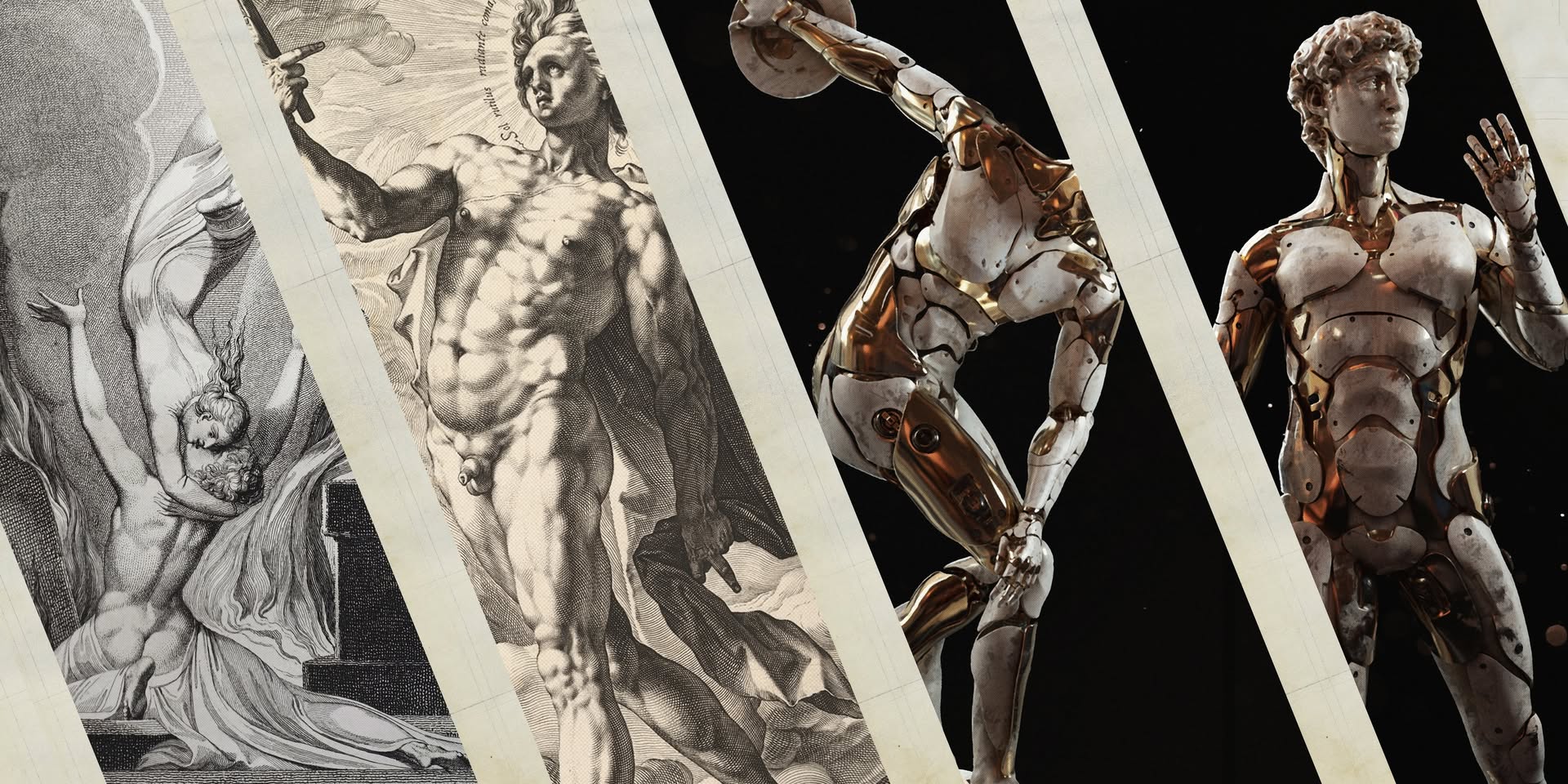
Emil Páleš: What new person should arise? Transhumanists no longer understand him spiritually, but technologically. Instead of the integral fire of love from the inside, they begin to improve a person from the outside using a single -purpose sense. However, such interventions will only imprison the human spirit in his foreign body and tend to be more than a superman. Who are we actually and who do we want to turn into? Every philosophy is a self -pleading that we form and change ourselves. The historical struggle between transhumanism and biocopreservatism began. Who is right? What will be the desired and unwanted side consequences of these concepts? Will it be able to preserve freedom, will not lose humanity? And why are we improving a person artificially when we haven't used our natural potential in that direction? Civilization is a manifestation of a great civilization story that saturates the aspiration of its members by a specific understanding of good, truth and beauty and in various The fields of ů the activity creates its countless theoretical and practical applications. Our modern civilization is built on a story that has always tried - not very successfully - to combine romantic idealism, based on the metaphor of the organism, with enlightenment rationalism, based on the metaphor of the machine. The complex dialectics between the two currents eventually flipped in favor of mechanical rationalism, and the multidirectional consequences of its flat dominance brought our civilization into the systemic crisis we are facing today. If we decide to ignore this crisis, the most likely result will be a collapse. However, it is also a possibility to transform, to which we are called upon by two influential civilization stories, each of which emphasizes the need to overcome a person in his present form. What radically differs from each other is the metaphysical frameworks in which they are planted, the goals they are directed, and the means to which they try to achieve their goals. One builds on a technological, the other on the spiritual concept of "superman". How does each of these two metaprisions understand man and his creative potential? How does it interpret the current path of humanity across time? And how does he work with the main civilization challenges of our time? It is these aspects that is the key to understanding how different the future awaits us in each of these scenarios. > The divine aspirations of a person must be taken seriously! As Mircea Eliade correctly pointed out, the human species is the desire for paradise and human transcendence. Different myths from all over the world reveal that man has always longed for redemption, paradise, the state of enlightenment, the kingdom of heaven, in short, after he rises above his current state. In mystical teachings, one was supposed to regain his lost divinity at the end of the time, ascend to the heavens or realize the fascinating potential of a cosmic person. According to Pierr Teilhard Chardin, the evolution of the whole nature and cosmic movement culminates in the point of omega, in the final incarnation of Christ's consciousness. As different thinkers are noticing, one has projected this innate potential for the future and intended to implement it by various means. To do this, he used a technique that he developed depending on the ideal he wanted to achieve. In this way, for example, the exit in order to enlighten the techniques of yoga and tantra. The general focus of spiritual techniques is a transcendent vertical. On the other hand, a modern man, in accordance with the materialistic worldview, designs his own potential horizontally. Therefore, he intends to transcend its humanity technologically. For example, he believes in achieving immortality through genetic engineering or in penetration into a virtual dimension through Avatar from Meta. In modern myths we simply find echoes of traditional spiritual ideas. His faith in the infinite transformation of himself with sophisticated means of science denies any nature and natural conditionality, and finds a statement, for example, in psychological self -education through drugs and psychopharmaceuticals.
term
will take place on 22 February 2025 from 9:30 am at: KTC Dancing in the City,
Tehelná 26, Bratislava
Login
Sign -in for the action is not necessary. The space has a capacity of one hundred participants.
Price
40 EUR, payment is made on site.
13.30-14.30 lunch Break
14.30-16.20 Emil (lecture + questions)
16.40-18.10 Lenka Palatová (constellation)
18.30-19.30 (final questions + FOLLOW UP)
Emil Páleš: What new person should arise? Transhumanists no longer understand him spiritually, but technologically. Instead of the integral fire of love from the inside, they begin to improve a person from the outside using a single -purpose sense. However, such interventions will only imprison the human spirit in his foreign body and tend to be more than a superman. Who are we actually and who do we want to turn into? Every philosophy is a self -pleading that we form and change ourselves. The historical struggle between transhumanism and biocopreservatism began. Who is right? What will be the desired and unwanted side consequences of these concepts? Will it be able to preserve freedom, will not lose humanity? And why are we improving a person artificially when we haven't used our natural potential in that direction? Civilization is a manifestation of a great civilization story that saturates the aspiration of its members by a specific understanding of good, truth and beauty and in various The fields of ů the activity creates its countless theoretical and practical applications. Our modern civilization is built on a story that has always tried - not very successfully - to combine romantic idealism, based on the metaphor of the organism, with enlightenment rationalism, based on the metaphor of the machine. The complex dialectics between the two currents eventually flipped in favor of mechanical rationalism, and the multidirectional consequences of its flat dominance brought our civilization into the systemic crisis we are facing today. If we decide to ignore this crisis, the most likely result will be a collapse. However, it is also a possibility to transform, to which we are called upon by two influential civilization stories, each of which emphasizes the need to overcome a person in his present form. What radically differs from each other is the metaphysical frameworks in which they are planted, the goals they are directed, and the means to which they try to achieve their goals. One builds on a technological, the other on the spiritual concept of "superman". How does each of these two metaprisions understand man and his creative potential? How does it interpret the current path of humanity across time? And how does he work with the main civilization challenges of our time? It is these aspects that is the key to understanding how different the future awaits us in each of these scenarios. > The divine aspirations of a person must be taken seriously! As Mircea Eliade correctly pointed out, the human species is the desire for paradise and human transcendence. Different myths from all over the world reveal that man has always longed for redemption, paradise, the state of enlightenment, the kingdom of heaven, in short, after he rises above his current state. In mystical teachings, one was supposed to regain his lost divinity at the end of the time, ascend to the heavens or realize the fascinating potential of a cosmic person. According to Pierr Teilhard Chardin, the evolution of the whole nature and cosmic movement culminates in the point of omega, in the final incarnation of Christ's consciousness. As different thinkers are noticing, one has projected this innate potential for the future and intended to implement it by various means. To do this, he used a technique that he developed depending on the ideal he wanted to achieve. In this way, for example, the exit in order to enlighten the techniques of yoga and tantra. The general focus of spiritual techniques is a transcendent vertical. On the other hand, a modern man, in accordance with the materialistic worldview, designs his own potential horizontally. Therefore, he intends to transcend its humanity technologically. For example, he believes in achieving immortality through genetic engineering or in penetration into a virtual dimension through Avatar from Meta. In modern myths we simply find echoes of traditional spiritual ideas. His faith in the infinite transformation of himself with sophisticated means of science denies any nature and natural conditionality, and finds a statement, for example, in psychological self -education through drugs and psychopharmaceuticals.
term
will take place on 22 February 2025 from 9:30 am at: KTC Dancing in the City,
Tehelná 26, Bratislava
Login
Sign -in for the action is not necessary. The space has a capacity of one hundred participants.
Price
40 EUR, payment is made on site.