This event has been ended!
Caminhando em Aldeias Históricas da Beira-Alta
Walking in Historical Villages of Beira-High
Event by: Caminhando.pt
Location: Estação do Oriente, Av. Dom João II, Lisboa
Tickets: Get tickets
About event
Event: Walking in Historical Villages of Beira-Alta
📆Arção de Arre: May 17 and 18, 2025
📆Data Registration Limit: 31 March 2025
This activity proposal aims to provide a weekend at the heart of the river Côa. We will go through a set of 6 villages, any of great beauty, whether by the ostentatious heritage, or by the landscapes where they come to know or revisit the villages of Almeida, Castelo Bom, Best Castle, Tailors, Sabugal and Belmonte. In paths of great natural beauty we will still be known a part of the Côa River and the historic village of Sabugal, with its imposing castle, as well as the well -preserved riverside area. This will be another event not to be missed!
Time: Departure from Lisbon at 6:30 am
Return: Arrived in Lisbon at 19:30
Registration Date: March 31 2025
May 17 (Saturday)
10:15 -
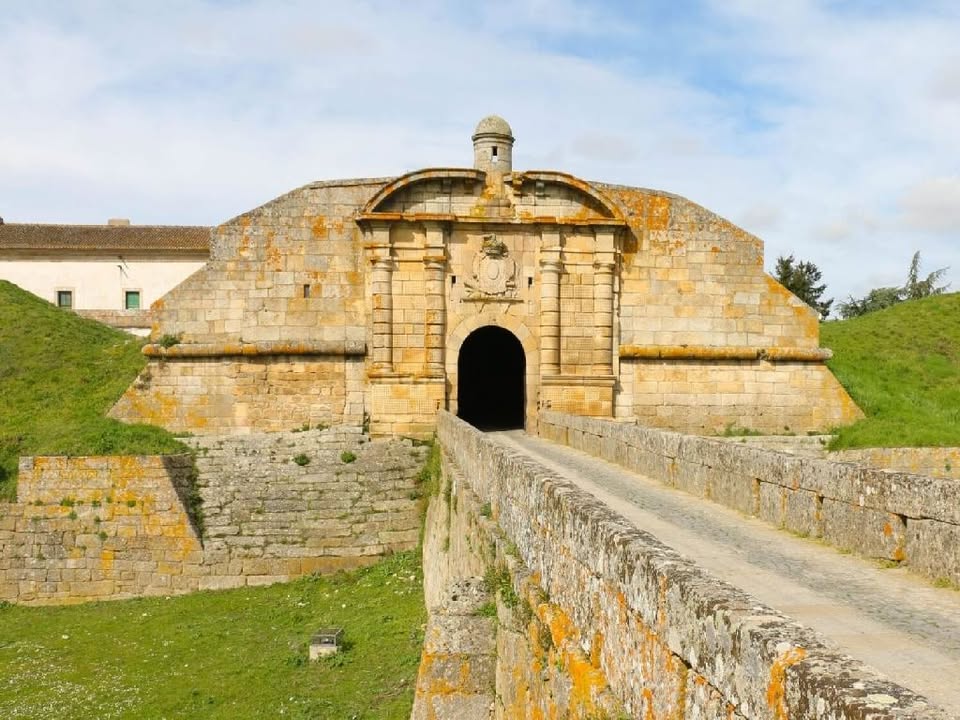
- Village of Almeida
- Fortaleza and Baluartes
- Ruins of the Castle
- Tower of the Merizer and Church of Mercy
- Casa da Roda dos Exposi
- PICADEIRO DEL REY
- Natural Landscapes
the easiest)
Expected duration: 1h15
Castelo Bom Village
The story of Castelo Bom is lost in time. Although, probably, the lands that today make up the parish have already been occupied by the same peoples to which Foz Côa's engravings belong, the first reliable trace of Bom Date Human Occupation, as the Bronze Age Sword attests here found and exposed in the Guard Museum, was disputed by Portuguese, Moorish, Leones and Castilians of the Alcanzes Treaty in 1297. As for Castelo Bom Castle is a medieval castle with a wall perimeter of irregular configuration adapted to the topography; Square Plant Mening Tower with Seven Tire; spans in full arc and broken arc. It has cistern in the Castelejo stronghold and two seventeenth -century wells that are part of the water supply to the village. Circular construction is probably what subsists from the Barbacan cylindrical tower; vaulted cistern; Two wells with architectural and urban expression, El-Rei with double staircase facade, with a certain scenographic effect.
Points of interest:
- Castle village
- Calvary and Almininhas
- Poço del Rey
ASSUNÇÃO
- Natural Landscapes
Castelo Mendo Village
Old Marked Village Medieval Made is composed of two very distinct nuclei: The Original Burgo Velho, composed of a castle, a ruined church, and traces of medieval urbanism, all bound by a twelfth century wall; and the new bourgeois, or arrabal of St. Peter, protected by a wall built in the reign of D. Dinis, of marked Gothic characteristics, and strongly affected by the 1755 earthquake. Rio, almost always flanked by stone walls, and we stunned with the beauty of these Raian landscapes. The route, circular and accessible to almost all, is partially coincident with the two large routes that cross and allow the vast land of Riba-Côa: Great Route of the Historical Villages and the great route of the Côa Valley. BR/>- Ruins of the Church of Santa Maria
- Pontão de São Miguel
- Cistern and Community Oven
- Pillory and Mother Church or St. Peter
- Guarda Porta, D. Sancho, Castelinho and Sol
- Natural landscapes
Distance:
Expected duration: 1h30
Lunch will be in the form of PIC -NIC of each participant's responsibility
16h15 - Tailor village ride (pillory, castle and albufeira)
The origin of the village is not safely known. Protohistoric traces were found, but their name should be of Arabic origin (possibly the term al-haet-wall, wall or fence). He was part of the Leonese Kingdom until the end of the thirteenth century. Between 1209 and 1226, the village was elevated and received charter from the king of Leo. With the conquest of the region, by D. Dinis, and the signature of the Treaty of Alcanizes in 1297, became part of the Portuguese kingdom. With the farthest border, the military importance of this village was reduced. Despite this, the wars of the restoration once again brought destruction to tailors. His captain, Brás Garcia de Mascarenhas, played a fundamental role in defending this region and in the remodeling works of the Forte Square, giving himself the current configuration. During the French invasions in 1811, the castle played an important role in defending the border zone.
Distance: 4 kms
Difficulty: 1 (1 to 5 scale being the easiest)
Expected duration: 1h15
Points of interest:
/>- Queen Santa Isabel Square
- Mercy Church
- Old House of House
- Albufeira e Praia Fluvial
- Natural Landscapes
19h15- Esmerged time to come to Sabugal
20h15- Grupo Suggestion
For the beginning of the walk
Walking in the intricacies of the Côa River
Points of interest:
- Tapada de S. Lazaro Mill
- Moinho da Volta
- Mill of Delgarids
Gal
- Natural Landscapes
Distance: 12 kms
Difficulty: 3 (1 to 5 scale being the easiest)
Walking in the river cowards
We pass to Ribeira da Paiã, in a corner with various testimonies of ancestral stone buildings, we continue to use the waters and the waters and the waters and the waters. nhais. In the "Mills of Daisies", abandoned for decades, the tranquility is total. The rail flashes the river, always covered by a lush forest of huge beems, friends, willow, oaks and chestnut trees. We can admire the abandoned dams and mills and be surprised by the jokes of the otters or by the hurry of ducks. The observation of the fauna is not always easy, with birds being the easiest observation group, and in this area we can observe ducks or herons. Being more difficult, the observation of existing otters is very rewarding. The traditional stone buildings, intended for the use of water for agriculture, pastoralism and grinding, also mark the landscape of the river, but in a very harmonious way. There are stone dams, with their channels, carried, stopped and walkways, to store and ingeniously drive the water to the fields or to the rotation mills. In the area of the route there are six mills of this type, all abandoned for several decades, but which are interesting testimonies of traditional architecture of the first half of the twentieth century.
- Statue of Pedro Álvares Cabral
- Church of Santiago and Pantheon of the Cabrais
- Chapel of Santo António
- Synagoga de Belmonte
- Natural landscapes
15h45- End of activity and return to Lisbon
- Hotel/BR/BR/BR/BR/ >- 3 walks and 2 tours
- The proposed accommodation option includes several room typologies
- Guide and accompanying walks
- Mandatory Insurance
Transport Values
€ 180 €
Individual room: 200 €
Individual Room Value: 140 €
Place reserve value: 50 €
Prices valid until March 20th. From this date the values are € 210 and 230 € respectively (option with transportation)
Notes:
a) Registration is limited and accommodation options limited to the availability at the time of the reserve.
📆Arção de Arre: May 17 and 18, 2025
📆Data Registration Limit: 31 March 2025
This activity proposal aims to provide a weekend at the heart of the river Côa. We will go through a set of 6 villages, any of great beauty, whether by the ostentatious heritage, or by the landscapes where they come to know or revisit the villages of Almeida, Castelo Bom, Best Castle, Tailors, Sabugal and Belmonte. In paths of great natural beauty we will still be known a part of the Côa River and the historic village of Sabugal, with its imposing castle, as well as the well -preserved riverside area. This will be another event not to be missed!
Time: Departure from Lisbon at 6:30 am
Return: Arrived in Lisbon at 19:30
Registration Date: March 31 2025
May 17 (Saturday)
10:15 -
- Village of Almeida
- Fortaleza and Baluartes
- Ruins of the Castle
- Tower of the Merizer and Church of Mercy
- Casa da Roda dos Exposi
- PICADEIRO DEL REY
- Natural Landscapes
the easiest)
Expected duration: 1h15
Castelo Bom Village
The story of Castelo Bom is lost in time. Although, probably, the lands that today make up the parish have already been occupied by the same peoples to which Foz Côa's engravings belong, the first reliable trace of Bom Date Human Occupation, as the Bronze Age Sword attests here found and exposed in the Guard Museum, was disputed by Portuguese, Moorish, Leones and Castilians of the Alcanzes Treaty in 1297. As for Castelo Bom Castle is a medieval castle with a wall perimeter of irregular configuration adapted to the topography; Square Plant Mening Tower with Seven Tire; spans in full arc and broken arc. It has cistern in the Castelejo stronghold and two seventeenth -century wells that are part of the water supply to the village. Circular construction is probably what subsists from the Barbacan cylindrical tower; vaulted cistern; Two wells with architectural and urban expression, El-Rei with double staircase facade, with a certain scenographic effect.
Points of interest:
- Castle village
- Calvary and Almininhas
- Poço del Rey
ASSUNÇÃO
- Natural Landscapes
Castelo Mendo Village
Old Marked Village Medieval Made is composed of two very distinct nuclei: The Original Burgo Velho, composed of a castle, a ruined church, and traces of medieval urbanism, all bound by a twelfth century wall; and the new bourgeois, or arrabal of St. Peter, protected by a wall built in the reign of D. Dinis, of marked Gothic characteristics, and strongly affected by the 1755 earthquake. Rio, almost always flanked by stone walls, and we stunned with the beauty of these Raian landscapes. The route, circular and accessible to almost all, is partially coincident with the two large routes that cross and allow the vast land of Riba-Côa: Great Route of the Historical Villages and the great route of the Côa Valley. BR/>- Ruins of the Church of Santa Maria
- Pontão de São Miguel
- Cistern and Community Oven
- Pillory and Mother Church or St. Peter
- Guarda Porta, D. Sancho, Castelinho and Sol
- Natural landscapes
Distance:
Expected duration: 1h30
Lunch will be in the form of PIC -NIC of each participant's responsibility
16h15 - Tailor village ride (pillory, castle and albufeira)
The origin of the village is not safely known. Protohistoric traces were found, but their name should be of Arabic origin (possibly the term al-haet-wall, wall or fence). He was part of the Leonese Kingdom until the end of the thirteenth century. Between 1209 and 1226, the village was elevated and received charter from the king of Leo. With the conquest of the region, by D. Dinis, and the signature of the Treaty of Alcanizes in 1297, became part of the Portuguese kingdom. With the farthest border, the military importance of this village was reduced. Despite this, the wars of the restoration once again brought destruction to tailors. His captain, Brás Garcia de Mascarenhas, played a fundamental role in defending this region and in the remodeling works of the Forte Square, giving himself the current configuration. During the French invasions in 1811, the castle played an important role in defending the border zone.
Distance: 4 kms
Difficulty: 1 (1 to 5 scale being the easiest)
Expected duration: 1h15
Points of interest:
/>- Queen Santa Isabel Square
- Mercy Church
- Old House of House
- Albufeira e Praia Fluvial
- Natural Landscapes
19h15- Esmerged time to come to Sabugal
20h15- Grupo Suggestion
For the beginning of the walk
Walking in the intricacies of the Côa River
Points of interest:
- Tapada de S. Lazaro Mill
- Moinho da Volta
- Mill of Delgarids
Gal
- Natural Landscapes
Distance: 12 kms
Difficulty: 3 (1 to 5 scale being the easiest)
Walking in the river cowards
We pass to Ribeira da Paiã, in a corner with various testimonies of ancestral stone buildings, we continue to use the waters and the waters and the waters and the waters. nhais. In the "Mills of Daisies", abandoned for decades, the tranquility is total. The rail flashes the river, always covered by a lush forest of huge beems, friends, willow, oaks and chestnut trees. We can admire the abandoned dams and mills and be surprised by the jokes of the otters or by the hurry of ducks. The observation of the fauna is not always easy, with birds being the easiest observation group, and in this area we can observe ducks or herons. Being more difficult, the observation of existing otters is very rewarding. The traditional stone buildings, intended for the use of water for agriculture, pastoralism and grinding, also mark the landscape of the river, but in a very harmonious way. There are stone dams, with their channels, carried, stopped and walkways, to store and ingeniously drive the water to the fields or to the rotation mills. In the area of the route there are six mills of this type, all abandoned for several decades, but which are interesting testimonies of traditional architecture of the first half of the twentieth century.
- Statue of Pedro Álvares Cabral
- Church of Santiago and Pantheon of the Cabrais
- Chapel of Santo António
- Synagoga de Belmonte
- Natural landscapes
15h45- End of activity and return to Lisbon
- Hotel/BR/BR/BR/BR/ >- 3 walks and 2 tours
- The proposed accommodation option includes several room typologies
- Guide and accompanying walks
- Mandatory Insurance
Transport Values
€ 180 €
Individual room: 200 €
Individual Room Value: 140 €
Place reserve value: 50 €
Prices valid until March 20th. From this date the values are € 210 and 230 € respectively (option with transportation)
Notes:
a) Registration is limited and accommodation options limited to the availability at the time of the reserve.