This event has been ended!
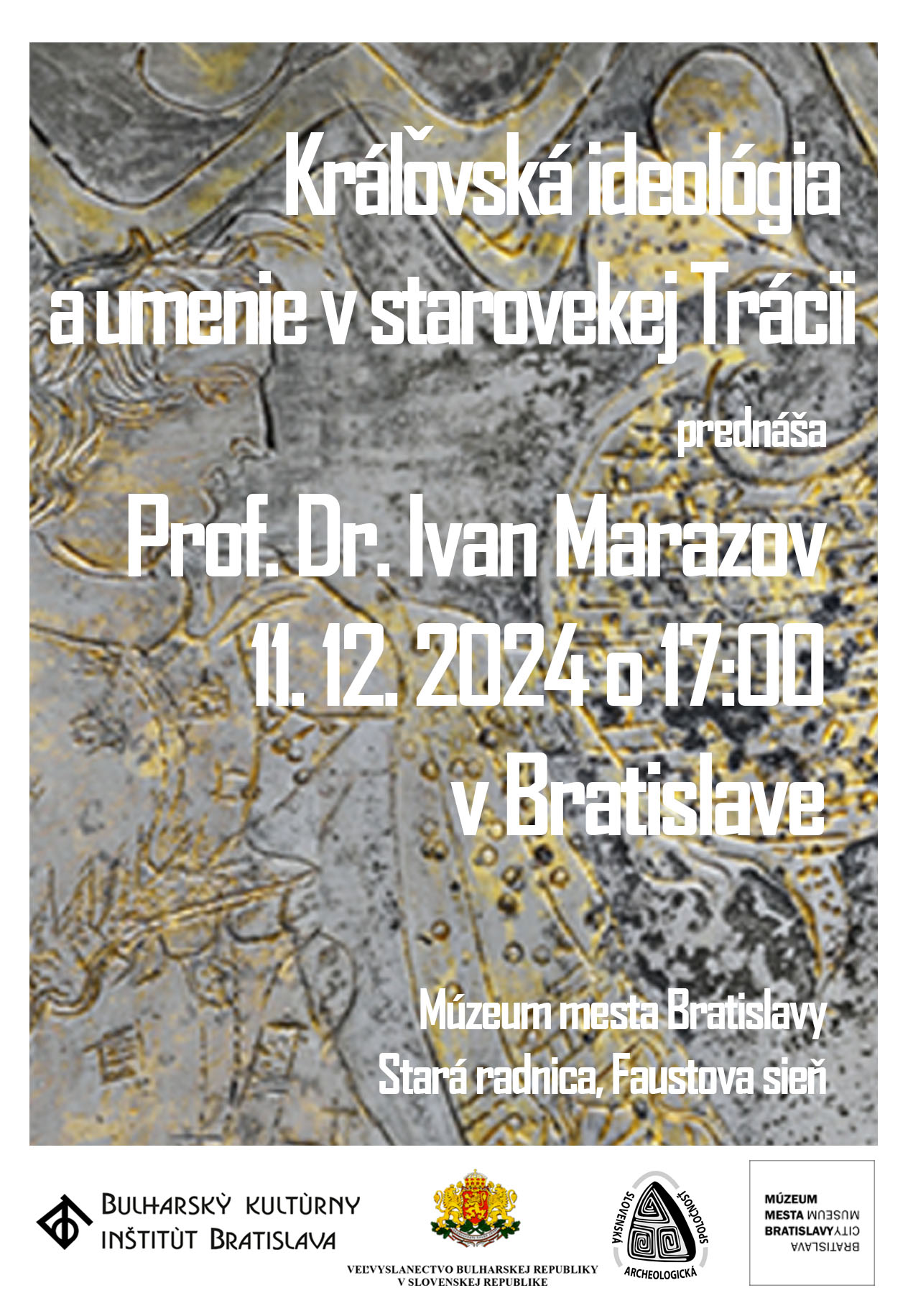
Cárska ideológia a umenie v starovekom Trácku - prednáška s prezentáciou
Imperial ideology and art in ancient Thrace - lecture with presentation
Event by: Bulharský kultúrny inštitút v Bratislave
Location: Múzeum mesta Bratislavy, Radničná 577, Bratislava - Staré Mesto
Discussions and lectures
About event
LECTURE WITH PRESENTATION
The territory of ancient Thrace, which mostly lies in the current territory of southern Bulgaria, is known for its wealth of ancient archaeological monuments - tombs, individual graves
and exceptional accidental findings. Toreutics, frescoes and sculpture (statues) in tombs are the most impressive works of Thracian art. The predominance of artistic types is related to the social
order from the aristocracy. Naturally, it also determines the predestination of monuments and the character of iconography and style. There is practically no monumental art in Thrace that would have an impact
on the public. Toreutics shows signs of social difference. Painting and sculpture (sculpture) in the tombs is directly related to the aristocratic belief in immortality.
Archaeological excavations, as well as accidental finds of treasures, point to two ways of preserving (treasuring) wealth - they are a symbol not only of the economic but also of the ideological
power. According to the position of valuable objects in the grave, one can determine the social status of the deceased aristocrat, which was much more important than his physical body. That is why we have so many
empty tombs in which bones are missing.
Toreutics provided the aristocracy with the means to objectify and illustrate the tsarist ideology. It consists of several groups: vessels, horse harnesses, sacred and ceremonial objects, weapons, decorative ornaments, jewelry. Each group bears the signs of power of different ideological areas. Depending on how the funeral feast was depicted, whether a horse was also buried there as the hero's alter ego, whether the hero was depicted as a soldier and a hunter, all this defined the aristocrat and his nobility and clarity.
Hiding treasure finds (recorded from Late Bronze Age, Geometric, Classical and Hellenistic) is considered a ceremony in the system of tsarist (royal) investiture.
Iconography of Thracian toreutics focuses on several basic themes: evidence of the rich value of the personality and character of the buried person, most often formulated as a depiction of
hunting performance, war victories, the investiture scene (the goddess hands over the insignia of power), the scene of marriage with the goddess, the scene of apotheosis. The iconography of funerary art uses
a plot related to the idea of the passage of an aristocrat's soul into the afterlife, i.e. with the famous Thracian belief in immortality.
The lecture will be richly illustrated with original slides of Thracian art monuments.
==== ===============================================
Tsarska ideology and art in ancient Thrace Thrace, which is mostly located in the current southern Bulgaria, is known for its wealth of archeological monuments from ancient times - tombs, individual treasures, and unique accidental finds. Torevtikata, frescoes and sculptures in tombs are the most impressive works in the art of the Thracians. The dominance of these artistic types is determined by the social order, which comes from the country of the aristocracy. Естествено е тя да да печать и преднежнието на паматницие и карачать на иконографита и стила. In Thrace, there is practically no monumental art intended for the general public. Торевтиката предлагать "знаците на социальный изображения". The painting and sculpture in the tombs are directly connected to the aristocratic faith in immortality.
Archaeological excavations, as well as accidental treasure finds, show two ways of treasuring wealth – a symbol not so much of economic as of ideological power. By placing precious things in the grave, the "social body" of the dead aristocrat is more important than the physical one. That's why we have so many "empty tombs", in which the bones are completely absent. It is concentrated in several groups: dishes, horse ammunition, ceremonial equipment, decorations. Each of them gives signs of power in different ideological areas: respectively, a pyre, a horse as an altar to a hero, a hero as a warrior and a hunter, defining an aristocrat as dzibythides - "siyaen". Findings from the Late Bronze Age, Geometrical, Classical and Hellenistic Age) are considered a rite of passage in the Imperial Investment System. Torevtika is centered around several main themes: the test of value (most often formulated as a hunted feat), military victories, the investiture scene (the goddess's hand insignia of power), the marriage scene with the goddess, the apotheosis scene.
Iconography on The funeral art uses plots related to the idea of the soul passing to an aristocrat in the open world, etc. with the famous Thracian faith in immortality.
The lecture will be richly illustrated with original slides from monuments to Thracian art.