This event has been ended!
Cultural Evening: Let’s talk about the Nakba/Mluvme o Nakbě
Event by: Sdružení Přátelé Palestiny
Location: Na Boršově, Náprstkova 10, Praha 1
About event
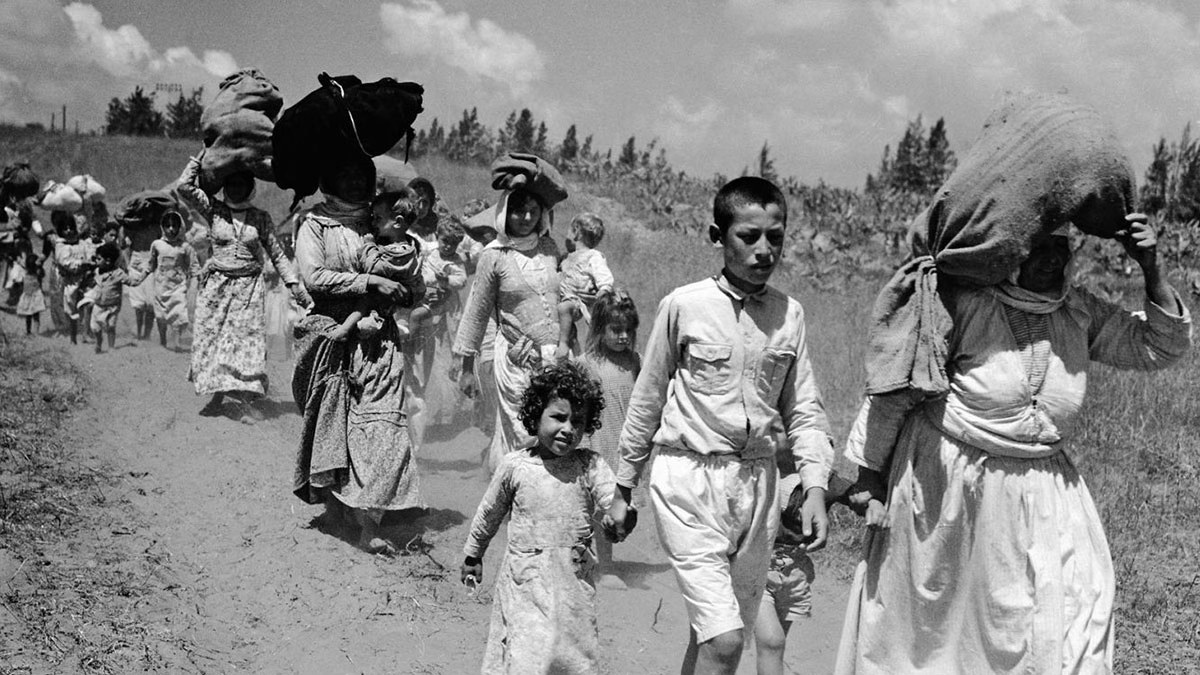
It's May again, and with it the 78th anniversary of the Nakba, the catastrophe that made the Palestinians strangers in their own land, as described by Elia Suleiman in the film Time That Remains, by Edward Said in his memoir Out of Place - I Belonged Nowhere (published in a Czech translation(!), Mahmoud Darwish in his monumental poem 'Madeeh al-Thill al-'Aaly' In Praise of the High Shadow, which we will reconstruct in in Czech and English. During the evening, we will introduce you to Palestine before the Nakba, as captured by the pioneers of Palestinian photography, Karimeh Abbud and Khalil Raad. The Palestinian filmmaker studying at FAMU, Moatasem Taha, will show you not only the events of the Nakba in 1948 and its continuation, but we will also outline how the Western world, including Czechoslovakia, predetermined the path to this tragic fate. But we will not stay with the historical facts. We will let you see the Palestinian soul through its culture, in which the theme of the Nakba, the endless exile, play a key role. We will also talk about Zionism and the reactions to it within the Jewish communities in Europe and the United States all Jews were Zionists. And we will introduce you to the Jewish anti-Zionist tradition. In the evening, you will be guided by Jana Ridvanová from SPP and her special guests: Palestinian-Jewish-Arab expert on genocide studies Lorrie Lynn King and renowned Czech translator from Arabic and Hebrew - Arabist Jitka Jeníková and Hebraist Magdalena Jehličková Cross stitch.
Tatriz (Tatreez) is an integral part of Palestinian culture - cross embroidery that decorates the traditional dresses of Palestinian women and girls and many other objects.
Every city in historical Palestine has its own typical Tatriz pattern. Luce Solfronková, who has been leading the Palestinian embroidery workshops at the Scout Institute for the third year, agreed to move the Wednesday Tatriz meeting to our in the evening, so you will be able to see how such an embroidery is made and maybe even make a decorated bookmark for a book or a small picture for your clothes Taha is a Palestinian filmmaker currently working in Prague, where he is studying for a master's degree in directing at the Film and Television Faculty of the Academy of Performing Arts (FAMU).
Lorrie Lynn King is an expert specializing in Holocaust and genocide studies. Her research deals with global patterns of resistance and reparations, and the pedagogy of genocide education. In her current research, entitled "The Tattooed Talmud", Lorrie explores how community engagement and dialogue based on the sharing of two-sided narratives can to support an empathetic correction. In the winter, Lorrie visited the West Bank in order to inform about the events on the spot. Jitka Jeníková is among the leading Czech translators and popularizers of Middle Eastern culture. Her work is mainly focused on works that reflect the current social and political changes in the Arab world translated, is also the highly acclaimed novel Tafasīl Thānawiyya by Palestinian writer Adania Shibli. The book and the author became the subject of a global debate in the fall of 2023, when the award ceremony for Shibli at the Frankfurt Book Fair was canceled due to the protests of hundreds of writers and publishers around the world. The plot of the novel follows an Israeli military unit in the Negev desert in 1949. Soldiers capture a young Bedouin girl, whom they gang-rape, murder and bury in the sand...
On the day I called Jitka, she had just finished translating the Palestinian author Emil Habibi and his work "The Optimist: Amazing Events with a Happy Ending from the Life of Sa'id Abu an-Nahs, bestseller" (in the original Al-Waqa'i' al-Ghariba fi Sa'id al-Mutasha'il) This work from 1974 is considered one of the most important works of modern Arabic literature. It is a satirical and tragicomic story that uses elements of dark humor and science fiction means "Happy, Father of Misfortunes".
Habibi combines traditional Arabic narrative with modern political commentary. Sa'íd constantly finds himself in absurd situations where he tries to comply with the authorities in order to stay in the country, which leads to a constant internal struggle between his loyalty and identity.
Magdalena Křížová is a renowned Czech Hebraist, historian and scholar who has been working for a long time studying Jewish history, literature and culture. She is also a member of the Jewish Voice of Solidarity and translates basically all the films we screen :) Majda has translated a number of titles, among them the works of the Palestinian-Israeli author Sajjid Kašuya, who very much reflects the mentioned feelings of uprootedness and foreignness in one's own country. However, Majda also translated Ten Myths about Israel by Ilan Pappé. And recently, in its Czech translation, Peter Beinart, Being a Jew after the destruction of Gaza, was published.
al-'Aaly).
During the evening, we will present Palestine before the Nakba as captured by the pioneers of Palestinian photography, Karimeh Abbud and Khalil Raad. Their work and memories of Palestine will be introduced to us by Moatasem Taha, a Palestinian filmmaker studying at FAMU.
We will guide you not only through the events of the 1948 Nakba and its ongoing continuation but also outline how the Western world—including Czechoslovakia—predetermined Palestine's path toward this tragic fate.
However, we won't stop at historical facts. We will offer a glimpse into the Palestinian soul through its culture, where the theme of the Nakba, endless exile, and separation play key roles.
We will also discuss Zionism and the past and present reactions to it within Jewish communities in Europe and the United States. We will debunk the myth that all Jewish people are Zionists and introduce you to the Jewish anti-Zionist tradition.
The evening will be hosted by Jana Ridvanová from SPP and her distinguished guests. A Palestinian filmmaker Moatasem Taha, an American_Jewish_Arab genocide studies expert Lorrie Lynn King. And renowned Czech translators from Arabic and Hebrew. Arabist Jitka Jeníková and Hebraist Magdalena Jehličková Křížová.
Tatríz (Tatreez) - a cross embroidery that decorates the traditional dresses of Palestinian women and girls and many other items, is an integral part of Palestinian culture. Every city in historical Palestine has its own typical Tatriz pattern. Luce Solfronková, who has been leading Palestinian embroidery workshops at the Scout Institute for the third year, has agreed to move the Wednesday Tatriz meeting to our evening, so you will be able to see how such embroidery is created and maybe even try it and make a decorated bookmark for a book or a small picture for a frame or on clothes during the evening.
We look forward to seeing you there!
Working language will be mostly English. We will also introduce texts of Palestinian authors in Czech and English.
About the guests
Moatasem Taha is a Palestinian filmmaker currently based in Prague, where he is pursuing an MA in Film Directing at the Film and TV School of the Academy of Performing Arts (FAMU)
Moatasem photographs of Karimeh Abbud and Khalil Raad
Prof. Lorrie Lynn King
An expert specializing in Holocaust and genocide studies, her research focuses on global patterns of resistance and reparations, as well as the pedagogy of genocide education. In her current research project, titled “The Tattooed Talmud,” Lorrie explores how community engagement and dialogue based on the sharing of mutual narratives can foster empathetic healing. Last winter, Lorrie visited the Palestinian West Bank so she could report on the situation there from firsthand experience.
Jitka Jeníková is among the leading Czech Arabists, translators, and popularizers of Middle Eastern culture. Her work is crucial for introducing modern Arabic literature to Czech readers, focusing primarily on works that reflect the current social and political transformations of the Arab world. Among the many titles Jitka has translated is the highly acclaimed novel *Detailed Sketch* (originally *Tafasīl Thānawiyya*) by Palestinian author Adania Shibli. Both the book and the author became the subject of global debate in the fall of 2023, when the award ceremony for Shibl at the Frankfurt Book Fair was canceled due to October 7, sparking protests from hundreds of writers and publishers around the world. The novel follows an Israeli military unit in the Negev Desert in 1949. The soldiers capture a young Bedouin woman...
On the day I called Jitka, she had just finished translating the work of Palestinian author Emile Habibi, titled The Secret Life of Saeed: The Ill-Fated Pessoptimist (originally Al-Waqa'i' al-Ghariba fi Ikhtifa' Sa'id Abi al-Nahsh al-Mutasha'il). This 1974 work is considered one of the most important pieces of modern Arabic literature. It is a satirical and tragicomic story that utilizes elements of both black humor and science fiction.
The protagonist, Saeed, is a "simpleton" archetype who tries to survive in the newly established state of Israel. His name literally translates to "Happy, the father of misfortune."
Habibi combines traditional Arabic storytelling with modern political commentary. Saeed constantly finds himself in absurd situations while trying to comply with authorities in order to remain in the country, leading to a continuous internal struggle between his loyalty and his identity.
Magdalena Křížová is a renowned Czech Hebraist, historian, and researcher who has long dedicated herself to the study of Jewish history, literature, and culture. She is also a member of the Jewish Voice of Solidarity and translates virtually all the films we screen :)
Majda has translated numerous titles, including works by the Palestinian-Israeli author Sayed Kashua, whose writing deeply reflects the aforementioned feelings of uprooting and being a stranger in one's own land. Majda also translated Ten Myths About Israel by Ilan Pappé and most recently, Peter Beinart's Being Jewish After the Destruction of Gaza was published in her Czech translation.
Work language will be English and Czech.