This event has been ended!
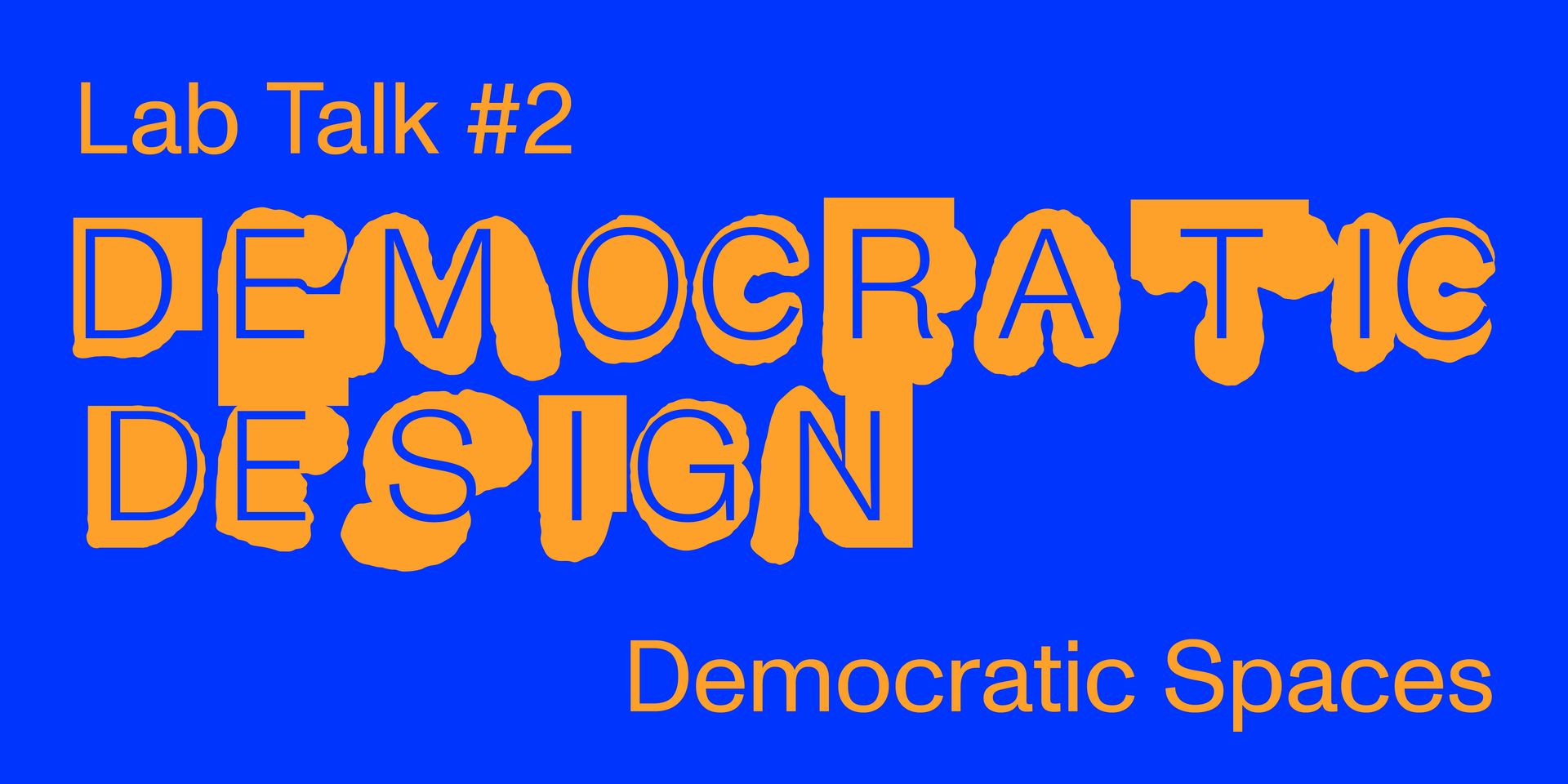
Democratic Design – #2 Democratic Spaces
Event by: Aedes Berlin
Location: Aedes Architekturforum, Christinenstraße 18-19, Berlin - Bezirk Pankow
About event
A democratic society depends on well-designed spaces that encourage exchange and actively support constructive discourse, mutual respect and social behaviour. This requires inclusive planning processes and the engagement of new networks to strengthen collective cooperation. Architects have a central role to play: planning and design have always been acts of teamwork – processes of jointly seeking, discussing and shaping decisions.
What kinds of spaces for negotiation does democracy need? What defines democratic design? And how can public spaces reflect and value diverse cultures and social backgrounds? More
PROGRAMME
Welcome
Miriam Mlecek, Partner, Aedes, Berlin
Presentations
Ulrike Steven, Director, what if:projects, London
Susanne Hofmann, Founder, Baupiloten, Berlin
Luka Cvitan, Director, Prostorne taktike, Split
Renée Tribble, Professor for Urban Design, Urban Land Use Planning and Process Design, TU Dortmund
Moderator
Amelie Klein, Curator/Writer/Critic, Design & Democracy, Vienna
Front-Row Peers
Anna Naumann, Architect, Berlin
Lisa Kolkowski, Architecture in Residency (A-I-R), Luckenwalde
Nora Kramer, Project Manager Competition Process, House of Democracy, Frankfurt/Main
About Democratic Design
In Democratic Design – Space for Cooperation, Collaboration and Compromise, Aedes explores how architecture, planning processes and public spaces can foster democratic engagement and social cohesion – both more urgent than ever in times of profound societal uncertainty. The programme consists of an exhibition, a series of four Lab Talks and a catalogue featuring contributions from practitioners in Berlin, Germany and across Europe, selected through an open call in collaboration with European architecture centres.
At the core of Democratic Design are democratic planning processes and the spaces they create. The presented projects amplify marginalised voices, encourage participation and inspire collective visions for the future. Dialogue and exchange are essential conditions for democracy, cultivating the ability to accept differing viewpoints and to compromise – the very foundations of democratic culture. More
Democratic Design is made possible through the generous support of the Berlin Capital Cultural Fund (Hauptstadtkulturfonds) and additional support from the ZEIT STIFTUNG BUCERIUS.
Image © Rimini Berlin