This event has been ended!
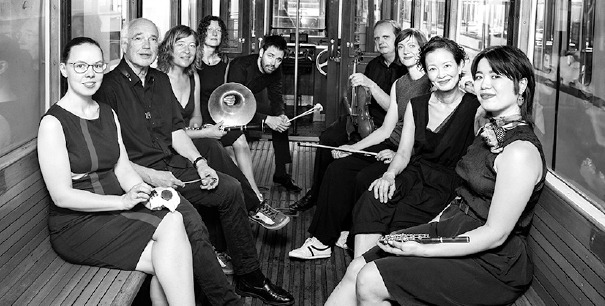
Ensemble Aventure | Klingende Resonanzen | Unerhörte Musik 4.11.2025
Ensemble Adventure | Sounding resonances | Unheard of music November 4th, 2025
Event by: Unerhörte Musik
Location: Mehringdamm 34, Mehringdamm 34, Berlin - Bezirk Friedrichshain-Kreuzberg
Tickets: Get tickets
About event
Ensemble Aventure
Keiko Murakami, flute
Andrea Nagy, clarinet
Wolfgang Rüdiger, bassoon
Akiko Okabe, piano
Nicholas Reed, drums
Katharina Schmauder, violin
Ellen Fallowfield, cello
Sounding resonances
Hans Zender
from: Lo Shu VI – 5 Haikai (1989)
for flute and cello
II, III, IV and V
Chikako Morishita
One Arm 3 (2016)
for alto flute, bass clarinet, violin, cello and piano
Yu Kuwabara
Five Images – In Nomine (2018/19)
for flute, clarinet, violin, cello, percussion and piano
Keitaro Takahashi
Ryouka (2014)
for prepared piano
Mayako Kubo
ALUSRURSULA (2020)
for bassoon
Since the 20th century, new music from Japan has found itself in the area of tension between the adaptation of “Western” sound ideas and the return to our own traditions. Conversely, Japanese sound ideas and traditions of thought have inspired European composers precisely by opening up an unusual perspective on their own work. Sounding resonances makes these mutual influences audible and illuminates the (supposedly) own in the mirror of the (supposedly) foreign.