This event has been ended!
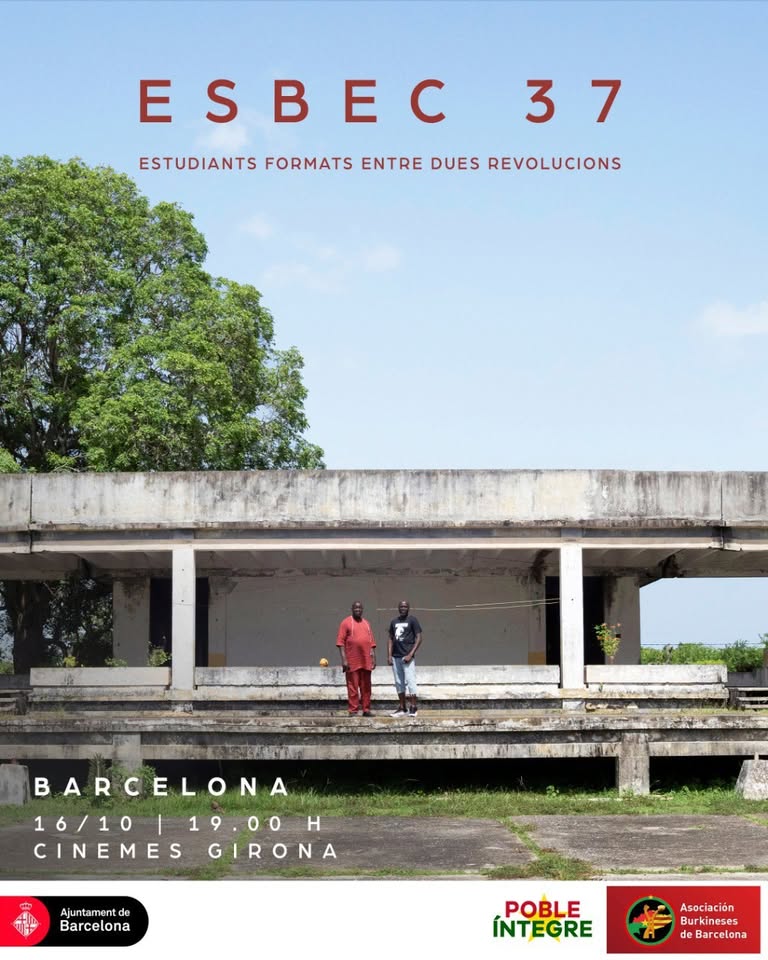
ESBEC_37 "Pioneers formed between two revolutions"
Event by: Burkinabe de Barcelone
Location: CINEMES GIRONA, Carrer de Girona 175, Barcelona - L'Eixample
About event
The Poble Íntegre collective and the Burkinabè Association of Barcelona premiere the documentary ESBEC 37.
“ Pioneers formed between two revolutions “
An unknown story, told by its own protagonists.
A story that speaks of education in times of revolution, of migrations outside of stereotypes, of cooperation between countries of the global south and of the fight to emancipate themselves from neocolonial chains. A narrative with direct links to one of the African revolutionary processes that currently has the most influence in the world, as well as the internationalist solidarity that the Cuban people have been practicing for decades.
On August 4, 1983, the revolutionary process led by Thomas Sankara began in Upper Volta, a former French colony in West Africa, that would turn the country into Burkina Faso (which can be translated as "the homeland of upright people"). The August Revolution was characterized by its transformative will in all areas: from the fight against foreign debt and neocolonialism, to the liberation of women, through the defense of the territory and the climate, among other things. The improvements in the living conditions of the popular classes were quickly perceived.
The educational field underwent strong transformations: The increase in the literacy rate was exponential and the gender gap in access to education was substantially reduced. The south-south cooperation agreement with the Cuban Revolution played an important role in this. At the end of 1986, 600 students from Burkina Faso (including 135 girls) traveled to Cuba to train and, upon their return to their country, contribute to improving the living conditions of their people. They were between 11 and 14 years old and were chosen because they were orphans and/or belonged to the most vulnerable layers of Burkinabè society.
But the joy did not last long. While they were studying at ESBEC 37 (Basic Secondary School in the Countryside No. 37), on the Isle of Youth, the revolutionary president Thomas Sankara was assassinated and the hopes of the Burkinabè students in Cuba vanished. Despite everything, the 600 students continued studying in different parts of Cuba until the early 90s, when they gradually returned to their country of origin.
Upon their arrival in Burkina Faso, they discovered that they were considered persona non-grata in their own country because they were linked to the August Revolution. Most had great difficulty finding work. Some chose to seek better luck abroad: this is the case of Nebon Babou Bassono, who currently lives in Barcelona and is the protagonist of the documentary.
Three decades later, Babou returns to Cuba for the first time, this time from Barcelona. There, in the same places that marked his adolescence, he will meet again with the teachers of his old school and some of his classmates. ESBEC 37 is a kind of revolutionary road movie full of great emotions, fun moments and, above all, a fighting spirit that does not give up under any circumstance.
Thanks to the documentary ESBEC 37, we will be able to learn about Babou's story from his own perspective. With him we will relive a historical event, as important as it is unknown, that changed his life forever. In this sense, he will be the protagonist himself who will guide us on this excursion to the past. At the same time as he visits the places that shaped his person, we will also meet different people who share, in different ways, his story:
The documentary, in order to explain this story in all its breadth, has been filmed on three continents: Europe, America and Africa. Babou will leave Barcelona and meet his friend Issa in Havana. From there, they will travel to the Isle of Youth and, later, to Santiago de Cuba. Once we have completed the tour of the Caribbean island, we will accompany Babou on his return to Barcelona and, finally, Issa on his return to Ouagadougou (Burkina Faso).
Objectives:
To make known the figure of Thomas Sankara, one of the African leaders who is becoming a reference in the pan-Africanism and the fight against imperialism.
Explain the positive impact that Cuban solidarity has had in Africa, based on the concrete experiences of Burkina Faso and -secondarily- Angola.
Break prejudices and stereotypes about people who migrate (and their countries of origin) by revealing one of the many and diverse stories that carry on their backs.
Evince that the countries of the global north have a direct responsibility for the socioeconomic situation of many countries in the global south.
Offer new perspectives from the revolutionary experiences in the countries of the global south, focusing attention on the educational field.
This documentary, therefore, is aimed at all those people who want to know Africa, avoiding welfare and victimizing logic, with the desire to learn from a revolution that has a lot to offer to the present, and with the desire to enjoy seeing how, far from standing with their arms crossed, the protagonists of this story rise up to defend their rights and the sovereignty of their people.
The underlying commitment that this documentary acquires is to offer a vision faithful and rigorous, not neutral, of the struggles experienced in Burkina Faso and Cuba to advance towards complete sovereignty, as well as the imperialist offensives that have been perpetrated against these processes: the assassination of Thomas Sankara and the criminal US blockade against Cuba.
The central theme of the audiovisual is the clear commitment to education that both the Revolution of August like the Cuban Revolution did from the first day. A decision that aims to contribute, along with other policies, to reducing inequality to its lowest level. Furthermore, this reduction in inequality cannot be achieved without combating neocolonial ties, and neocolonial ties cannot be combated without mutually supportive relationships between peoples fighting imperialism.
“ Pioneers formed between two revolutions “
An unknown story, told by its own protagonists.
A story that speaks of education in times of revolution, of migrations outside of stereotypes, of cooperation between countries of the global south and of the fight to emancipate themselves from neocolonial chains. A narrative with direct links to one of the African revolutionary processes that currently has the most influence in the world, as well as the internationalist solidarity that the Cuban people have been practicing for decades.
On August 4, 1983, the revolutionary process led by Thomas Sankara began in Upper Volta, a former French colony in West Africa, that would turn the country into Burkina Faso (which can be translated as "the homeland of upright people"). The August Revolution was characterized by its transformative will in all areas: from the fight against foreign debt and neocolonialism, to the liberation of women, through the defense of the territory and the climate, among other things. The improvements in the living conditions of the popular classes were quickly perceived.
The educational field underwent strong transformations: The increase in the literacy rate was exponential and the gender gap in access to education was substantially reduced. The south-south cooperation agreement with the Cuban Revolution played an important role in this. At the end of 1986, 600 students from Burkina Faso (including 135 girls) traveled to Cuba to train and, upon their return to their country, contribute to improving the living conditions of their people. They were between 11 and 14 years old and were chosen because they were orphans and/or belonged to the most vulnerable layers of Burkinabè society.
But the joy did not last long. While they were studying at ESBEC 37 (Basic Secondary School in the Countryside No. 37), on the Isle of Youth, the revolutionary president Thomas Sankara was assassinated and the hopes of the Burkinabè students in Cuba vanished. Despite everything, the 600 students continued studying in different parts of Cuba until the early 90s, when they gradually returned to their country of origin.
Upon their arrival in Burkina Faso, they discovered that they were considered persona non-grata in their own country because they were linked to the August Revolution. Most had great difficulty finding work. Some chose to seek better luck abroad: this is the case of Nebon Babou Bassono, who currently lives in Barcelona and is the protagonist of the documentary.
Three decades later, Babou returns to Cuba for the first time, this time from Barcelona. There, in the same places that marked his adolescence, he will meet again with the teachers of his old school and some of his classmates. ESBEC 37 is a kind of revolutionary road movie full of great emotions, fun moments and, above all, a fighting spirit that does not give up under any circumstance.
Thanks to the documentary ESBEC 37, we will be able to learn about Babou's story from his own perspective. With him we will relive a historical event, as important as it is unknown, that changed his life forever. In this sense, he will be the protagonist himself who will guide us on this excursion to the past. At the same time as he visits the places that shaped his person, we will also meet different people who share, in different ways, his story:
The documentary, in order to explain this story in all its breadth, has been filmed on three continents: Europe, America and Africa. Babou will leave Barcelona and meet his friend Issa in Havana. From there, they will travel to the Isle of Youth and, later, to Santiago de Cuba. Once we have completed the tour of the Caribbean island, we will accompany Babou on his return to Barcelona and, finally, Issa on his return to Ouagadougou (Burkina Faso).
Objectives:
To make known the figure of Thomas Sankara, one of the African leaders who is becoming a reference in the pan-Africanism and the fight against imperialism.
Explain the positive impact that Cuban solidarity has had in Africa, based on the concrete experiences of Burkina Faso and -secondarily- Angola.
Break prejudices and stereotypes about people who migrate (and their countries of origin) by revealing one of the many and diverse stories that carry on their backs.
Evince that the countries of the global north have a direct responsibility for the socioeconomic situation of many countries in the global south.
Offer new perspectives from the revolutionary experiences in the countries of the global south, focusing attention on the educational field.
This documentary, therefore, is aimed at all those people who want to know Africa, avoiding welfare and victimizing logic, with the desire to learn from a revolution that has a lot to offer to the present, and with the desire to enjoy seeing how, far from standing with their arms crossed, the protagonists of this story rise up to defend their rights and the sovereignty of their people.
The underlying commitment that this documentary acquires is to offer a vision faithful and rigorous, not neutral, of the struggles experienced in Burkina Faso and Cuba to advance towards complete sovereignty, as well as the imperialist offensives that have been perpetrated against these processes: the assassination of Thomas Sankara and the criminal US blockade against Cuba.
The central theme of the audiovisual is the clear commitment to education that both the Revolution of August like the Cuban Revolution did from the first day. A decision that aims to contribute, along with other policies, to reducing inequality to its lowest level. Furthermore, this reduction in inequality cannot be achieved without combating neocolonial ties, and neocolonial ties cannot be combated without mutually supportive relationships between peoples fighting imperialism.
Events in Barcelona today · Events in Barcelona this weekend