This event has been ended!
Female Cadence: Lolita Garrido (Spanien) mit dem Lucia Boffo Trio
Female Cadence: Lolita Garrido (Spain) with the Lucia Boffo Trio
Event by: Jazz am Helmholtzplatz e.V.
Location: Brotfabrik Berlin, Caligariplatz 1, Berlin - Bezirk Pankow
About event
Start of the concert series on Saturday, October 4, 2025, 8h, Brotfabrik, Caligariplatz 1, 13086 Berlin. Entry 12-18 euros. The box office from 7.30 p.m. and advance sales via event brit. Piano
Sidney Werner-Bass
Lolita Garrido (1928-2018) is considered a pioneer of Spanish jazz, who is the "La Novia del Swing" (the lover of swing) jazz and big band on Spanish stages brought, but was also affected by the censorship of the Franco dictatorship. At the end of the 1940s, she interpreted jazz standards, especially in the revue "Historia de Dos Mujeres", which was presented in Madrid in 1945 and with which she started her international career, which she catapulted into the big concert halls - especially in Spain and Latin America. In the 1950s, she increasingly turned to Latin American music, the Bolero, the Cuban "Filin" and the tango. At that time, the overall jazz was severely restricted under Franco and existed with a few "hot clubs" as "niche music" in some Spanish cities. Concerts of jazz musicians like Lionel Hampton were considered a sign of a cultural opening in the 1950s. Jazz was also frowned upon in western dictatorships in the Cold War as the music of the political protest and was attributed to the "left -wing scene".
Under the dictatorship Francos (1939-1979), the Spanish music scene was greatly censored. Texts that were considered subversive or politically dangerous were either changed or forbidden. Song texts had to match the "Catholic" values that were propagated by the Franco regime - too much lasciviousness or even female desires and longings were frowned upon. Lolita Garrido was the first singer in Spain to interpret "Bésame Mucho" - and her version was promptly censored. The song was also a composition by the Mexican composer Consuelo Velázquez. The song is representative of the sensual boleros of the time and the Cuban "Filin", which addresses longings and erotic desire and thus a contrast to the politically extremely tense situation of the Cold War with its revolutions, suppression mechanisms and political persecution. Although the text itself was not open, the way Lolita Garrido (which was actually called Dolores) interpreted the song was perceived as an act of cultural subversion. In films, the Spanish censorship allegedly cut out all kiss scenes that lasted longer than three seconds. It was not until 1966 that Spain graduated, a subsequent censorship remained.
Ultimately Lolita Garrido founded her success but also on interpretations of the Spanish songs "Copla". During the Franco dictatorship, the Copla was used both as a tool of political propaganda and as an expression of resistance. Her songs dealt with topics such as love, loss and social injustice, which often transported allegorically political messages. Lolita Garrido took part in several renowned music festivals around 1960, including at the Festival de la Canción Mediterránea and the Festival de Benidorm in Spain.
Lolita Garrido was a professional artist who managed to be successful for decades. Therefore, she represented a key figure in the Spanish music scene of the 1950s and 1960s. Although it started with jazz, she later turned to the popular Latin American music styles and also interpreted twist and pop songs in the 1960s. She was active as a singer until the end of her life and also played in films towards the end of her career.
Lucia Boffo
The Argentine singer, composer and lecturer Lucia Boffo comes from Ushuaia and has lived in Berlin since 2019. Her music combines jazz with Argentine folklore, songwriting and experimental sound languages. She studied jazz and composition in Buenos Aires and taught at various universities before she came to the Berlin Jazz Institute. With her ensemble "Nomade" she develops a personal language between improvisation, tradition and avant -garde. She can be heard regularly at Berlin festivals and stages. Growing up in a family of musicians, he has been studying at the Berlin Jazz Institute with Tino Derado, Wolfgang Köhler and Greg Cohen since 2020. Numerous prices: "Jugend Jazzt" Award, the Ingolf-Burkhardt-Award or the 1st Prize at the International Jazzhaus Pianowtrektbref Freiburg 2024. Concert tours already lead him through Germany and Europe.
Sidney Werner
The double bass player Sidney Werner studied at the Jazz Institute Berlin at Greg Cohen. Among other things, he plays in the "Omniversal Earkestra" and in the "Far East Trio", which is devoted to the music of Duke Ellington and regularly appears with Natalie Greffel.
www.sidwerner.com
background:
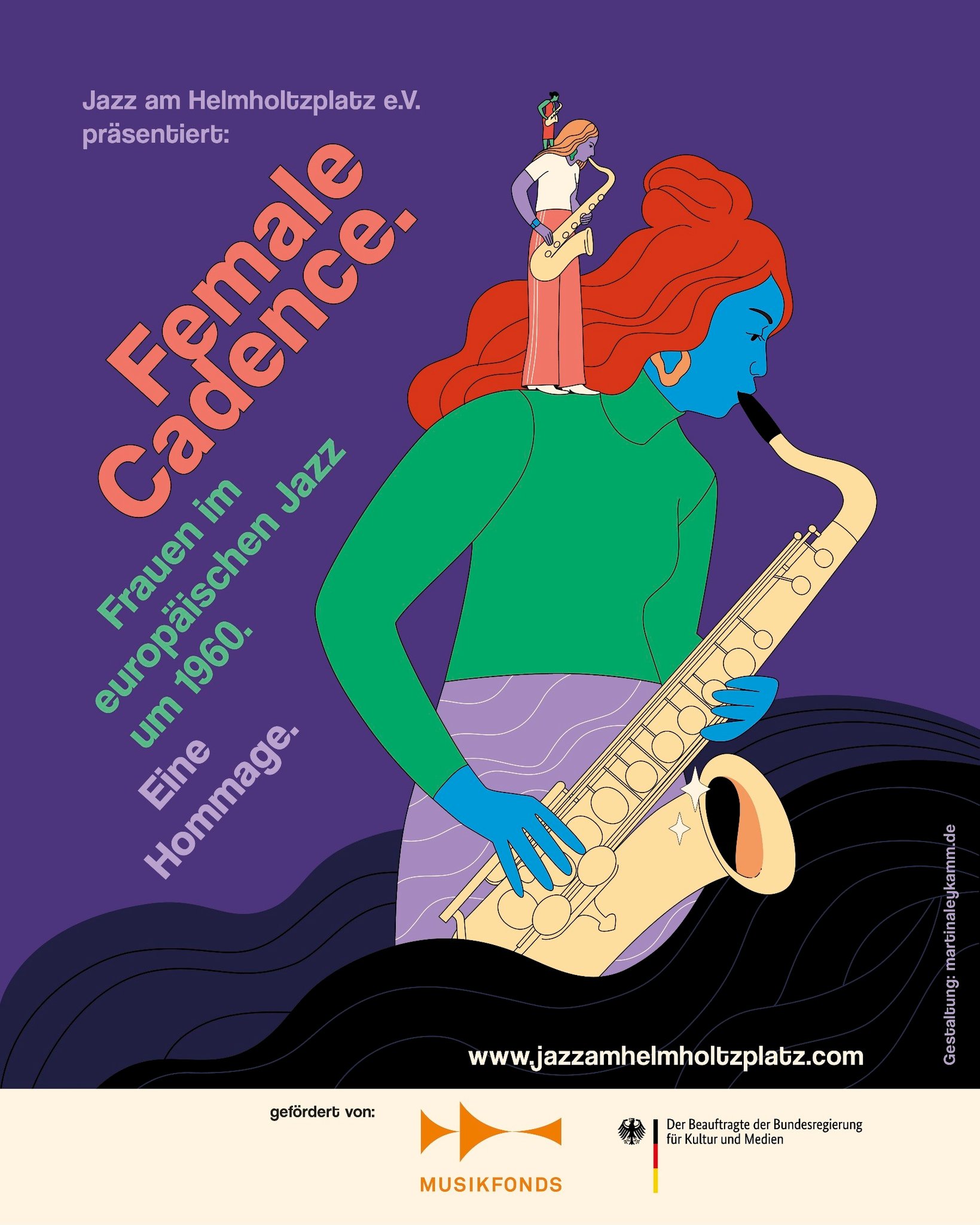
female Cadence: Women in European Jazz around 1960 (October 2025 - January 2026) dedicates to forgotten musicians in Europe. The focus is on artists such as Lolita Garrido (Spain), Pia Beck (Netherlands), Colette Magny (France), German Tülay (Turkey), Kathy Stotbart (Great Britannia) and Ewa Wanat (Poland). Mathilde Vendramin, Lucia Boffo, Pinar Tatlikazan, Birgitta Flick and Ola Blachno with their ensembles reinterpret, transcribed and connect them with their own artistic positions. This creates a dialogue between the past and the present, between politically motivated music history and today's jazz avant-garde.
In addition to six concerts in venues such as the bread factory and the Kubiz Raoul Wallenberg, the series includes lectures and a program booklet. A podcast is then created. This makes female jazz history visible and at the same time opens up a discourse on the social conditions of those musicians - patriarchal structures and authoritarian regime focus on this. A look at today's conditions in jazz should also be taken, as well as current artistic positions of musicians of jazz and improvisation music. Musikfonds e.V. with the Federal Government Commissioner for Culture and Media.
Idea and implementation: Regina Câmara
Sidney Werner-Bass
Lolita Garrido (1928-2018) is considered a pioneer of Spanish jazz, who is the "La Novia del Swing" (the lover of swing) jazz and big band on Spanish stages brought, but was also affected by the censorship of the Franco dictatorship. At the end of the 1940s, she interpreted jazz standards, especially in the revue "Historia de Dos Mujeres", which was presented in Madrid in 1945 and with which she started her international career, which she catapulted into the big concert halls - especially in Spain and Latin America. In the 1950s, she increasingly turned to Latin American music, the Bolero, the Cuban "Filin" and the tango. At that time, the overall jazz was severely restricted under Franco and existed with a few "hot clubs" as "niche music" in some Spanish cities. Concerts of jazz musicians like Lionel Hampton were considered a sign of a cultural opening in the 1950s. Jazz was also frowned upon in western dictatorships in the Cold War as the music of the political protest and was attributed to the "left -wing scene".
Under the dictatorship Francos (1939-1979), the Spanish music scene was greatly censored. Texts that were considered subversive or politically dangerous were either changed or forbidden. Song texts had to match the "Catholic" values that were propagated by the Franco regime - too much lasciviousness or even female desires and longings were frowned upon. Lolita Garrido was the first singer in Spain to interpret "Bésame Mucho" - and her version was promptly censored. The song was also a composition by the Mexican composer Consuelo Velázquez. The song is representative of the sensual boleros of the time and the Cuban "Filin", which addresses longings and erotic desire and thus a contrast to the politically extremely tense situation of the Cold War with its revolutions, suppression mechanisms and political persecution. Although the text itself was not open, the way Lolita Garrido (which was actually called Dolores) interpreted the song was perceived as an act of cultural subversion. In films, the Spanish censorship allegedly cut out all kiss scenes that lasted longer than three seconds. It was not until 1966 that Spain graduated, a subsequent censorship remained.
Ultimately Lolita Garrido founded her success but also on interpretations of the Spanish songs "Copla". During the Franco dictatorship, the Copla was used both as a tool of political propaganda and as an expression of resistance. Her songs dealt with topics such as love, loss and social injustice, which often transported allegorically political messages. Lolita Garrido took part in several renowned music festivals around 1960, including at the Festival de la Canción Mediterránea and the Festival de Benidorm in Spain.
Lolita Garrido was a professional artist who managed to be successful for decades. Therefore, she represented a key figure in the Spanish music scene of the 1950s and 1960s. Although it started with jazz, she later turned to the popular Latin American music styles and also interpreted twist and pop songs in the 1960s. She was active as a singer until the end of her life and also played in films towards the end of her career.
Lucia Boffo
The Argentine singer, composer and lecturer Lucia Boffo comes from Ushuaia and has lived in Berlin since 2019. Her music combines jazz with Argentine folklore, songwriting and experimental sound languages. She studied jazz and composition in Buenos Aires and taught at various universities before she came to the Berlin Jazz Institute. With her ensemble "Nomade" she develops a personal language between improvisation, tradition and avant -garde. She can be heard regularly at Berlin festivals and stages. Growing up in a family of musicians, he has been studying at the Berlin Jazz Institute with Tino Derado, Wolfgang Köhler and Greg Cohen since 2020. Numerous prices: "Jugend Jazzt" Award, the Ingolf-Burkhardt-Award or the 1st Prize at the International Jazzhaus Pianowtrektbref Freiburg 2024. Concert tours already lead him through Germany and Europe.
Sidney Werner
The double bass player Sidney Werner studied at the Jazz Institute Berlin at Greg Cohen. Among other things, he plays in the "Omniversal Earkestra" and in the "Far East Trio", which is devoted to the music of Duke Ellington and regularly appears with Natalie Greffel.
www.sidwerner.com
background:
female Cadence: Women in European Jazz around 1960 (October 2025 - January 2026) dedicates to forgotten musicians in Europe. The focus is on artists such as Lolita Garrido (Spain), Pia Beck (Netherlands), Colette Magny (France), German Tülay (Turkey), Kathy Stotbart (Great Britannia) and Ewa Wanat (Poland). Mathilde Vendramin, Lucia Boffo, Pinar Tatlikazan, Birgitta Flick and Ola Blachno with their ensembles reinterpret, transcribed and connect them with their own artistic positions. This creates a dialogue between the past and the present, between politically motivated music history and today's jazz avant-garde.
In addition to six concerts in venues such as the bread factory and the Kubiz Raoul Wallenberg, the series includes lectures and a program booklet. A podcast is then created. This makes female jazz history visible and at the same time opens up a discourse on the social conditions of those musicians - patriarchal structures and authoritarian regime focus on this. A look at today's conditions in jazz should also be taken, as well as current artistic positions of musicians of jazz and improvisation music. Musikfonds e.V. with the Federal Government Commissioner for Culture and Media.
Idea and implementation: Regina Câmara