This event has been ended!
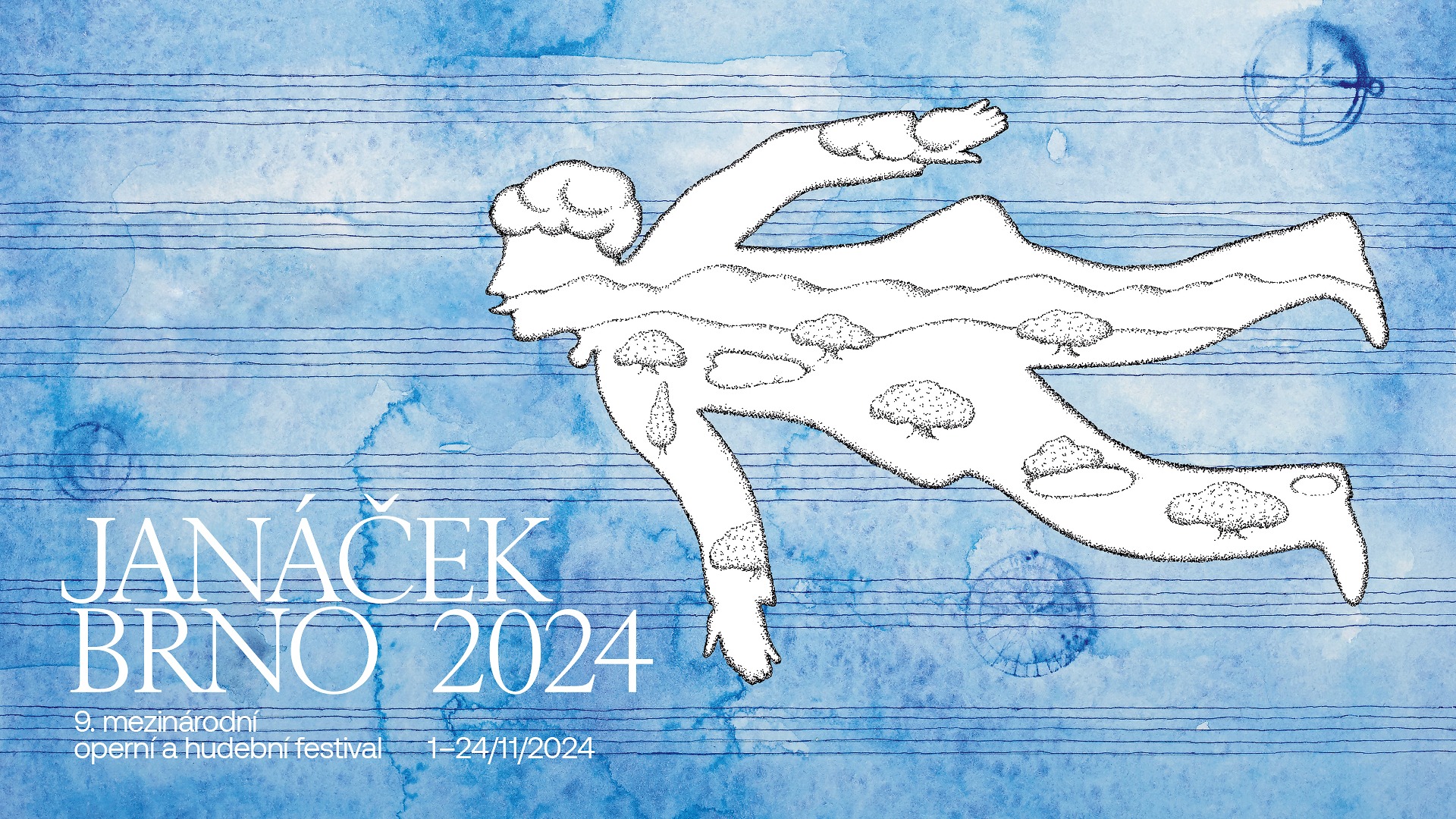
Festival Janáček Brno 2024
Event by: Český filharmonický sbor Brno - Czech Philharmonic Choir Brno
Location: Mahen Theatre, Malinovského náměstí, Brno-střed
Tickets: Get tickets
Concerts, Festivals
About event
Leoš Janáček: The Wandering of a Soul
Miloslav Ištvan: Conjuring Time
Bohuslav Martinů: Bouquet
Jan Mráček violin
Jana Šrejma Kačírková soprano< br/>Václava Krejčí Housková alto
Vít Nosek tenor
Roman Hoza baritone
Hana Briesťanská recital
Daniel Bambas recital
Children's Choir Brno
choirmaster Valeria Maťašová
Czech Philharmonic Choir Brno
choirmaster Petr Fiala
Orchestra of the Janáček Opera of the National Theater
conductor Robert Kružík
The violin concerto Putování dušička was just an unfinished project of Leoš Janáček (1854–1928). When he returned from an official visit to England in May 1926, where his Sonata for Violin and Piano was played by the excellent violinist Adila Fachiri, he was impressed by her performance and considered composing a violin concerto, which he called "The Wandering of the Soul". However, he soon abandoned the work in progress and put aside the manuscript score. It is a mysterious composition about which we know very little. Parts of this concerto were later used by Janáček in the overture to the opera Z mrtvý domu, and it is interesting that already in the score of the violin concerto we find the blows of prison shackles - as if the vanguard of the next opera. The reconstruction of this piece was carried out by Miloš Štědroň and Leoš Faltus.
Miloslav Ištvan (1928–1990) is one of the most important composers active in Brno. He came onto the scene at the end of the 1940s, when he responded to musical neoclassicism and neofolklorism, especially to Bartók and Janáček, but in the early 1960s he leaned towards the so-called New Music. Subsequently, he developed his specific approach to creation, which he summarized in the publication Method of montage of isolated elements in music. The Enchantment of Time is a composition in four parts for a symphony orchestra and the upper and lower voice of two reciters from 1967. The decision to compose for a recited text and orchestra was brought about by his collaboration with the theater. The text was created by assembling excerpts of poems from Oldřich Mikulášek's collection, parts of the Bible and texts by an unknown baroque writer. Ištvan's composition reflecting on the transience of life is one of the most impressive compositions of the second half of the 1960s.
Bouquets, a cantata for solos, mixed and children's choir and orchestra, was written by Bohuslav Martinů (1890–1959) in 1937. The 1930s are typical of the composer's increased interest in Czech and Moravian folklore. Martinů's texts, mainly of a ballad nature, were taken from the collections of K. J. Erben and František Sušil. A total of eight parts are introduced by a distinctive prelude, and the individual numbers are divided by the orchestral Selanka reminiscent of the cantor's pastorals and Intrada. It is a lesser-known work by Martinů, although it is one of his most remarkable compositions. Here, the composer perfectly combines neo-folkloric tendencies with neo-classical ones, inspired primarily by Igor Stravinsky. The premiere took place under the baton of Otakar Jeremiáš in Prague in 1938, and Martinů apparently heard it only from a radio broadcast. He attributed the work to his friend, the painter Jan Zrzavé.
Jiří Zahrádek
Miloslav Ištvan: Conjuring Time
Bohuslav Martinů: Bouquet
Jan Mráček violin
Jana Šrejma Kačírková soprano< br/>Václava Krejčí Housková alto
Vít Nosek tenor
Roman Hoza baritone
Hana Briesťanská recital
Daniel Bambas recital
Children's Choir Brno
choirmaster Valeria Maťašová
Czech Philharmonic Choir Brno
choirmaster Petr Fiala
Orchestra of the Janáček Opera of the National Theater
conductor Robert Kružík
The violin concerto Putování dušička was just an unfinished project of Leoš Janáček (1854–1928). When he returned from an official visit to England in May 1926, where his Sonata for Violin and Piano was played by the excellent violinist Adila Fachiri, he was impressed by her performance and considered composing a violin concerto, which he called "The Wandering of the Soul". However, he soon abandoned the work in progress and put aside the manuscript score. It is a mysterious composition about which we know very little. Parts of this concerto were later used by Janáček in the overture to the opera Z mrtvý domu, and it is interesting that already in the score of the violin concerto we find the blows of prison shackles - as if the vanguard of the next opera. The reconstruction of this piece was carried out by Miloš Štědroň and Leoš Faltus.
Miloslav Ištvan (1928–1990) is one of the most important composers active in Brno. He came onto the scene at the end of the 1940s, when he responded to musical neoclassicism and neofolklorism, especially to Bartók and Janáček, but in the early 1960s he leaned towards the so-called New Music. Subsequently, he developed his specific approach to creation, which he summarized in the publication Method of montage of isolated elements in music. The Enchantment of Time is a composition in four parts for a symphony orchestra and the upper and lower voice of two reciters from 1967. The decision to compose for a recited text and orchestra was brought about by his collaboration with the theater. The text was created by assembling excerpts of poems from Oldřich Mikulášek's collection, parts of the Bible and texts by an unknown baroque writer. Ištvan's composition reflecting on the transience of life is one of the most impressive compositions of the second half of the 1960s.
Bouquets, a cantata for solos, mixed and children's choir and orchestra, was written by Bohuslav Martinů (1890–1959) in 1937. The 1930s are typical of the composer's increased interest in Czech and Moravian folklore. Martinů's texts, mainly of a ballad nature, were taken from the collections of K. J. Erben and František Sušil. A total of eight parts are introduced by a distinctive prelude, and the individual numbers are divided by the orchestral Selanka reminiscent of the cantor's pastorals and Intrada. It is a lesser-known work by Martinů, although it is one of his most remarkable compositions. Here, the composer perfectly combines neo-folkloric tendencies with neo-classical ones, inspired primarily by Igor Stravinsky. The premiere took place under the baton of Otakar Jeremiáš in Prague in 1938, and Martinů apparently heard it only from a radio broadcast. He attributed the work to his friend, the painter Jan Zrzavé.
Jiří Zahrádek