This event has been ended!
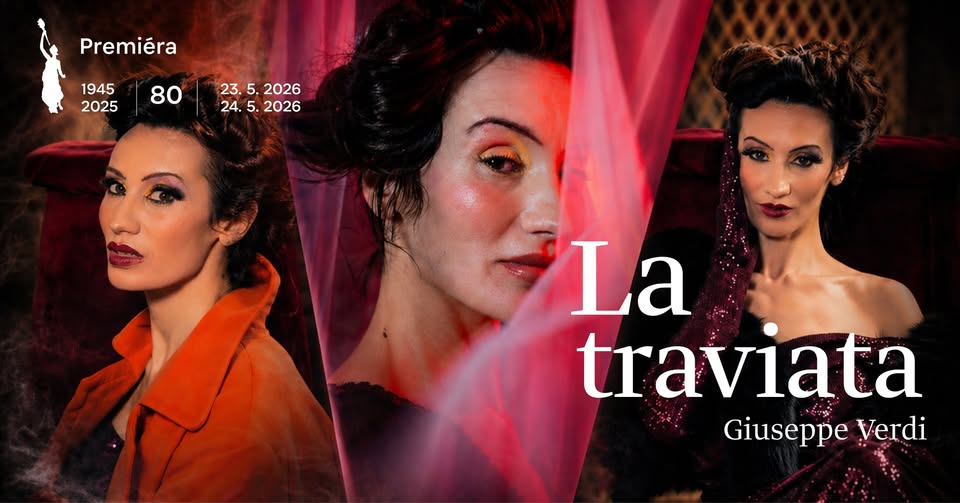
G. Verdi: LA TRAVIATA - PREDPREMIÉRA
G. Verdi: LA TRAVIATA - PREPREMIÉRA
Event by: Národné divadlo Košice
Tickets: Get tickets
Concerts, Theatre
About event
The return of the world's most played opera in a new production directed by Anton Korenči and musically staged by the chief conductor of the NDKE Opera, Petr Valentovič.
The most played opera by the genius Giuseppe Verdi is a sharp critique of the Parisian glitz of the 19th century, in which the glittering world of parties collides with cruel social reality. The protagonist Violetta Valéry, although she is a well-traveled courtesan and the center of attention, in fact remains a tragic outsider. Society seeks her out for fun and for her beauty, but at the same time perceives her as a moral threat that cannot be accepted among "decent" people.
Her personal tragedy culminates in a conflict with her lover Alfredo's father, Giorgio Germont, who embodies cold middle-class hypocrisy. He asks her to give up her only true love in the name of saving the family reputation. Violetta, though scorned by society, shows more nobility and capacity for sacrifice than those who judge her. Her death in seclusion and illness is the result not only of tuberculosis, but also of emotional destruction by a world that prefers external decorum to human feeling.
Giuseppe Verdi was looking for just such a provocative story when he came across the novel La Dame aux Camélias by Alexandre Dumas the Younger. In the spring of 1852, he saw the play The Lady with the Camellias in an adaptation by the author himself at the Théâtre du Vaudeville in Paris. The impression she made on him strengthened his decision to use the story for his next opera; the story gave him the opportunity to formulate his great theme: love defeated by a hypocritical society.
The most played opera by the genius Giuseppe Verdi is a sharp critique of the Parisian glitz of the 19th century, in which the glittering world of parties collides with cruel social reality. The protagonist Violetta Valéry, although she is a well-traveled courtesan and the center of attention, in fact remains a tragic outsider. Society seeks her out for fun and for her beauty, but at the same time perceives her as a moral threat that cannot be accepted among "decent" people.
Her personal tragedy culminates in a conflict with her lover Alfredo's father, Giorgio Germont, who embodies cold middle-class hypocrisy. He asks her to give up her only true love in the name of saving the family reputation. Violetta, though scorned by society, shows more nobility and capacity for sacrifice than those who judge her. Her death in seclusion and illness is the result not only of tuberculosis, but also of emotional destruction by a world that prefers external decorum to human feeling.
Giuseppe Verdi was looking for just such a provocative story when he came across the novel La Dame aux Camélias by Alexandre Dumas the Younger. In the spring of 1852, he saw the play The Lady with the Camellias in an adaptation by the author himself at the Théâtre du Vaudeville in Paris. The impression she made on him strengthened his decision to use the story for his next opera; the story gave him the opportunity to formulate his great theme: love defeated by a hypocritical society.