This event has been ended!
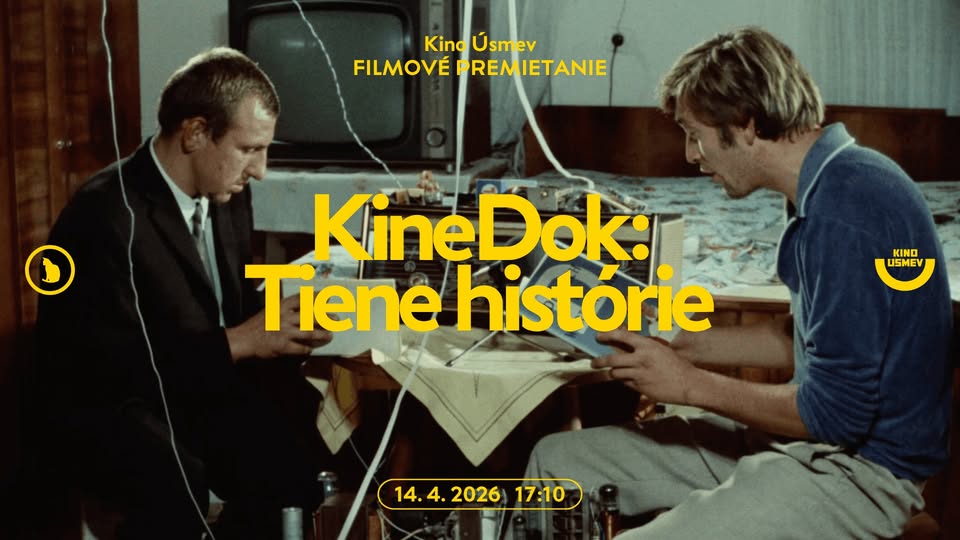
KineDok v Úsmeve: TIENE HISTÓRIE
KineDok in Smile: SHADOWS OF HISTORY
Event by: Kino Úsmev, KineDok SK
Tickets: Get tickets
Discussions and lectures, Films
About event
KineDok SK and Kino Úsmev invite you to the screening of the documentary film
The films are united not only by a reference to a shared regional history, but also by the fact that each of them refers to the heritage of previous generations, whether material or immaterial.
The first film The gifted city raises questions that intersect with the entire band: how we currently approach history, how film can become an accomplice distortions of historical truth; uncovering a dark truth.
The second film Castle Dwellers deals with architectural heritage - the physical, tangible remains of history - and traces the social life of imperial castles rebuilt by the state in socialist Hungary and the fleeting memory of the past after it physically disappeared from the memory of those who witnessed it.
The third film Let Our Voices Be Heard shifts the focus to intangible heritage and explores the now-defunct pirate radio stations that were once established in the Yugoslav countryside and functioned as essential catalysts for popular mobilization.
The final film Hrib's Diaries returns to the theme of tangible heritage: a self-taught peasant opens a museum dedicated to local traditions in his house in the Bukovina countryside. Today we know that the museum did not survive its administrator, who died shortly after the fall of the Ceauşescu regime. The pressures and ambitions brought about by the new capitalist order of the 1990s led to the rapid demise of the museum, along with the liquidation of the plants, factories and film studios left behind by the former regime. more diverse than it seemed from the outside) and the "iron curtain" (with varying degrees of permeability in different countries). The echoes of this past still haunt the present, which has fewer and fewer points of contact with it. We put this band together against the backdrop of a surprising shift in global power dynamics, marked by a growing nostalgia for forms of authoritarianism reconfigured by technological means, as well as the rise of populism and the spread of disinformation fueled by this new era of "platform capitalism." We would like these films to build a possible "soil" for our troubled present, to remind us of our individual and collective resistance and to cultivate our belonging to the common European history. In 1944, on Himmler's order, a would-be documentary film entitled Vodca offers the Jews a city was filmed, which was supposed to serve as evidence of the alleged quality of life of the Jews imprisoned in the Terezín ghetto. Scattered segments and footage from this film, which has never been fully reconstructed, deeply affected Czechoslovakia in the 1960s and remain the subject of interest for researchers trying to uncover the circumstances of its creation.
In 1965, director Vladimír Kressl responded to this disgusting distortion of the tragedy unfolding in Terezín by comparing footage from the original film with sketches of life in the ghetto that they had created former inhabitants of Terezín - many of them were later murdered in Auschwitz. Terezín to various extermination camps. The resulting film is a strong, compact work that invites the viewer to critically examine the authenticity of the images handed down to us from previous historical periods.
The inhabitants of castles / Kastélyok lakói (Judiť Elek, Hungary, 1966, 28 min)
How does the past live in the bones of buildings that have gone through a turbulent history? And what do the youngest inhabitants of today know about the worlds that are still hidden within the walls of castles, so carefully watched in the film Judit Elek? A remarkable feature of this film is the fluid movement of the camera, which floats through several castles of imperial Hungary, which socialist Hungary rebuilt into functional spaces - for example, a nursing home, a residence for artists and an orphanage. While the new regimes still tolerate some of their former owners in their native homes, others are now inhabited by entirely new inhabitants, such as children raised by the state and fed new versions of official history.
Also, the filmmakers' sense of discretion is striking: Elek never meddles in the lives of his charges or tries to simplify the complexities of their experiences. Instead, it listens with the same sympathetic attention to the memories of adults burdened by the past as to the projections of that past by children. they did not "pollute" the strictly controlled radio waves in the Yugoslav countryside. Nevertheless, the people behind these independent radio stations continue to work. Depending on one's point of view, their efforts can be described in different ways: for the socialist state, they are pirate radio stations - unregulated and therefore to be silenced; for their enthusiastic listeners (who sometimes co-produce their programs) they are forms of community radio with a multitude of functions, from social and political criticism to education and the promotion of cultural participation.
Fluently shifting between social commentary (sometimes delivered in verse!), German lessons for future migrant workers and live musical performances, this witty documentary reminds us of our ability to defy systemic adversity, and both as individuals and as a community.
Hrib's Diaries / Letopisețul lui Hrib (Slavomir Popovici, Romania, 1974, 15 min)
At the time when Slavomir Popovici filmed this documentary, his hero was already known thanks to the museum of history and folk art that he founded in his house in the village of Arbor. The self-taught Hrib, a peasant from the northern Romanian Bukovina, was at the same time an eccentric and cosmopolitan personality who was interested both in the life of his rural community and in the life of his neighbors from all over the world. His museum was visited by thousands of tourists every year, and the diary he kept for four decades was published under the title Chronicle of Arbore.
The film follows Hrib's diary entries, especially those that show the friendly and chatty peasant as a constant "translator" between the traditional culture of the village - illustrated by the religious scenes from the Arbore monastery fresco - and the modern, political and relatively cosmopolitan culture, illustrated set. This constant transition between "here" and "there" leads to amusing and significant juxtapositions between certain categories of rural tradition and wisdom and the problems of the modern day.
The films are united not only by a reference to a shared regional history, but also by the fact that each of them refers to the heritage of previous generations, whether material or immaterial.
The first film The gifted city raises questions that intersect with the entire band: how we currently approach history, how film can become an accomplice distortions of historical truth; uncovering a dark truth.
The second film Castle Dwellers deals with architectural heritage - the physical, tangible remains of history - and traces the social life of imperial castles rebuilt by the state in socialist Hungary and the fleeting memory of the past after it physically disappeared from the memory of those who witnessed it.
The third film Let Our Voices Be Heard shifts the focus to intangible heritage and explores the now-defunct pirate radio stations that were once established in the Yugoslav countryside and functioned as essential catalysts for popular mobilization.
The final film Hrib's Diaries returns to the theme of tangible heritage: a self-taught peasant opens a museum dedicated to local traditions in his house in the Bukovina countryside. Today we know that the museum did not survive its administrator, who died shortly after the fall of the Ceauşescu regime. The pressures and ambitions brought about by the new capitalist order of the 1990s led to the rapid demise of the museum, along with the liquidation of the plants, factories and film studios left behind by the former regime. more diverse than it seemed from the outside) and the "iron curtain" (with varying degrees of permeability in different countries). The echoes of this past still haunt the present, which has fewer and fewer points of contact with it. We put this band together against the backdrop of a surprising shift in global power dynamics, marked by a growing nostalgia for forms of authoritarianism reconfigured by technological means, as well as the rise of populism and the spread of disinformation fueled by this new era of "platform capitalism." We would like these films to build a possible "soil" for our troubled present, to remind us of our individual and collective resistance and to cultivate our belonging to the common European history. In 1944, on Himmler's order, a would-be documentary film entitled Vodca offers the Jews a city was filmed, which was supposed to serve as evidence of the alleged quality of life of the Jews imprisoned in the Terezín ghetto. Scattered segments and footage from this film, which has never been fully reconstructed, deeply affected Czechoslovakia in the 1960s and remain the subject of interest for researchers trying to uncover the circumstances of its creation.
In 1965, director Vladimír Kressl responded to this disgusting distortion of the tragedy unfolding in Terezín by comparing footage from the original film with sketches of life in the ghetto that they had created former inhabitants of Terezín - many of them were later murdered in Auschwitz. Terezín to various extermination camps. The resulting film is a strong, compact work that invites the viewer to critically examine the authenticity of the images handed down to us from previous historical periods.
The inhabitants of castles / Kastélyok lakói (Judiť Elek, Hungary, 1966, 28 min)
How does the past live in the bones of buildings that have gone through a turbulent history? And what do the youngest inhabitants of today know about the worlds that are still hidden within the walls of castles, so carefully watched in the film Judit Elek? A remarkable feature of this film is the fluid movement of the camera, which floats through several castles of imperial Hungary, which socialist Hungary rebuilt into functional spaces - for example, a nursing home, a residence for artists and an orphanage. While the new regimes still tolerate some of their former owners in their native homes, others are now inhabited by entirely new inhabitants, such as children raised by the state and fed new versions of official history.
Also, the filmmakers' sense of discretion is striking: Elek never meddles in the lives of his charges or tries to simplify the complexities of their experiences. Instead, it listens with the same sympathetic attention to the memories of adults burdened by the past as to the projections of that past by children. they did not "pollute" the strictly controlled radio waves in the Yugoslav countryside. Nevertheless, the people behind these independent radio stations continue to work. Depending on one's point of view, their efforts can be described in different ways: for the socialist state, they are pirate radio stations - unregulated and therefore to be silenced; for their enthusiastic listeners (who sometimes co-produce their programs) they are forms of community radio with a multitude of functions, from social and political criticism to education and the promotion of cultural participation.
Fluently shifting between social commentary (sometimes delivered in verse!), German lessons for future migrant workers and live musical performances, this witty documentary reminds us of our ability to defy systemic adversity, and both as individuals and as a community.
Hrib's Diaries / Letopisețul lui Hrib (Slavomir Popovici, Romania, 1974, 15 min)
At the time when Slavomir Popovici filmed this documentary, his hero was already known thanks to the museum of history and folk art that he founded in his house in the village of Arbor. The self-taught Hrib, a peasant from the northern Romanian Bukovina, was at the same time an eccentric and cosmopolitan personality who was interested both in the life of his rural community and in the life of his neighbors from all over the world. His museum was visited by thousands of tourists every year, and the diary he kept for four decades was published under the title Chronicle of Arbore.
The film follows Hrib's diary entries, especially those that show the friendly and chatty peasant as a constant "translator" between the traditional culture of the village - illustrated by the religious scenes from the Arbore monastery fresco - and the modern, political and relatively cosmopolitan culture, illustrated set. This constant transition between "here" and "there" leads to amusing and significant juxtapositions between certain categories of rural tradition and wisdom and the problems of the modern day.