This event has been ended!
Komentovaná prohlídka kláštera
Guided tour of the monastery
Event by: Malakim, Gabriel Loci
Location: St. Gabriel catholic church, Praha 5
Tickets: Get tickets
Talks & discussions
About event
Meeting point:
in front of the church of St. Gabriela
A tour of the interiors of the church and monastery of St. Gabriela is accompanied by:
Monica Bubna-Litic
From the legacy of her relative Gabriela Swéerts-Sporck, Monica Bubna-Litic became a promoter and connoisseur of Beuron art, which she has been working on for over 30 years.
Tickets can be purchased
at GoOut – Gabriel Loci by clicking on the ticket link, or on the spot.
Children up to 15 years FREE.
It is colder in the monastery than outside, we recommend warm clothes!
The interior of the monastery and especially the church of St. Gabriela with its unique atmosphere (built in the shape of the letter L) is valued by experts as the oldest and most remarkable example of Beuron art in the world.
The Monastery of St. Gabriela belonged to the female Benedictine order of the Beuron Congregation. It was built for the sisters by the Beuron Benedictines from the Emmaus monastery on the opposite bank of the Vltava, who moved to Prague from Beuron in Germany (hence the name). "style". The built-up area of the monastery is about 5,000 m2.
Since 1891, when the church was dedicated to the Annunciation to the Virgin Mary, services are still held here.
Benedictine nuns (up to 130 sisters) lived in a cloister in the monastery buildings and prayed in a separate choir of the church. The public present during the services sat in the nave of the church.
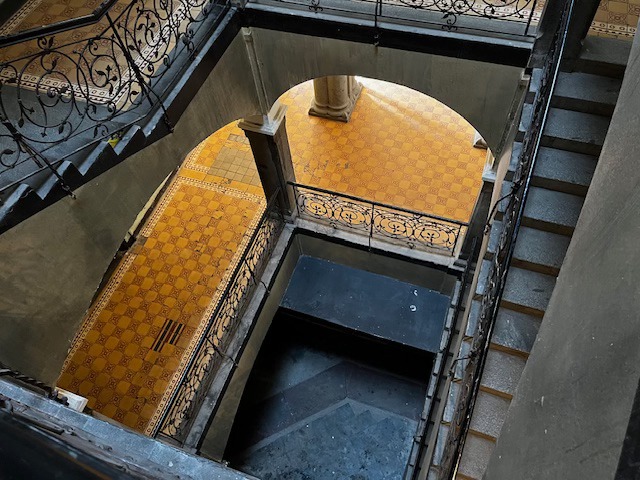
During the guided tour you will visit the normally inaccessible historical halls in the eastern part of the monastery from the years 1888–1891 (spanned choir of sisters, chapter hall, garden of paradise, refectory, library and others places).
Paintings, the realization of which took part in painting educated Benedictine nuns in throughout the monastery, they were mostly whitewashed, and in 2016 some were revealed using small probes.
In the interior of the church, the world-unique Beuron wall paintings are preserved, including the original furniture, which was taken to Austria after the dissolution of the monastery in 1918, and in returned to Prague in 2008.
in front of the church of St. Gabriela
A tour of the interiors of the church and monastery of St. Gabriela is accompanied by:
Monica Bubna-Litic
From the legacy of her relative Gabriela Swéerts-Sporck, Monica Bubna-Litic became a promoter and connoisseur of Beuron art, which she has been working on for over 30 years.
Tickets can be purchased
at GoOut – Gabriel Loci by clicking on the ticket link, or on the spot.
Children up to 15 years FREE.
It is colder in the monastery than outside, we recommend warm clothes!
The interior of the monastery and especially the church of St. Gabriela with its unique atmosphere (built in the shape of the letter L) is valued by experts as the oldest and most remarkable example of Beuron art in the world.
The Monastery of St. Gabriela belonged to the female Benedictine order of the Beuron Congregation. It was built for the sisters by the Beuron Benedictines from the Emmaus monastery on the opposite bank of the Vltava, who moved to Prague from Beuron in Germany (hence the name). "style". The built-up area of the monastery is about 5,000 m2.
Since 1891, when the church was dedicated to the Annunciation to the Virgin Mary, services are still held here.
Benedictine nuns (up to 130 sisters) lived in a cloister in the monastery buildings and prayed in a separate choir of the church. The public present during the services sat in the nave of the church.
During the guided tour you will visit the normally inaccessible historical halls in the eastern part of the monastery from the years 1888–1891 (spanned choir of sisters, chapter hall, garden of paradise, refectory, library and others places).
Paintings, the realization of which took part in painting educated Benedictine nuns in throughout the monastery, they were mostly whitewashed, and in 2016 some were revealed using small probes.
In the interior of the church, the world-unique Beuron wall paintings are preserved, including the original furniture, which was taken to Austria after the dissolution of the monastery in 1918, and in returned to Prague in 2008.