This event has been ended!
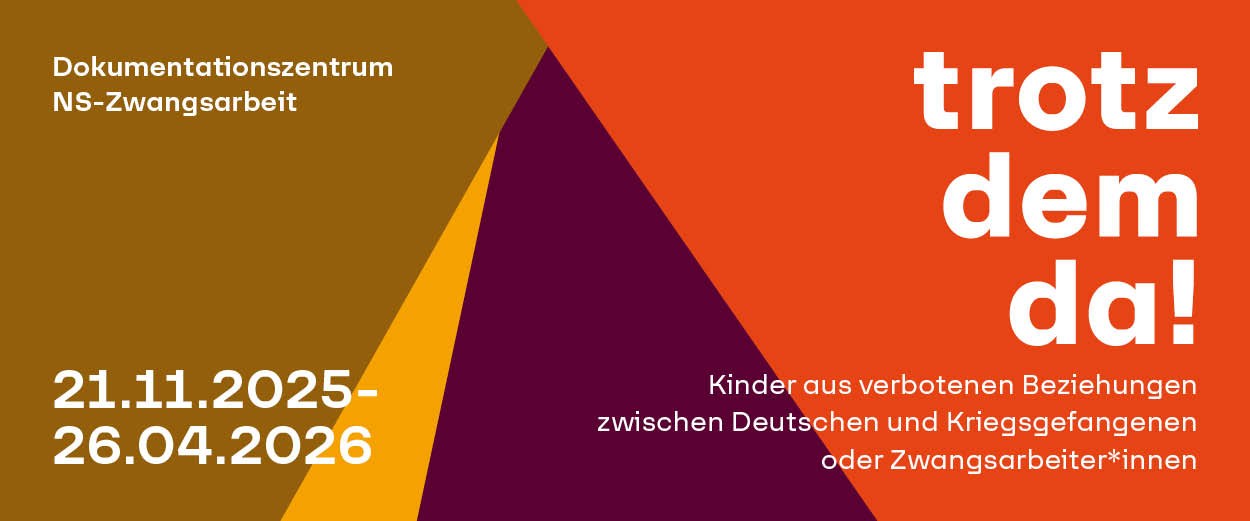
Kurator:innenführung "trotzdem da!"
Curator's tour "still there!"
Event by: Dokumentationszentrum NS-Zwangsarbeit
Location: Nazi Forced Labour Documentation Centre, Britzer Straße 5, Berlin - Bezirk Treptow-Köpenick
About event
Children from forbidden relationships between Germans and prisoners of war or forced laborers
During the time of National Socialism, friendly and intimate contacts between Germans and prisoners of war or forced laborers were undesirable. Some of them were strictly forbidden. But they are “still there”: children who emerge from such relationships. Their stories have long been taboo. They have received little scientific research and are hardly present in the culture of remembrance. This exhibition is dedicated to their life stories.
Forbidden Relationships
During the course of the Second World War, around 13 million prisoners of war and forced laborers were forced to work in the German Reich. Both sides faced high penalties for friendly or intimate contact with Germans. They ranged from prison sentences to being sent to a concentration camp to the death penalty. Nevertheless, children were born from such relationships.
The children
Many children from forbidden relationships did not know for a long time that one of their parents had been a prisoner of war or forced laborer. However, they were often stigmatized as illegitimate children and not in accordance with social norms. They were repeatedly racially insulted and discriminated against. Many searched for decades for an unknown parent - in some cases with success.
During the time of National Socialism, friendly and intimate contacts between Germans and prisoners of war or forced laborers were undesirable. Some of them were strictly forbidden. But they are “still there”: children who emerge from such relationships. Their stories have long been taboo. They have received little scientific research and are hardly present in the culture of remembrance. This exhibition is dedicated to their life stories.
Forbidden Relationships
During the course of the Second World War, around 13 million prisoners of war and forced laborers were forced to work in the German Reich. Both sides faced high penalties for friendly or intimate contact with Germans. They ranged from prison sentences to being sent to a concentration camp to the death penalty. Nevertheless, children were born from such relationships.
The children
Many children from forbidden relationships did not know for a long time that one of their parents had been a prisoner of war or forced laborer. However, they were often stigmatized as illegitimate children and not in accordance with social norms. They were repeatedly racially insulted and discriminated against. Many searched for decades for an unknown parent - in some cases with success.