This event has been ended!
Nationalsozialistischer Städtebau im Großraum Berlin – Vortrag von Prof. Dr. Harald Bodenschatz
National Socialist urban development in the greater Berlin area - lecture by Prof. Dr. Harald Bodenschatz
Event by: Kulturhaus Schwartzsche Villa
Location: Kulturhaus Schwartzsche Villa, Grunewaldstraße 55, Berlin - Bezirk Steglitz-Zehlendorf
About event
Welcome: Dr. Brigitte Hausmann, Department of Culture Steglitz-Zehlendorf Harald Bodenschatz (TU Berlin) presented some of the results of his research. This book is at the same time the conclusion and climax of 25 years of work by Harald Bodenschatz and a changing group of experts on the subject of urban development and dictatorship in various European countries: in the former Soviet Union, in Italy, in Portugal and in Spain.
Urban development was an essential instrument (not only) of the Nazi dictatorship. It served to legitimize rule, to produce approval, to demonstrate strength, efficiency and speed, it underpinned economic, social and cultural development, it conveyed the socio-political program at home and abroad, and it mobilized old and new experts. It was a medium of competition, especially with other European dictatorships, and from the beginning it was a means of preparing and carrying out war. In everyday urban planning, it became clear which social classes were excluded, persecuted, imprisoned and murdered. Even after the fall of the dictatorship, the urban development legacy of this time is still moving today. Urban development and dictatorship is not just a historical topic.
The book advocates a changed view of urban development: behind the monumental scenes, towards the actual priorities of the Nazi leadership, the projects to prepare for and accompany the war, to where not only drawings were carried out, but also construction. Because the view of the big ostentatious projects still dominates, a view that was propagated by the dictatorship itself. This often shows a too narrow understanding of urban development, which tends to exclude the renewal of old towns, the creation of industrial areas, motorways, educational institutions and camps as well as other facilities of the material and social infrastructure. These objects have certainly been examined, but many results remain confined to small circles, in regional and disciplinary circles, in generation circles and also in thematic circles, which make integration into higher-level discourses difficult. The lecture deals with a sub-topic of the book - the conversion of the greater Berlin area into an armaments landscape that was unique in Europe.
Schwartzsche Villa, Großer Salon
Organizer: Department of Culture Steglitz-Zehlendorf
Free entry
Tel. 030 90299 2302
www.berlin.de/kultur-steglitz-zehlendorf
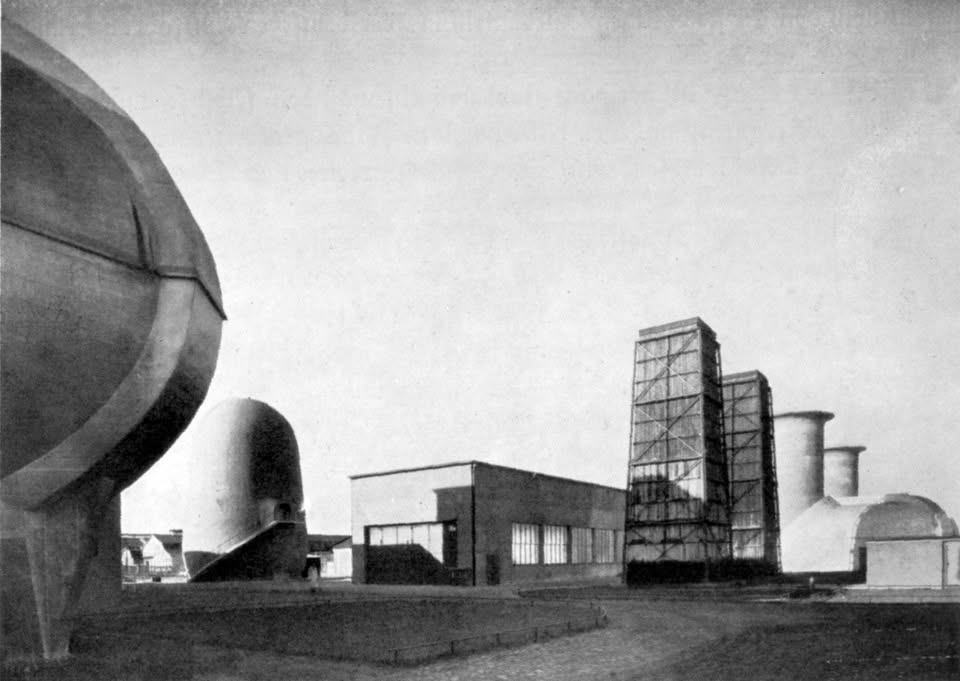
Image: Buildings of the German Aviation Research Institute in Johannisthal. from Heinz Bongartz: Air Power Germany, 1939, photo: M. Krajewsky
Urban development was an essential instrument (not only) of the Nazi dictatorship. It served to legitimize rule, to produce approval, to demonstrate strength, efficiency and speed, it underpinned economic, social and cultural development, it conveyed the socio-political program at home and abroad, and it mobilized old and new experts. It was a medium of competition, especially with other European dictatorships, and from the beginning it was a means of preparing and carrying out war. In everyday urban planning, it became clear which social classes were excluded, persecuted, imprisoned and murdered. Even after the fall of the dictatorship, the urban development legacy of this time is still moving today. Urban development and dictatorship is not just a historical topic.
The book advocates a changed view of urban development: behind the monumental scenes, towards the actual priorities of the Nazi leadership, the projects to prepare for and accompany the war, to where not only drawings were carried out, but also construction. Because the view of the big ostentatious projects still dominates, a view that was propagated by the dictatorship itself. This often shows a too narrow understanding of urban development, which tends to exclude the renewal of old towns, the creation of industrial areas, motorways, educational institutions and camps as well as other facilities of the material and social infrastructure. These objects have certainly been examined, but many results remain confined to small circles, in regional and disciplinary circles, in generation circles and also in thematic circles, which make integration into higher-level discourses difficult. The lecture deals with a sub-topic of the book - the conversion of the greater Berlin area into an armaments landscape that was unique in Europe.
Schwartzsche Villa, Großer Salon
Organizer: Department of Culture Steglitz-Zehlendorf
Free entry
Tel. 030 90299 2302
www.berlin.de/kultur-steglitz-zehlendorf
Image: Buildings of the German Aviation Research Institute in Johannisthal. from Heinz Bongartz: Air Power Germany, 1939, photo: M. Krajewsky