This event has been ended!
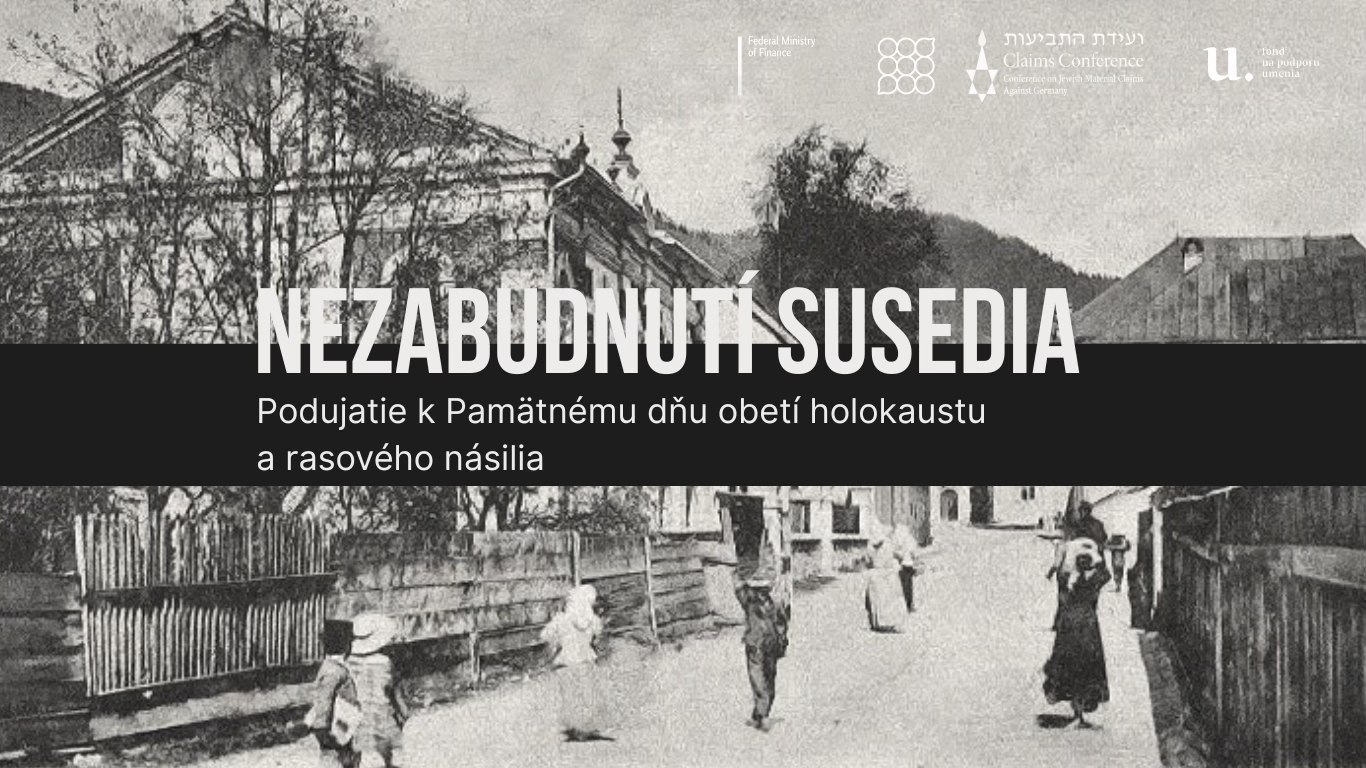
Nezabudnutí susedia: Podujatie k Pamätnému dňu obetí holokaustu a rasového násilia
Understanding Neighbors: The Holocaust Memorial Day event and racial violence
Event by: Akropola Kremnica
Location: Akropola Kremnica, P. Križku 393/10, Kremnica
Tickets: Get tickets
Discussions and lectures
About event
Where: Acropolis Kremnica
When: 17. 9. 2025, 17.00- 20.00
CO: Tryzna (17.00), lecture by historian Anton Hruboň (18.00) and discussion with writer Pál Závada (19.00) Tryzna on the occasion of the Holocaust Day and Racial Violence Day
- Siren, the sound of the bells and the minute of silence
- the speech of Daniel Haas Kianička
- Audio-Monuments of Memorials, Experts and Activists
- Prayer for Rabbin M. B.
(ignition of candles and storage of reverent stones)
- conclusion
18.00 Lecture of historian Anton Hruboň:
The well-known Slovak historian Anton Hruboň will perform in the second part of the program, with a lecture dedicated to the theme of war Slovak Republic and the Holocaust. It will focus on the general context and specific events, many of which also concerned the town of Kremnica (duration of about 45 min.).
Doc. PhDr. Anton Hruboň, PhD. (* 1989) deals with the political history of Slovakia and Central Europe in the 20th century, comparative studies of European fascism, problems of international relations and security and issues of nationalism. He is particularly involved in the issue of the Holocaust. He is the author of eight monographs (eg the Slovak state in us, myth and cult of Jozef Tisa, fascism our Slovak, or popularization nationalisms in us), teaching texts and many studies and articles. He published in Slovakia, the Czech Republic, Poland, Romania, Serbia, Belarus and the Netherlands. He completed study stays in Prague, Rome, Munich and Vienna. He works at Matej Bel University in Banská Bystrica (Faculty of Political Sciences and International Relations - Department of Security Studies). Erinnerung, Verantwortung und Zukunft) within Claims Conference University Partnership Program in Holocaust Studies. " Central European area. He comes from Slovak Komlóš. The roots of his author's testimony are to explore the life and thinking of people, among whom he grew up and maintained the original culture with a specific language - Komlos.
He is the author of a number of novels, novels and theater plays. He made his debut in 1986 with the novel Svo Kulakov. His most famous works include titles until it gets dark, Jadvig's pillow, Milota, descendants of photographer, natural light, day on the market or ash and grass. He is also the author of the translation of Slovak fairy tales into Hungarian. Novel Natural Light became an inspiration for the same film, which in the same year won a silver bear at the Berlinale festival.
The breakthrough work of the Pála Závada is the novel Jadvigin Pillow (1997, Slovak Translation Renáta Deáková/1999/). The story of unfortunate love, based on the First World War and written in the form of diaries, has put the attention of linguists, literary historians, critics and opened up space for new reflections on Central Europeanism. It also became very successful in Slovakia. It can masterfully overlap the social context of intimate life peripetia of the characters. He has received several important literary awards for his works, but his name in Hungary has long been on the Black Charter for his tireless critical civic attitude. It comes from the Slovak Komlóša, a town in the south of Hungary, where ancestors from the territory of today's Slovakia moved in several waves in the past. The roots of his author's testimony are precisely in the exploration of the life and thinking of the people, among whom he grew up and maintained the original culture with a specific language - Komlóština. In order to reveal the living nerve of this garnishing of Slovak, Hungarian and German, he decided to study sociology, which quickly led him to write the first literary works. A year later, his first large novel Jadviga Pareniaja (Jadvigiga Pillow) was published in Hungary, which at the moment ranked him among the most read and highly rated authors of contemporary Hungarian literature. The breakthrough work was published in Slovakia in 1999 in an excellent translation Renáta Deáková and the local reading audience showed an unprecedented interest. The story of unfortunate love, based on the First World War and written in the form of diaries, has put the attention of our linguists, literary historians, critics and opened up space for new reflections on Central Europeanism. At the same time, he became the basis of his novel trilogy, complemented by the works of Milota (2002) and the descendants of the photographer (2004, Slovak translation Renáta Deáková was published in 2010). The novel was also an inspiration for the same film, which in the same year won the silver bear at the Berlinale festival. In the book, the author captures the period before the Second World War, during it and just after it and confirms his masterpiece to overlap the social context of intimate life peripetia of the characters. She builds the ideological base again in the Slovak Komlóša, but it is situated in the wider region bounded by the then territorial and political organization of Central Europe. In 2024, its translation also published the novel Egy Fričia Nap (day on the market). In it, the defect is diverting from Komlóš identity, but through the story taking place in the fictional Hungarian village of Kunmadaras, it continues to cross the historical events after World War II, approaching the motives of those who committed Jewish pogro after returning from concentration camps. Pál Závada is the author of nearly twenty novels, so far the last are Hajó and Ködben (ship in the fog), Wanderer, Apfelbaum and Pernye és Fű (Popol and Grass). In addition to the novels, he also wrote theatrical plays about the crisis periods of the 20th century. He translated Slovak fairy tales to Hungarian, which were published in 2010 by a book entitled 33 Szlovák Népmese (33 Slovak folk fairy tales). He has received several major literary awards for his works, but for his tireless critical civic attitude he has long been on the black list. Federal Minister of Finance
When: 17. 9. 2025, 17.00- 20.00
CO: Tryzna (17.00), lecture by historian Anton Hruboň (18.00) and discussion with writer Pál Závada (19.00) Tryzna on the occasion of the Holocaust Day and Racial Violence Day
- Siren, the sound of the bells and the minute of silence
- the speech of Daniel Haas Kianička
- Audio-Monuments of Memorials, Experts and Activists
- Prayer for Rabbin M. B.
(ignition of candles and storage of reverent stones)
- conclusion
18.00 Lecture of historian Anton Hruboň:
The well-known Slovak historian Anton Hruboň will perform in the second part of the program, with a lecture dedicated to the theme of war Slovak Republic and the Holocaust. It will focus on the general context and specific events, many of which also concerned the town of Kremnica (duration of about 45 min.).
Doc. PhDr. Anton Hruboň, PhD. (* 1989) deals with the political history of Slovakia and Central Europe in the 20th century, comparative studies of European fascism, problems of international relations and security and issues of nationalism. He is particularly involved in the issue of the Holocaust. He is the author of eight monographs (eg the Slovak state in us, myth and cult of Jozef Tisa, fascism our Slovak, or popularization nationalisms in us), teaching texts and many studies and articles. He published in Slovakia, the Czech Republic, Poland, Romania, Serbia, Belarus and the Netherlands. He completed study stays in Prague, Rome, Munich and Vienna. He works at Matej Bel University in Banská Bystrica (Faculty of Political Sciences and International Relations - Department of Security Studies). Erinnerung, Verantwortung und Zukunft) within Claims Conference University Partnership Program in Holocaust Studies. " Central European area. He comes from Slovak Komlóš. The roots of his author's testimony are to explore the life and thinking of people, among whom he grew up and maintained the original culture with a specific language - Komlos.
He is the author of a number of novels, novels and theater plays. He made his debut in 1986 with the novel Svo Kulakov. His most famous works include titles until it gets dark, Jadvig's pillow, Milota, descendants of photographer, natural light, day on the market or ash and grass. He is also the author of the translation of Slovak fairy tales into Hungarian. Novel Natural Light became an inspiration for the same film, which in the same year won a silver bear at the Berlinale festival.
The breakthrough work of the Pála Závada is the novel Jadvigin Pillow (1997, Slovak Translation Renáta Deáková/1999/). The story of unfortunate love, based on the First World War and written in the form of diaries, has put the attention of linguists, literary historians, critics and opened up space for new reflections on Central Europeanism. It also became very successful in Slovakia. It can masterfully overlap the social context of intimate life peripetia of the characters. He has received several important literary awards for his works, but his name in Hungary has long been on the Black Charter for his tireless critical civic attitude. It comes from the Slovak Komlóša, a town in the south of Hungary, where ancestors from the territory of today's Slovakia moved in several waves in the past. The roots of his author's testimony are precisely in the exploration of the life and thinking of the people, among whom he grew up and maintained the original culture with a specific language - Komlóština. In order to reveal the living nerve of this garnishing of Slovak, Hungarian and German, he decided to study sociology, which quickly led him to write the first literary works. A year later, his first large novel Jadviga Pareniaja (Jadvigiga Pillow) was published in Hungary, which at the moment ranked him among the most read and highly rated authors of contemporary Hungarian literature. The breakthrough work was published in Slovakia in 1999 in an excellent translation Renáta Deáková and the local reading audience showed an unprecedented interest. The story of unfortunate love, based on the First World War and written in the form of diaries, has put the attention of our linguists, literary historians, critics and opened up space for new reflections on Central Europeanism. At the same time, he became the basis of his novel trilogy, complemented by the works of Milota (2002) and the descendants of the photographer (2004, Slovak translation Renáta Deáková was published in 2010). The novel was also an inspiration for the same film, which in the same year won the silver bear at the Berlinale festival. In the book, the author captures the period before the Second World War, during it and just after it and confirms his masterpiece to overlap the social context of intimate life peripetia of the characters. She builds the ideological base again in the Slovak Komlóša, but it is situated in the wider region bounded by the then territorial and political organization of Central Europe. In 2024, its translation also published the novel Egy Fričia Nap (day on the market). In it, the defect is diverting from Komlóš identity, but through the story taking place in the fictional Hungarian village of Kunmadaras, it continues to cross the historical events after World War II, approaching the motives of those who committed Jewish pogro after returning from concentration camps. Pál Závada is the author of nearly twenty novels, so far the last are Hajó and Ködben (ship in the fog), Wanderer, Apfelbaum and Pernye és Fű (Popol and Grass). In addition to the novels, he also wrote theatrical plays about the crisis periods of the 20th century. He translated Slovak fairy tales to Hungarian, which were published in 2010 by a book entitled 33 Szlovák Népmese (33 Slovak folk fairy tales). He has received several major literary awards for his works, but for his tireless critical civic attitude he has long been on the black list. Federal Minister of Finance