This event has been ended!
NOVÝ VIETOR Z VÝCHODU
NEW WIND FROM THE EAST
Event by: Filmový kabinet
Location: Ministerstvo práce, sociálnych vecí a rodiny Slovenskej republiky, Špitálska 4, Bratislava - Staré Mesto
Tickets: Get tickets
Discussions and lectures
About event
When the aesthetic revolution of the new waves rolls through the iron curtain, it will find a prepared terrain full of talented creators with professional training, practical experience and the desire to reflect the world in an original way despite the supervision of the communist power. Their works, sensitized by the innovations of the author's film and the local cultural tradition, turn with original poetics to the reflection of totalitarian regimes with an aspect of national history and current social reality. In the USSR, Yugoslavia and Hungary, they are trying to free the film from serving the party in favor of a personal statement and to oppose the truth of the artistic imagination to the lie of propaganda.
The lecture will be combined with the screening of the film Hopeless (1966, Miklós Jancsó).
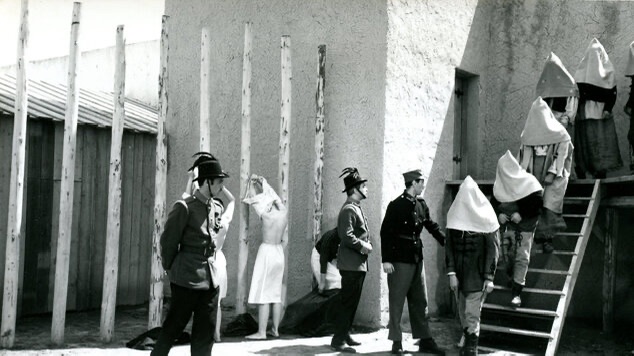
Hungarian director Miklós Jancsó became famous for his characteristic film style, benefiting from precisely composed slow and long shots. shots with complex choreography of the characters and the camera. With the film Beznádejní, Hungarian cinematography was put in the crosshairs of the international festival audience. In a story inspired by the real historical events of the revolutionary year 1848, he used allusions and allegories to portray the complexity of historical events, the mechanisms of violence, revolution and power manipulation, which metaphorically resonated with the contemporary situation after the suppression of the Hungarian uprising of 1956.
The lecture will be combined with the screening of the film Hopeless (1966, Miklós Jancsó).
Hungarian director Miklós Jancsó became famous for his characteristic film style, benefiting from precisely composed slow and long shots. shots with complex choreography of the characters and the camera. With the film Beznádejní, Hungarian cinematography was put in the crosshairs of the international festival audience. In a story inspired by the real historical events of the revolutionary year 1848, he used allusions and allegories to portray the complexity of historical events, the mechanisms of violence, revolution and power manipulation, which metaphorically resonated with the contemporary situation after the suppression of the Hungarian uprising of 1956.