This event has been ended!
„Ohne den Sieg der Wehrmacht kein Auschwitz – Der deutsche Überfall auf Polen war der Auftakt zum...
"Without the victory of the Wehrmacht no Auschwitz - the German attack on Poland was the prelude to ...
Event by: Pilecki-Institut
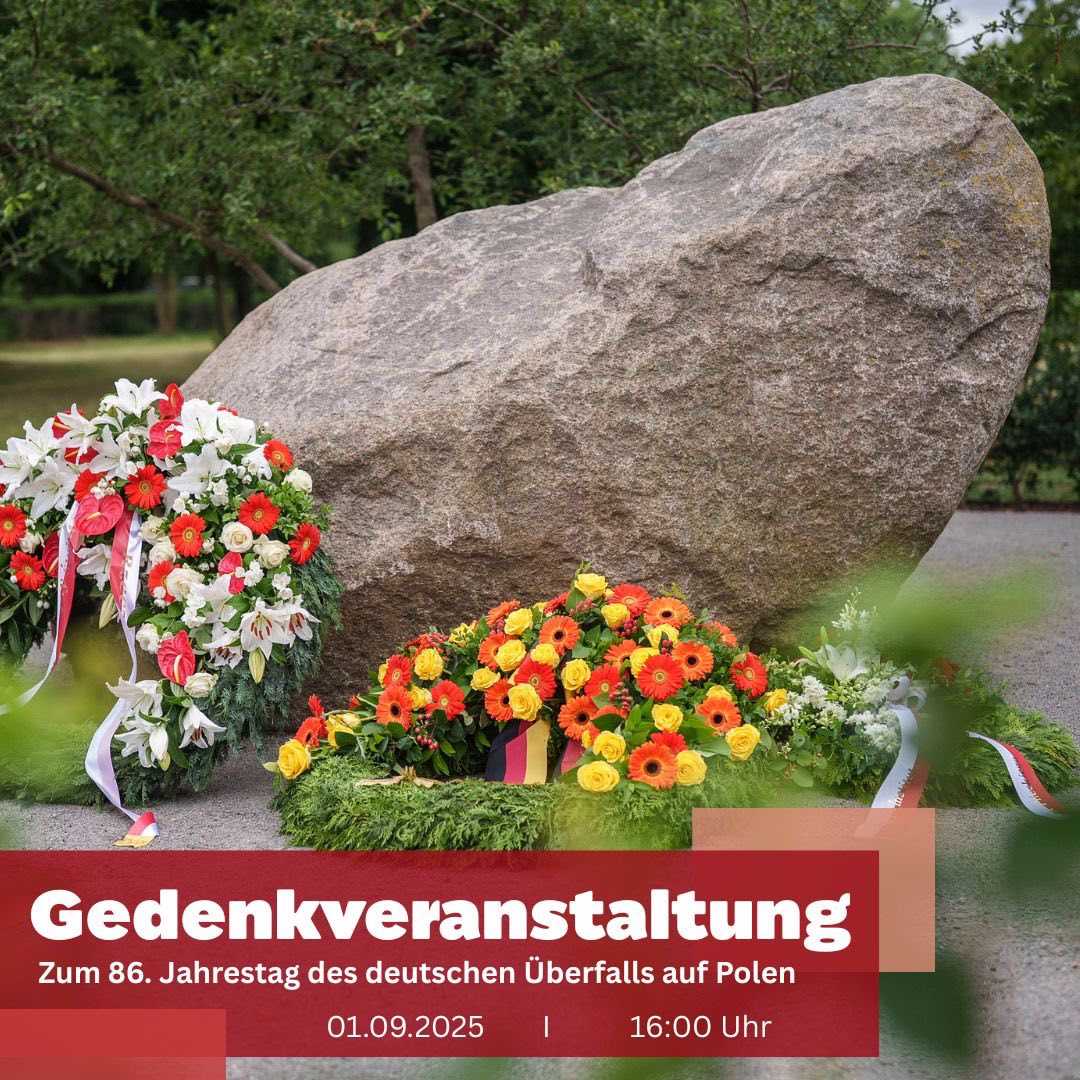
Location: Pilecki-Institut, Pariser Platz 4A, Berlin - Mitte
About event
On September 1, 1939, National Socialist Germany attacked Poland. This started the Second World War.
Lecture and panel discussion (01.09, 6 p.m. in the Pilecki Institute)
"Without the victory of the Wehrmacht no Auschwitz-the German attack on Poland was the start of the war" with PD Dr. Colonel John Zimmermann, Prof. Dr. Martin Aust (University of Bonn) and Prof. Jerzy Piotr Kochanowski (University of Warsaw)
As part of this year's memorial event on the 86th anniversary of the beginning of the war, organized by the News of the Republic of Poland in Berlin, the Federal Foreign Office, the German Poland Institute and the German-Polish House, the Pilecki Institute participates with one Program point:
Program overview
4:00 p.m.-5:15 p.m.: Talking and lying down at the temporary “Memorial for Poland 1939 to 1945” (Heinrich-von-Gagern-Straße, Berlin) in the presence of a military guard of the Polish Army
6:00 p.m. Pilecki-Institut at Pariser Platz 4a, then Get-Together
(this evening part is organized together by the German-Polish House and the Pilecki Institute.)
Speakers of the evening
Prof. Dr. Martin Aust (University of Bonn), Eastern European History
Publications etc. Germany's war of extermination and occupation in Eastern Europe 1939–1945 (2021), the Russian Revolution. From the Tsarist Empire to the Soviet empire (2017).
PD Dr. Colonel John Zimmermann (Center for Military History and Social Sciences of the Bundeswehr, Potsdam), military history until 1945
has been heading the research area "Military History until 1945" at the ZMSBW since 2019. Research focus: the military and its Germans. Military identity in Germany 1870–1970.
Prof. Jerzy Piotr Kochanowski (University of Warsaw), contemporary history of Poland and Eastern Europe research focus: Poland in World War II, German-Polish relationships, social history of East Central Europe in the 20th century.
on Sunday, August 31, 2025, the writer and publishers Dorota Danielewicz offers a city tour to places in Berlin that make Polish traces of the Second World War visible. Start: 12:00 p.m..
In addition, the audio guide "Berlinski Tour" enables 47 stations on the Polish city history of Berlin. The project was expanded in 2024 on the occasion of the 50th anniversary of the German-Polish Society of Berlin in cooperation with the German-Polish House.
Lecture and panel discussion (01.09, 6 p.m. in the Pilecki Institute)
"Without the victory of the Wehrmacht no Auschwitz-the German attack on Poland was the start of the war" with PD Dr. Colonel John Zimmermann, Prof. Dr. Martin Aust (University of Bonn) and Prof. Jerzy Piotr Kochanowski (University of Warsaw)
As part of this year's memorial event on the 86th anniversary of the beginning of the war, organized by the News of the Republic of Poland in Berlin, the Federal Foreign Office, the German Poland Institute and the German-Polish House, the Pilecki Institute participates with one Program point:
Program overview
4:00 p.m.-5:15 p.m.: Talking and lying down at the temporary “Memorial for Poland 1939 to 1945” (Heinrich-von-Gagern-Straße, Berlin) in the presence of a military guard of the Polish Army
6:00 p.m. Pilecki-Institut at Pariser Platz 4a, then Get-Together
(this evening part is organized together by the German-Polish House and the Pilecki Institute.)
Speakers of the evening
Prof. Dr. Martin Aust (University of Bonn), Eastern European History
Publications etc. Germany's war of extermination and occupation in Eastern Europe 1939–1945 (2021), the Russian Revolution. From the Tsarist Empire to the Soviet empire (2017).
PD Dr. Colonel John Zimmermann (Center for Military History and Social Sciences of the Bundeswehr, Potsdam), military history until 1945
has been heading the research area "Military History until 1945" at the ZMSBW since 2019. Research focus: the military and its Germans. Military identity in Germany 1870–1970.
Prof. Jerzy Piotr Kochanowski (University of Warsaw), contemporary history of Poland and Eastern Europe research focus: Poland in World War II, German-Polish relationships, social history of East Central Europe in the 20th century.
on Sunday, August 31, 2025, the writer and publishers Dorota Danielewicz offers a city tour to places in Berlin that make Polish traces of the Second World War visible. Start: 12:00 p.m..
In addition, the audio guide "Berlinski Tour" enables 47 stations on the Polish city history of Berlin. The project was expanded in 2024 on the occasion of the 50th anniversary of the German-Polish Society of Berlin in cooperation with the German-Polish House.