This event has been ended!
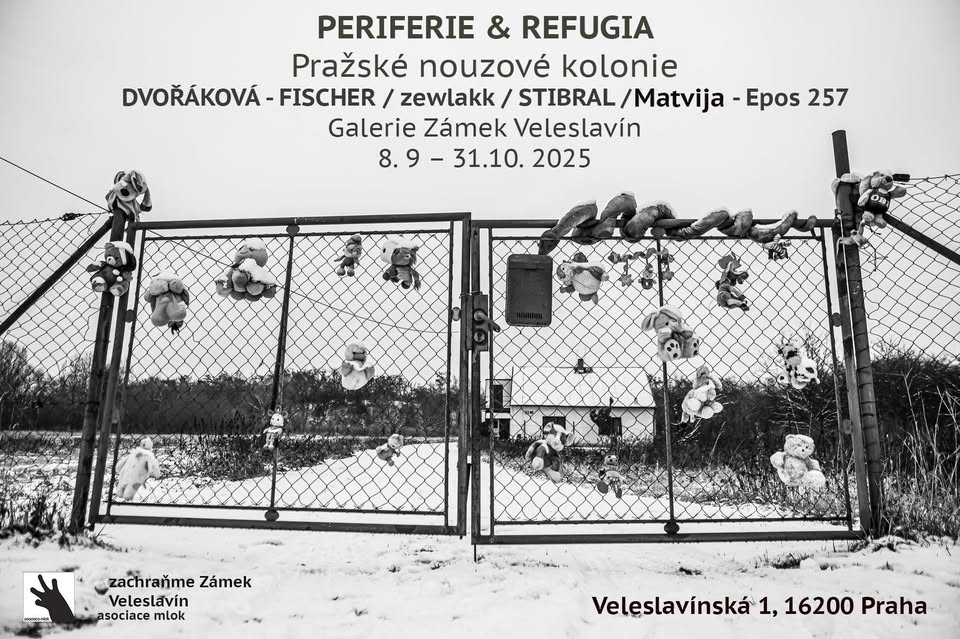
Periferie & Refugia
Periphery & refuge
Event by: Veronika Zapletalova, Milos Vojtechovsky
Location: Chateau Veleslavín, Veleslavínská 54, Praha 6
Discussions and lectures
About event
The Periphery & Refugia exhibition is about (emergency) dining, housing and lived and hidden corners of Prague. Documentary photographs of Alena Dvořáková/Viktor Fischer and Petr Stibral from the emergency colony in Slatiny, series of roads and clippings around the metropolis, including abandoned and temporarily inhabited places around Veleslavín Petr Zewlak Vrabec and video documentary about the story of Marek Matvije. from the surroundings of Slatin)
Workers' colonies and poor refugia - perhaps the unwilling islands of urban vegetation, are often considered to be unwanted, sometimes even disturbing element in the body of the city. It was not always the case: between the wars of emergency and working colonies in Prague, they formed a relatively large part of the housing stock. Even in the 1950s, the social geographer and Africanist Ctibor Votrubec in Prague counted 61 poor settlements and colonies. Temporary legally and illegally modified territories for housing are part of the demography of Prague, and most large European cities. There are at least 2000 people in the capital today, the capacity of asylum houses and hostels is not enough, and who is in need, has little hope to find available housing. Some move to the countryside, others are looking for shelter in refuge, temporary mushrooms, camps, improvised hiding without electricity, hygiene. You will find such places when you go to abandoned industrial regions, according to streams, railway lines.
Before 1938, the colonies on Slatiny on the border of Michle, Záběhlice and Vršovice were about two and a half thousand inhabitants. There were workers from the nearby Michelská plynárny and former legionnaires. Slatiny had civic amenities, sports, cultural and political associations, their tradesmen, craftsmen, merchants, a prayer room and several pubs. In the age of 50, some Slatiňáci took advantage of the offer to move to prefabs. The devastation of the place continued after 1989: the rural atmosphere disappeared, poetic and green corners were occupied by the operators of the nigginal car repair shops and scrapyards, the junction, burnt houses and desolate gardens, where they lived homeless. Slatiny today is the second largest area, which is to be redeemed according to the Metropolitan Plan, or transformed into another satellite neighborhood for movable.
Emergency and workers' colonies are endangered habitats, but have not disappeared quite. Rather, they were transformed into hiding places on steep slopes and according to wetlands where developers are afraid to do business. These are places where our poorest and often anonymous neighbors survive. Their architecture looks more nasty than the self -built houses of old workers' colonies.
Periphery & Refugia exhibition follows the exhibition Slatina in the photo in the gallery of the cornea in 2023.
will be played by Michael Delia and Comp. and from 7 pm
Mineral band that plays "ritual folk" and "Devotional ambient".
Accompanying program:
18. September from 7 pm: Presentation of the book Disappeared Prague-Fuel Colony Martin Dolejský and David Platil. brickworks and caves. David Platil (1993) is a sociologist and social anthropologist and has long been involved in urbanism and public space. Since 2020 he has gathered information about emergency colonies and founded the website Bahno Prague. Veleslavín
The date will be specified Href = "https://www.facebook.com/zamekveleslavin/"> https://www.facebook.com/zamekveleslavin/
Periphery & Refugia is About (Emergency). Documentary Photographs by Alena Dvořáková / Viktor Fischer and Petr Stibral from the Workers Colony on Slatiny, and Series of Paths and Shelters Around the Metropolis, Including ABandoned and Temporarily Inhabited Locations Around The City's Inhabitants. Workers' Colonies and Poor People's Refuges - For Example, Untamed Islands of Urban Vegetation - Are Offten Considered an Unwanted, Sometimes Even Disruptive Element in the Body of A Big Cities. IT WASN'T ALWAYS LIKE THAT: BETWEEN The Wars, Emergency and Worker Colonies in Prague Made Up and relative Large Part of the Housing Stock. AS LATE as the 1950s, Social Geography and Africanist Ctibor Votrubec Counged 61 Poor Settlements and Colonies in Prague. Legally and Illlegally Adapted Areas for Temporary Housing Are Part of the Demographics of Prague, as Well as Most Large European Cities. There are at the Least 2,000 Homeless People in the Capital Today SOME OF THEM ARE MOVING TO THE COUNTRYSIDE, OTHERS SEEKING SHELTER IN REFUGES, Temporary Shelters, Camps, In Improvised Spots without Electricity or Sanitation. You Will Come Across Such Places If You Go to Abandoned Industrial Areas, Along Streams, Or Along Railway Lines.
Workers' colonies and poor refugia - perhaps the unwilling islands of urban vegetation, are often considered to be unwanted, sometimes even disturbing element in the body of the city. It was not always the case: between the wars of emergency and working colonies in Prague, they formed a relatively large part of the housing stock. Even in the 1950s, the social geographer and Africanist Ctibor Votrubec in Prague counted 61 poor settlements and colonies. Temporary legally and illegally modified territories for housing are part of the demography of Prague, and most large European cities. There are at least 2000 people in the capital today, the capacity of asylum houses and hostels is not enough, and who is in need, has little hope to find available housing. Some move to the countryside, others are looking for shelter in refuge, temporary mushrooms, camps, improvised hiding without electricity, hygiene. You will find such places when you go to abandoned industrial regions, according to streams, railway lines.
Before 1938, the colonies on Slatiny on the border of Michle, Záběhlice and Vršovice were about two and a half thousand inhabitants. There were workers from the nearby Michelská plynárny and former legionnaires. Slatiny had civic amenities, sports, cultural and political associations, their tradesmen, craftsmen, merchants, a prayer room and several pubs. In the age of 50, some Slatiňáci took advantage of the offer to move to prefabs. The devastation of the place continued after 1989: the rural atmosphere disappeared, poetic and green corners were occupied by the operators of the nigginal car repair shops and scrapyards, the junction, burnt houses and desolate gardens, where they lived homeless. Slatiny today is the second largest area, which is to be redeemed according to the Metropolitan Plan, or transformed into another satellite neighborhood for movable.
Emergency and workers' colonies are endangered habitats, but have not disappeared quite. Rather, they were transformed into hiding places on steep slopes and according to wetlands where developers are afraid to do business. These are places where our poorest and often anonymous neighbors survive. Their architecture looks more nasty than the self -built houses of old workers' colonies.
Periphery & Refugia exhibition follows the exhibition Slatina in the photo in the gallery of the cornea in 2023.
will be played by Michael Delia and Comp. and from 7 pm
Mineral band that plays "ritual folk" and "Devotional ambient".
Accompanying program:
18. September from 7 pm: Presentation of the book Disappeared Prague-Fuel Colony Martin Dolejský and David Platil. brickworks and caves. David Platil (1993) is a sociologist and social anthropologist and has long been involved in urbanism and public space. Since 2020 he has gathered information about emergency colonies and founded the website Bahno Prague. Veleslavín
The date will be specified Href = "https://www.facebook.com/zamekveleslavin/"> https://www.facebook.com/zamekveleslavin/
Periphery & Refugia is About (Emergency). Documentary Photographs by Alena Dvořáková / Viktor Fischer and Petr Stibral from the Workers Colony on Slatiny, and Series of Paths and Shelters Around the Metropolis, Including ABandoned and Temporarily Inhabited Locations Around The City's Inhabitants. Workers' Colonies and Poor People's Refuges - For Example, Untamed Islands of Urban Vegetation - Are Offten Considered an Unwanted, Sometimes Even Disruptive Element in the Body of A Big Cities. IT WASN'T ALWAYS LIKE THAT: BETWEEN The Wars, Emergency and Worker Colonies in Prague Made Up and relative Large Part of the Housing Stock. AS LATE as the 1950s, Social Geography and Africanist Ctibor Votrubec Counged 61 Poor Settlements and Colonies in Prague. Legally and Illlegally Adapted Areas for Temporary Housing Are Part of the Demographics of Prague, as Well as Most Large European Cities. There are at the Least 2,000 Homeless People in the Capital Today SOME OF THEM ARE MOVING TO THE COUNTRYSIDE, OTHERS SEEKING SHELTER IN REFUGES, Temporary Shelters, Camps, In Improvised Spots without Electricity or Sanitation. You Will Come Across Such Places If You Go to Abandoned Industrial Areas, Along Streams, Or Along Railway Lines.