This event has been ended!
Přednáška Maja a Reuben Fowkes: Oil Rocks: A Utopia on Stilts in the Caspian Sea
Lecture Maja and Reuben Fowkes: Oil Rocks: A Utopia on Stilts in the Caspian Sea
Event by: Akademie výtvarných umění v Praze
Location: 22, U Akademie 4, U Akademie 4, Praha 7
Discussions and lectures
About event
/// scroll down for English Reuben Fowkes
🗓️ 18 February 2025 at 6 pm
📍aula on the main building of the Avu
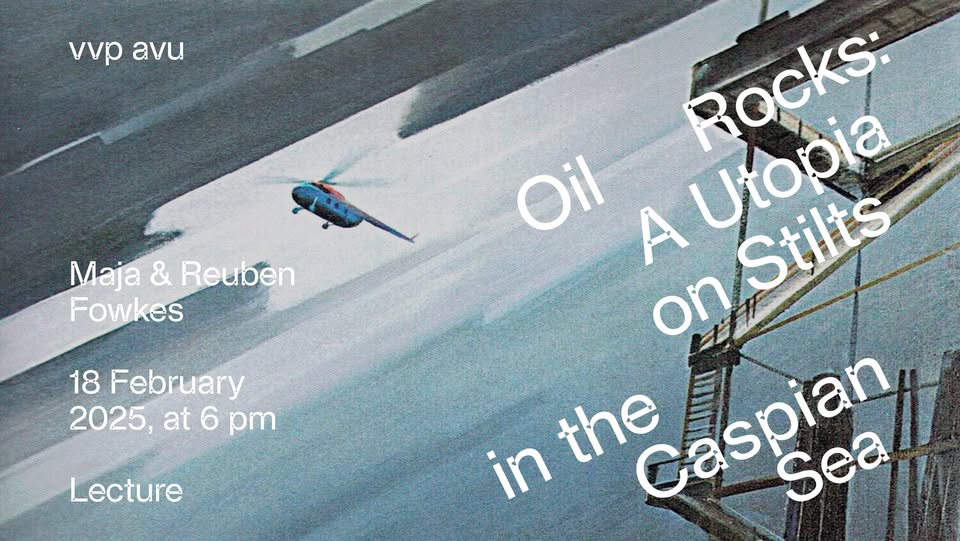
In the middle of the Caspian Sea, a new chapter opened in the history of hydrocarbons in Azerbaijan, which was supposed to shape the oil ideas of the socialist anthropocene. For Soviet pioneers of the oil industry at sea was built a utopian city on stilts, equipped with hostels, technical school, libraries, shops, hospital, cinema, gardens and lemonade production. Oil rocks were a magnet for artists who took a strenuous journey in the 1950s to witness the heroism of oil workers in their struggle with the elements in the mining of Caspian "black gold". This presentation deals with the depiction of oil rocks in socialist art as an exception to the general invisibility of the oil industry in modern literature and art. How can we explain the pardon of oil boreholes in Soviet Azerbaijan art and what does it tell us about the oil imagination of socialist anthropocene? What was the importance of the shift from the ethos "the expression of the country to serve socialism", which was characteristic of socialist realistic "oil" images, more differentiated attitudes towards nature that can be ascertained in strict style from the end of the 50s and early 60s? How did artists deal with social and environmental consequences of unmistakable dependence of industrial modernity on hydrocarbons? . They deal with the history of the art of the twentieth century in the period of socialism from Eastern Europe to Central Asia and contemporary artistic engagement in the fields of ecology, climate and anthropocene. Their publications include Art and Climate Change (Thames & Hudson, 2022), Central and East European Art Since 1950 (Thames & Hudson, 2020), a special issue of Third text that Reuben has hosted and dedicated to "currently existing art worlds" (2018), and Majina monograph The Green Bloc: (CEU Press, 2015). Maja is the main researcher of the European Research Council (ERC) and the British research and innovation grant (Kri) Consolidator Grant on the Socialist Anthropocene in the Visual Arts (Sava) (2022-27). Their teaching on UCL History of Art includes Art History for a Climate Emergency and Contemporary Art and Climate Change and is also involved in the Anthropocene Studies interdisciplinary module.
Their curatorial exhibitions include "Colliding Epistemes" in Bozar Brussels (2022) and "Potential Agrarianisms" in Kunsthalle Bratislava (2021) and led the Getty Foundation Confontations: Sessions in East European Art History (2018-22). They publish abundantly in reviewed magazines, edited books, exhibition catalogs and platforms for contemporary art, including Art Monthla, Texte Zur Kunst and Springerin, and co -organize Sava Left to Be desired.
Br/>
///
The Research Center Avu Invites You To the Lecture:
Br/> Maja and Reuben Fowkes
🗓️ 18 February 2025 at 6 PM and the Hero of Socialist Labor Struck Oil in the midst of the Caspian Sea and New Chapter Opened in the History of Hydrocarbon Exploitation in Azerbaijan That Was to Shape The Petroleum Imaginary of the Socialist Anthropocene. And Utopian City On Stilts Was Built for the Soviet Pioneers of the Offshore Oil Industry, Equipped with Dormiters, and Technical School, Libraries, Shops, and Hospital, Cinema, Gardens and a Lemonade Factory. Oil Rocks Was and Magnet for Artists Who in the 1950s Made The Streno Journey to Witness the Heroism of Oil Workers in Their Battle with the Elements to Extract Caspian "Black Gold". This presentation considers of the Representations of Oil Rocks in Socialist Art As An Exception to the General Invisibility of the Petroleum Industry in Modern Literature and Art. How Can We Account for the Prominence of Oil Drilling Imagery in Soviet Azerbijani Art and What Does It Tell US About the Petroleum Imaginary of the Socialist Anthropone? What is the Significance of the Shift from the Ethos of the "Commanding the Earth to the Socialism" Characteristic of the Socialist Realist "Oil" Paints to the Nuanced Attitudes to Nature Detectable in the Sever Style Works of the Late 1950s and Early 1960s? How HAVE ARTISTS ADDDRESSED The Social and Environmental Consequences of Industrial Modernity's Invisible Dependence on Hydrocarbons?
At the Institute of Advanced Studies, University College London. The Work on the Twentieth-Century Art History Of Their publications included art and climate Change (Thames & Hudson, 2022), Central and East European Art Since 1950 (Thames & Hudson, 2020), and Special Issue of Third Text Guest-Edited by Reuben on the “Actuals existing Artworlds of Socialism” (2018) and Maja's Monograph the Green Bloc: Neo-Avant-Garde Art and Ecology Under Socialism (CEU Press, 2015). Maja is Principal Investigator of the European Research Council (ERC) and UK Research and Innovation (KRI) Consolidator Grant Project on the Socialist Anthropocene in the Visual Arts (Sava) (2022-27). Their teaching at ucl History of Art Includes Modules on Art History for a Climate Emergency and Contemporary Art and Climate Change Their Curated Exhibitions Include “Colliding Episters” at Bozar Brussels (2022) and “Potential Agrarianisms” at Kunsthale Bratislava (2021), and They Led The Getty Foundation Project Confontations: Sessions in East European Art History (2018-22). They Publish Extensively in Peer-Reviewed Journals, Edited Books, Exhibition Catalogues and On Contemporary Art Platforms Including Art Monthly, Texte Zur Kunst and Springerin, and They Co-Host The Sava Podcast Left to Be desired.
The Lecture Will Be in English
🗓️ 18 February 2025 at 6 pm
📍aula on the main building of the Avu
In the middle of the Caspian Sea, a new chapter opened in the history of hydrocarbons in Azerbaijan, which was supposed to shape the oil ideas of the socialist anthropocene. For Soviet pioneers of the oil industry at sea was built a utopian city on stilts, equipped with hostels, technical school, libraries, shops, hospital, cinema, gardens and lemonade production. Oil rocks were a magnet for artists who took a strenuous journey in the 1950s to witness the heroism of oil workers in their struggle with the elements in the mining of Caspian "black gold". This presentation deals with the depiction of oil rocks in socialist art as an exception to the general invisibility of the oil industry in modern literature and art. How can we explain the pardon of oil boreholes in Soviet Azerbaijan art and what does it tell us about the oil imagination of socialist anthropocene? What was the importance of the shift from the ethos "the expression of the country to serve socialism", which was characteristic of socialist realistic "oil" images, more differentiated attitudes towards nature that can be ascertained in strict style from the end of the 50s and early 60s? How did artists deal with social and environmental consequences of unmistakable dependence of industrial modernity on hydrocarbons? . They deal with the history of the art of the twentieth century in the period of socialism from Eastern Europe to Central Asia and contemporary artistic engagement in the fields of ecology, climate and anthropocene. Their publications include Art and Climate Change (Thames & Hudson, 2022), Central and East European Art Since 1950 (Thames & Hudson, 2020), a special issue of Third text that Reuben has hosted and dedicated to "currently existing art worlds" (2018), and Majina monograph The Green Bloc: (CEU Press, 2015). Maja is the main researcher of the European Research Council (ERC) and the British research and innovation grant (Kri) Consolidator Grant on the Socialist Anthropocene in the Visual Arts (Sava) (2022-27). Their teaching on UCL History of Art includes Art History for a Climate Emergency and Contemporary Art and Climate Change and is also involved in the Anthropocene Studies interdisciplinary module.
Their curatorial exhibitions include "Colliding Epistemes" in Bozar Brussels (2022) and "Potential Agrarianisms" in Kunsthalle Bratislava (2021) and led the Getty Foundation Confontations: Sessions in East European Art History (2018-22). They publish abundantly in reviewed magazines, edited books, exhibition catalogs and platforms for contemporary art, including Art Monthla, Texte Zur Kunst and Springerin, and co -organize Sava Left to Be desired.
Br/>
///
The Research Center Avu Invites You To the Lecture:
Br/> Maja and Reuben Fowkes
🗓️ 18 February 2025 at 6 PM and the Hero of Socialist Labor Struck Oil in the midst of the Caspian Sea and New Chapter Opened in the History of Hydrocarbon Exploitation in Azerbaijan That Was to Shape The Petroleum Imaginary of the Socialist Anthropocene. And Utopian City On Stilts Was Built for the Soviet Pioneers of the Offshore Oil Industry, Equipped with Dormiters, and Technical School, Libraries, Shops, and Hospital, Cinema, Gardens and a Lemonade Factory. Oil Rocks Was and Magnet for Artists Who in the 1950s Made The Streno Journey to Witness the Heroism of Oil Workers in Their Battle with the Elements to Extract Caspian "Black Gold". This presentation considers of the Representations of Oil Rocks in Socialist Art As An Exception to the General Invisibility of the Petroleum Industry in Modern Literature and Art. How Can We Account for the Prominence of Oil Drilling Imagery in Soviet Azerbijani Art and What Does It Tell US About the Petroleum Imaginary of the Socialist Anthropone? What is the Significance of the Shift from the Ethos of the "Commanding the Earth to the Socialism" Characteristic of the Socialist Realist "Oil" Paints to the Nuanced Attitudes to Nature Detectable in the Sever Style Works of the Late 1950s and Early 1960s? How HAVE ARTISTS ADDDRESSED The Social and Environmental Consequences of Industrial Modernity's Invisible Dependence on Hydrocarbons?
At the Institute of Advanced Studies, University College London. The Work on the Twentieth-Century Art History Of Their publications included art and climate Change (Thames & Hudson, 2022), Central and East European Art Since 1950 (Thames & Hudson, 2020), and Special Issue of Third Text Guest-Edited by Reuben on the “Actuals existing Artworlds of Socialism” (2018) and Maja's Monograph the Green Bloc: Neo-Avant-Garde Art and Ecology Under Socialism (CEU Press, 2015). Maja is Principal Investigator of the European Research Council (ERC) and UK Research and Innovation (KRI) Consolidator Grant Project on the Socialist Anthropocene in the Visual Arts (Sava) (2022-27). Their teaching at ucl History of Art Includes Modules on Art History for a Climate Emergency and Contemporary Art and Climate Change Their Curated Exhibitions Include “Colliding Episters” at Bozar Brussels (2022) and “Potential Agrarianisms” at Kunsthale Bratislava (2021), and They Led The Getty Foundation Project Confontations: Sessions in East European Art History (2018-22). They Publish Extensively in Peer-Reviewed Journals, Edited Books, Exhibition Catalogues and On Contemporary Art Platforms Including Art Monthly, Texte Zur Kunst and Springerin, and They Co-Host The Sava Podcast Left to Be desired.
The Lecture Will Be in English