This event has been ended!
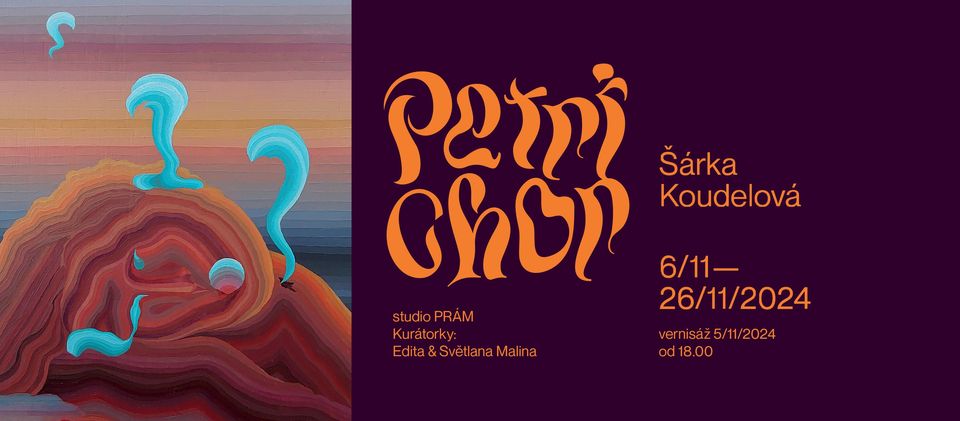
Šárka Koudelová: Petrichor
Event by: PRÁM, Šárka Basjuk Koudelová
Location: Studio Prám, Čerpadlová 4, Praha 9
Exhibitions
About event
We invite you to the opening of the exhibition Petrichor by Šárko Koudelova, the curators of the exhibition are Edita & Světlana Malina.
opening: 5/11/2024 / 18:00
exhibition: 6/11 – 26/11/2024
Scent layered, sedimented, unclassifiable in time . A reminder of long-buried processes, imprints that live in stones and that never stop breathing. The skeleton of the earth, a solid space, a mineral box that can hold everything fragile in its arms. But also to release, allow escape or entry. Osmosis between the body of the stone and what penetrates it and from it.
Starting a chain of reactions, activation, living salt memory. Minerals, waiting at rest, passive and ready, brought to life by the first touch of water, the first millimeter of precipitation that blends everything together — stone, salt, earth. In this interaction, a familiar smell opens up that is so subtle in the air that we usually don't notice it, but it activates all of our primal senses. The receptors of our own skeleton, the body that comes from the same minerals, salts, smells.
Petrichor is the land that opens its mouth to confess the presence. This ancient, indigestible scent is speech without words, a message that the earth, the stone, the salt, are ultimately still active, still awake, still present.
Petrichor — the word sounds too pure to what it describes, a virginal transparent wrapper enveloping raw sensation. It is the smell of the slow exhalation of the soil, the warm whisper of the stones awakened by the rain. It is the scent of an awakening earth, of dreams melted from the dust, of ancient history imprinted in stone, slipping into the air we breathe. This ancient, moist musk, layered in the depths of its origin, rises as a body almost alive, almost conscious—and yet, like all that is earth bearing layers of geological timelessness.
The memory of things older than thoughts, a code imprinted not in DNA but in the very stone bones of our world, settled, settling, eternal. It is the echo of the first rains of the universe, those first waters that touched the immaculate stone and gave meaning to the void, time counted only by the pressure of one layer upon another. Petrichor spreads through these layers, a reminder that the earth — so often insensible to our senses — is a living body, breathing and seething beneath us in ways too slow, too subtle for our eye.
Petrichor is a reaction that invokes a salt memory, triggers a string older than the memory itself. Minerals lie still, passive, waiting, and then come to life at the first touch of rain, the silent touch of storm. In osmosis, stone mixes with soil, salt mixes with steam. The language of the country. Not in words we could understand, and not even in symbols we could understand, but in the language of feelings, something almost comprehensible. It is the olfactory fizz of a world that we cannot fully see, it is an opening, a gateway to a hidden sensibility — a fleeting, atmospheric bridge to the fact that we are not only on earth, but from it.
The project is realized thanks to the support hl. City of Prague, the State Culture Fund of the Czech Republic and the company Solný Obklad.
//
We are inviting you to the exhibition Petrichor by Šárka Koudelová, curated by Edita & Světlana Malina .
opening of the exhibition: 5 November 2024 / 18:00
exhibition: 6 November – 26 November 2024
A scent that is layered, sedimented, timeless. A reminder of long-buried processes, of imprints that live within stones and continue to breathe. The earth's skeleton, a solid space, a mineral shell capable of cradling all that is fragile. But also one that can release, allow escape or entry. An osmosis between the body of the stone and what seeps into it and out of it.
A chain reaction ignition, an activation, a living memory of salt. Minerals, lying still, passive and prepared, awakened by the first touch of water, the first millimeter of rain, which permeates everything—stone, salt, earth. In this interaction, a familiar scent opens up, so faint in the air that we rarely feel it, yet it activates our most primal senses. Receptors in our own bony shell, our bodies that arise from the same minerals, salts, and smells.
Petrichor is the earth opening its mouth in confession of presence. This ancient, indigestible scent is a speech without words, a message that earth, stone, salt remain in the end always active, always awake, always present.
Petrichor — the word itself feels too pure for what it describes, a pristine shell wrapped around the raw pulse of sensation. It is the fragrance of soil's slow exhale, the warm whisper of stones awakened by rain. It is the smell of earth coming alive, of dreams forged from dust, of ancient history imprinted in stone, slipping into the air we swallow. This smell, this ancient wet musk,
rises like something almost alive, almost aware, and yet, like all that is earthly, carried through layers of geological timelessness.
There is the memory of things older than thought — a code embedded not in DNA but in the very stone bones of our world, some echo from the universe's own original rains, the first waters that touched virgin rock and filled the blankness with purpose. Petrichor spreads through these layers, a reminder that the earth—so often unresponsive to our senses—is a living body, breathing and simmering below us in ways too slow, too subtle for our eyes.
Petrichor is a reaction that awakens the memory of salt, setting off a chain older than memory itself. Minerals lie still, passive, waiting, and then come alive at the first touch of rain, the silent touch of a storm. In osmosis, stone mixes with soil, salt with steam. It is the language of the earth. Not in words we understand, nor in symbols we might grasp, but in a language of sensation, something almost comprehensible. It is the olfactory murmur of a world we cannot fully see, an opening, a portal into hidden sensitivities—a fleeting, atmospheric bridge to the realization that we are not only on the earth but from itself.
The project is implemented with financial support from the City of Prague, State Fund of Culture of the Czech Republic and the company Solný Obklad.
opening: 5/11/2024 / 18:00
exhibition: 6/11 – 26/11/2024
Scent layered, sedimented, unclassifiable in time . A reminder of long-buried processes, imprints that live in stones and that never stop breathing. The skeleton of the earth, a solid space, a mineral box that can hold everything fragile in its arms. But also to release, allow escape or entry. Osmosis between the body of the stone and what penetrates it and from it.
Starting a chain of reactions, activation, living salt memory. Minerals, waiting at rest, passive and ready, brought to life by the first touch of water, the first millimeter of precipitation that blends everything together — stone, salt, earth. In this interaction, a familiar smell opens up that is so subtle in the air that we usually don't notice it, but it activates all of our primal senses. The receptors of our own skeleton, the body that comes from the same minerals, salts, smells.
Petrichor is the land that opens its mouth to confess the presence. This ancient, indigestible scent is speech without words, a message that the earth, the stone, the salt, are ultimately still active, still awake, still present.
Petrichor — the word sounds too pure to what it describes, a virginal transparent wrapper enveloping raw sensation. It is the smell of the slow exhalation of the soil, the warm whisper of the stones awakened by the rain. It is the scent of an awakening earth, of dreams melted from the dust, of ancient history imprinted in stone, slipping into the air we breathe. This ancient, moist musk, layered in the depths of its origin, rises as a body almost alive, almost conscious—and yet, like all that is earth bearing layers of geological timelessness.
The memory of things older than thoughts, a code imprinted not in DNA but in the very stone bones of our world, settled, settling, eternal. It is the echo of the first rains of the universe, those first waters that touched the immaculate stone and gave meaning to the void, time counted only by the pressure of one layer upon another. Petrichor spreads through these layers, a reminder that the earth — so often insensible to our senses — is a living body, breathing and seething beneath us in ways too slow, too subtle for our eye.
Petrichor is a reaction that invokes a salt memory, triggers a string older than the memory itself. Minerals lie still, passive, waiting, and then come to life at the first touch of rain, the silent touch of storm. In osmosis, stone mixes with soil, salt mixes with steam. The language of the country. Not in words we could understand, and not even in symbols we could understand, but in the language of feelings, something almost comprehensible. It is the olfactory fizz of a world that we cannot fully see, it is an opening, a gateway to a hidden sensibility — a fleeting, atmospheric bridge to the fact that we are not only on earth, but from it.
The project is realized thanks to the support hl. City of Prague, the State Culture Fund of the Czech Republic and the company Solný Obklad.
//
We are inviting you to the exhibition Petrichor by Šárka Koudelová, curated by Edita & Světlana Malina .
opening of the exhibition: 5 November 2024 / 18:00
exhibition: 6 November – 26 November 2024
A scent that is layered, sedimented, timeless. A reminder of long-buried processes, of imprints that live within stones and continue to breathe. The earth's skeleton, a solid space, a mineral shell capable of cradling all that is fragile. But also one that can release, allow escape or entry. An osmosis between the body of the stone and what seeps into it and out of it.
A chain reaction ignition, an activation, a living memory of salt. Minerals, lying still, passive and prepared, awakened by the first touch of water, the first millimeter of rain, which permeates everything—stone, salt, earth. In this interaction, a familiar scent opens up, so faint in the air that we rarely feel it, yet it activates our most primal senses. Receptors in our own bony shell, our bodies that arise from the same minerals, salts, and smells.
Petrichor is the earth opening its mouth in confession of presence. This ancient, indigestible scent is a speech without words, a message that earth, stone, salt remain in the end always active, always awake, always present.
Petrichor — the word itself feels too pure for what it describes, a pristine shell wrapped around the raw pulse of sensation. It is the fragrance of soil's slow exhale, the warm whisper of stones awakened by rain. It is the smell of earth coming alive, of dreams forged from dust, of ancient history imprinted in stone, slipping into the air we swallow. This smell, this ancient wet musk,
rises like something almost alive, almost aware, and yet, like all that is earthly, carried through layers of geological timelessness.
There is the memory of things older than thought — a code embedded not in DNA but in the very stone bones of our world, some echo from the universe's own original rains, the first waters that touched virgin rock and filled the blankness with purpose. Petrichor spreads through these layers, a reminder that the earth—so often unresponsive to our senses—is a living body, breathing and simmering below us in ways too slow, too subtle for our eyes.
Petrichor is a reaction that awakens the memory of salt, setting off a chain older than memory itself. Minerals lie still, passive, waiting, and then come alive at the first touch of rain, the silent touch of a storm. In osmosis, stone mixes with soil, salt with steam. It is the language of the earth. Not in words we understand, nor in symbols we might grasp, but in a language of sensation, something almost comprehensible. It is the olfactory murmur of a world we cannot fully see, an opening, a portal into hidden sensitivities—a fleeting, atmospheric bridge to the realization that we are not only on the earth but from itself.
The project is implemented with financial support from the City of Prague, State Fund of Culture of the Czech Republic and the company Solný Obklad.