This event has been ended!
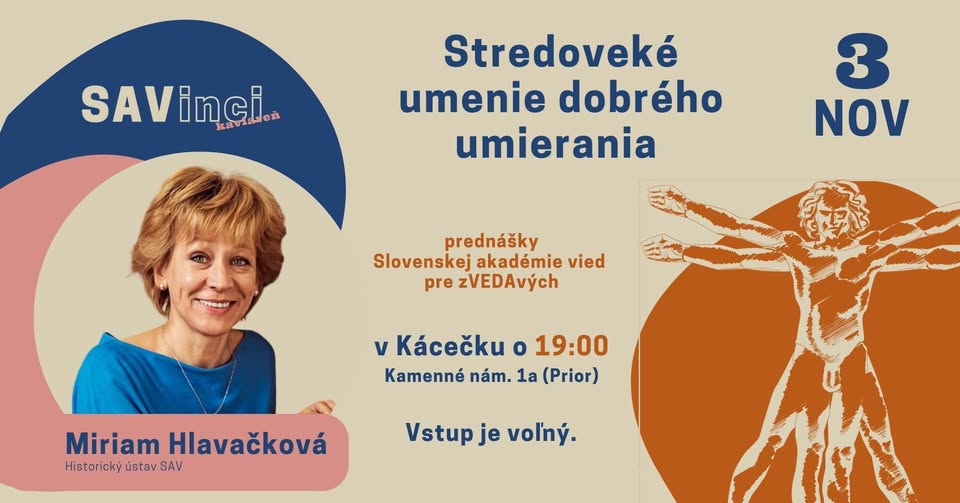
SAVinci kaviareň: Stredoveké umenie dobrého umierania
SAvinci cafe: The medieval art of dying well
Event by: Kácečko, Slovenská akadémia vied
Location: Kácéčko, Kamenné Námestie 1/a, Bratislava
Discussions and lectures
About event
Today's dying usually takes place in hospitals and hospices, out of sight of relatives and friends. In the Middle Ages, it was a ritualized, public and social event. A person did not die alone, but in the circle of family and neighbors, or in a monastery in the company of fellow brothers, who, with their prayers and encouragement, were supposed to help him resist the last temptations on his deathbed. Rituals that were directly related to the hour of death were practiced mainly with the vision of facilitating the departure of the soul to the "other world", because it was believed that death does not end life.
What did medieval people consider "good" and "bad" death? What ideas did they have about the afterlife? What did the manuals on the art of dying well recommend to them? What were the medical, legal, and spiritual aspects of death? How did the people of that time deal with this existential question and how different was their perception of death from our contemporaries?
About the speaker:
PhDr. Miriam Hlavačková, PhD. is a Slovak historian and archivist. Since 1996, he has been working at the Historical Institute of the Slovak Republic, v. v. i. He deals with the research of the medieval Hungarian Kingdom. It deals with church and cultural history, the history of education and everyday life in the late Middle Ages. She looks at the Middle Ages with a fresh perspective, feels good in archives, and together with fellow historian Daniela Dvořáková, they create a successful podcast "Archivists on the Road," in which she shares interesting things from European archives with the audience.
__________________________________
🗓️ Monday, November 3
🕖 19:00
📍 small hall˜ Kácečka, Kamenné námestie 1/a, Bratislava (4th floor OD Prior)
🎫 entry free
What did medieval people consider "good" and "bad" death? What ideas did they have about the afterlife? What did the manuals on the art of dying well recommend to them? What were the medical, legal, and spiritual aspects of death? How did the people of that time deal with this existential question and how different was their perception of death from our contemporaries?
About the speaker:
PhDr. Miriam Hlavačková, PhD. is a Slovak historian and archivist. Since 1996, he has been working at the Historical Institute of the Slovak Republic, v. v. i. He deals with the research of the medieval Hungarian Kingdom. It deals with church and cultural history, the history of education and everyday life in the late Middle Ages. She looks at the Middle Ages with a fresh perspective, feels good in archives, and together with fellow historian Daniela Dvořáková, they create a successful podcast "Archivists on the Road," in which she shares interesting things from European archives with the audience.
__________________________________
🗓️ Monday, November 3
🕖 19:00
📍 small hall˜ Kácečka, Kamenné námestie 1/a, Bratislava (4th floor OD Prior)
🎫 entry free