This event has been ended!
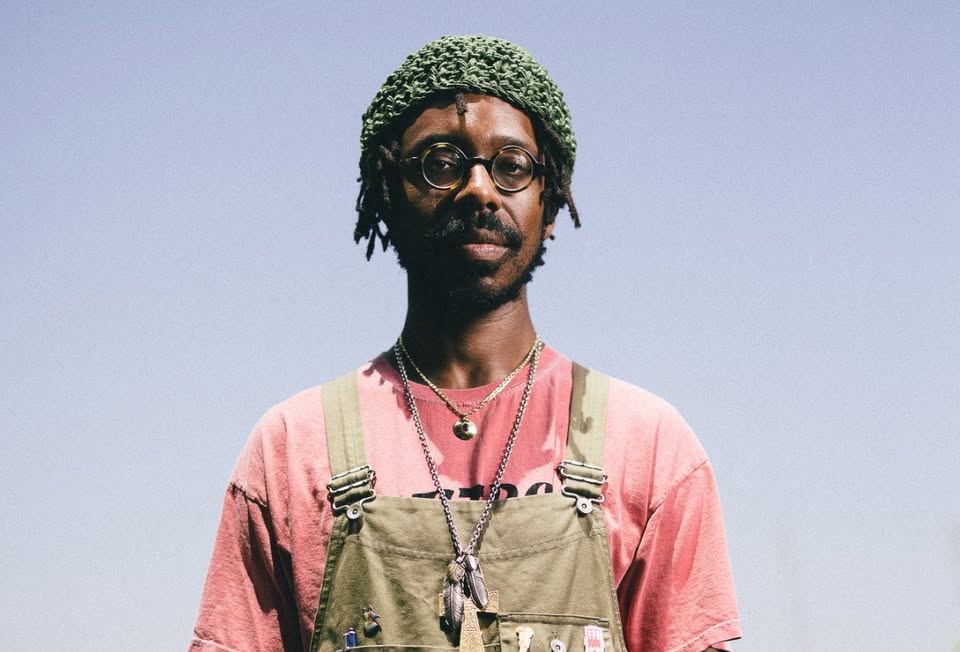
Shabaka (solo) — ZDB no B.Leza
SHABAKA (SOLO) - ZDB NO B.MEA
Event by: Galeria Zé dos Bois
Location: Zé dos Bois gallery, Rua da Barroca 59, Lisboa
Tickets: Get tickets
About event
Input: 23 €
Tickets Available at: https://zedosbois.bol.pt/
shabaka
by timings/moments, the last album A Solo of Shabaka Hutchings, perceive iS Beauty, acknowled, Ge ITS Grace, was often compared to Andre's gesture in New Blue Sun, both by approaching New Age and the use of flute. The comparison takes some merit to Shabaka, stuck in a kind of combined zeitgeist, rather than claiming someone's willingness to seek energy on another side otherwise. His debut album while Shabaka alone, without the nickname, is a spontaneous reflection on the search for a place that questions the sound. The British musician does it through references to spiritual jazz and his various coexistence with ambient and minimal music. That is, it is expressed as a manifestation of will and less for the purpose of sounding different.
There is context. Hutchings was tired of delivering the energy on another side. Not in the instrument by which he became a reputed jazz musician - the tenor saxophone - in the various most sediments (Sons of Kemet, Comet is Coming or the Shababaka and the Ancestors) or even extensive collaborations ranging from the Sun Ra Arkestra to heliocentrics. Nothing concrete, but the whole came to that point where he realized that the sound that came out of his saxophone did not represent a pure idea of externalization of something, that is, it was mainly strength, will, and less energy. Mainstream problems. Here's this new idea, Shabaka puts the saxophone aside and is dedicated to different types of flute. You hear something that has already been tempted, whether by Alice Coltrane, Pharoah Sanders, Laraaji, Lloyd McNeill, here with clear notions of an Electronics/Ambient language, whether with Brian Eno/Harold Budd, Steve Reich or Jon Hassell, but no fourth world attempts. Shabaka now looks for a sound that breathes inside and not out, without that inner peace thing, but of time to time. A musician looking for infinite respite music, where surprise often happens through the sounds that arise in the absence of something. As if Shabaka built a void and then filled it without realizing it. In other words, it creates music channels that we thought do not need the terms in the past. Here it tells us that sound is a continuous process, in progression, and that we only have to find it at the right time. This is the current state and, thankfully, we find Shabaka here. TO THE
Tickets Available at: https://zedosbois.bol.pt/
shabaka
by timings/moments, the last album A Solo of Shabaka Hutchings, perceive iS Beauty, acknowled, Ge ITS Grace, was often compared to Andre's gesture in New Blue Sun, both by approaching New Age and the use of flute. The comparison takes some merit to Shabaka, stuck in a kind of combined zeitgeist, rather than claiming someone's willingness to seek energy on another side otherwise. His debut album while Shabaka alone, without the nickname, is a spontaneous reflection on the search for a place that questions the sound. The British musician does it through references to spiritual jazz and his various coexistence with ambient and minimal music. That is, it is expressed as a manifestation of will and less for the purpose of sounding different.
There is context. Hutchings was tired of delivering the energy on another side. Not in the instrument by which he became a reputed jazz musician - the tenor saxophone - in the various most sediments (Sons of Kemet, Comet is Coming or the Shababaka and the Ancestors) or even extensive collaborations ranging from the Sun Ra Arkestra to heliocentrics. Nothing concrete, but the whole came to that point where he realized that the sound that came out of his saxophone did not represent a pure idea of externalization of something, that is, it was mainly strength, will, and less energy. Mainstream problems. Here's this new idea, Shabaka puts the saxophone aside and is dedicated to different types of flute. You hear something that has already been tempted, whether by Alice Coltrane, Pharoah Sanders, Laraaji, Lloyd McNeill, here with clear notions of an Electronics/Ambient language, whether with Brian Eno/Harold Budd, Steve Reich or Jon Hassell, but no fourth world attempts. Shabaka now looks for a sound that breathes inside and not out, without that inner peace thing, but of time to time. A musician looking for infinite respite music, where surprise often happens through the sounds that arise in the absence of something. As if Shabaka built a void and then filled it without realizing it. In other words, it creates music channels that we thought do not need the terms in the past. Here it tells us that sound is a continuous process, in progression, and that we only have to find it at the right time. This is the current state and, thankfully, we find Shabaka here. TO THE