This event has been ended!
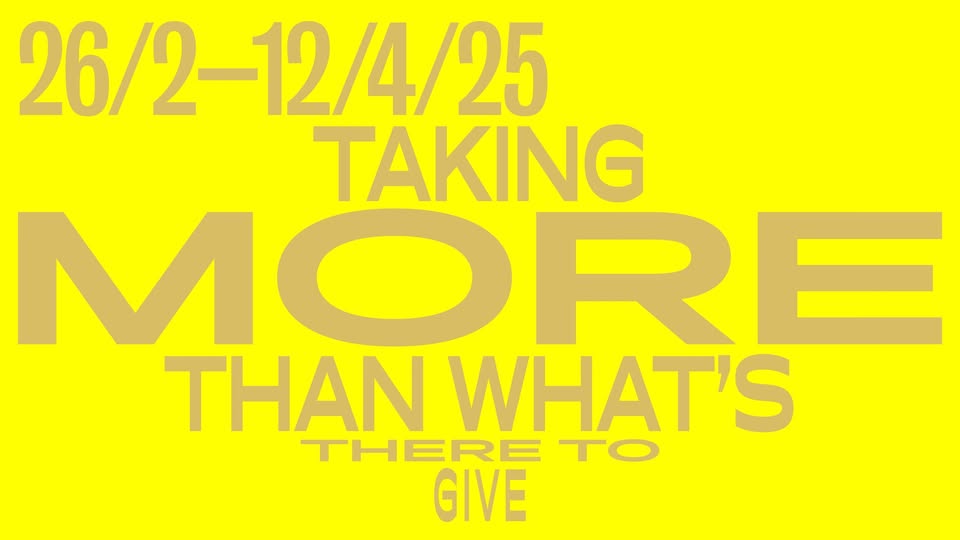
Taking More Than What’s There to Give – vernisáž / opening
Location: Vítkova 293/2, Vítkova 2, Praha 8
Talks & discussions
About event
/Please Scroll Down for English/
We cordially invite you to the opening of our new exhibition Taking More Than What's to Give (take more than can be given), which was curatively prepared by Alina Paias.
In contemporary architectural work, it is still common to rely on various types of mining. Therefore, many designers and researchers seek to define and facilitate procedures that would escape architectural practice from the necessary dependence on mining. As these concerns penetrate the mainstream of reasoning, the question is what other forms of mining are the basis of architectural production. Energy is an essential part of this examination: the term gray or also embodied energy is often used as one of the ways of evaluating the impact of a particular building on the environment and describing the form of energy debt: the sum of all energy consumed during the building life cycle or some of its components, from mining of raw materials to waste disposal. This calculation shows the understanding that the movement, transformation and scattering of energy promotes the formation of architecture. Energy is a revitalizing and basic factor from the mining of raw materials to the extraction of value, namely overshoots, through mobilization of work on the construction site and in the architectural office. Energy, work and value in the creation of architecture and built environment. Once it is clear that energy represents a material base for value, maximizing the value expresses the maximization of energy consumption. The creation of architecture then takes place on the border of overloading, and sometimes even exceeds this limit and takes more than can be taken. The section called Economies of Architecture is research from different corners of the planet revealing relations between mining, energy consumption and maximizing value. It includes a mine where architecture depends on the mining of raw materials and energy and supports it; It also shows a factory in which environmental impacts with dangerous working conditions go hand in hand; Subsequently, the infrastructure environment, where all energy flows are spatially materialized in the form of workers and materials; the construction site as the centerpiece of architectural production and the main place of mining of overvaluation; Atelier, where monetization of architecture directly affects the way of the work of architects; Finally, the inhabited building where all these conditions are connected and the building is then consumed.
The work of scholarships of the European architectural platform Lina, straddled between Prague and Lisbon, where the exhibition takes place in parallel, addresses the inhabited architecture as energy consumers, speculative cartography Fight against the climate crisis. The exhibition is concluded by the Void of Its Other, which examines financial and political pressures and incentives that create housing construction in today's Rotterdam. Netherlands Angry Architects!
Architecture economy section is research projects by: Angela Gigliotti (research scholarship Roma Calling 2024–2025, Istito Svizzero), Belgian Architects United, Evelina Gambino Cambridge) & Jess Gough, Jean Souviron (research scholarship 2024–2025, Collegium Helveticum), Laura Pappalardo (PhD student, University in São Paulo), Lesia Topolnyk, Liam Ross (professor architectural design, school of architecture and landscape architecture) Calitz (PhD student, Faculty of Architecture TU DELFT), Sergio Lopinski Ekerman (Associate Professor at the Faculty of Architecture of the Federal University of Bahia). Creation and uses a wide range of different philosophical approaches. She was one of the curators of the International Biennial of Architecture 2024 in Rotterdam with the title Nature of Hope and is a member of the editorial team of the magazine on the theory of architecture of Footprint, published by the Technical University of Delft (TU DELFT). European Architecture Platform.
-------------------------------------------------- ----------------------
When it comes to Conventional Practice, to make architecture still means to Rely on Different Types of Extraction. MANY Designers and Researchers Are Focused on Defining and Faciliting What Would Be Non-Extractive Architecture and As These Conceric Slowly Infiltrate The Mainstream, They Beget The Question of What Are Other Forms of Extraction that Underpin Architecture Production. Energy is an Essential part of this inquiry: Therm Embody Energy Corresponds To A Tallying UP of All the Energy Consumed During and Building or One of Its Component's Life Cycle, From Raw Material Extraction that asses and Building’s Environmental Impact. Revealed in this Calculation is an understanding that, transformation and dispsipation of energy sustain the product of architecture. Energy Is the Animating and Underlying Factor From the Extraction of Raw Material All the Way to the Extraction of Value, Namely Surplus Value, Through the Mobilization of Work at the Building Site, As Well As in the Architecture Office.
Firmly Grounded in These Considerations, The Exhibition Explores The Tight Relationship Between Energy, Work, And Value in the Production of Architecture and the Built Environment. When Energy is Disclosed as the Material Ballast for Value, the Maximization of Value Expresses the Maximization of Energy Consumancy. Architecture Production Happens at the Edge of Ovexertion, Sometimes Fully Engaging With It and Thus Taking More Than What’s There to Give.
The Exhibition Collects Investigations, Situated Histories, and Unanswered Questions, As Well As Hopeful Ways of Doing OtherWis. The Economies of Architecture Panorama Showcases Research From Aroud the Involving Relations Between the Consumination of Energy, in All Its Forms and the Maximization of Value. This Panorama Spans the Mine, Where Architecture Both Depends On and Supports Raw Material and Energy Extraction; The Factory, Where Environmental Impacts and Dangerous Work Conditions Go Hand-in-Hand; The Infrastructure Space, Where All the Energy Flows are SPATIALized in the Form of Workers and Materials; The Building Site, The Crux of Architecture Production and Principal Site for Surplus Value Extraction; The Office, Where the Financialization of Space Directly Impacts How Architects Work; and the inhabited building, WHERE All of these condptions come toether and the building is Then Consumed. Works by Fellows of the Lina European Architecture Platform Are Divided Between Prague and Lisbon, Where the Exhibition Happens Simultaneously, Tackling Inhabited Architecture As and Consumer of Energy; Speculative cartographies of territorial dynamics of exhaust in Europe; And Networks of Solidarity Between Workers in the Building Industry to Tackle The Climate Crisis. Completing the exhibition, The Video Piece The Void of Its Other Explores the Financial and Political Pressures and Incentives That Shape Contemporary Housing Production in Rotterdam.
with Works by Alfons Chiu & Emma Kaufmann Laduc, Alina Paias & Benjamin Schoonenberg, and Netherlands Angry Architects!
Economies of Architecture Showcases 2024–2025, Istituto Svizzero), Belgian Architects United, Evelina Gambino Pappalardo (PhD Candidate, University of São Paulo), Lesia Topolnyk, Liam Ross (Senior Lecturer in Architecture Design, Edinburgh School of Architecture and Landscape Architecture) and the Built Environment), and Sergio Lopinski (Associate Professor, Faculty of Architecture at the Federal University of Bahia).
Knowledge Involved in Architecture Production by Engaging with and Broad Range of Philosophies. She Was One of the Curators for Nature of Hope, The 2024 International Architecture Biennale Rotterdam, and Is and the Member of the Editorial Team for Footprint, The Delft Architecture Theory Journal. European Architecture Platform Program.
We cordially invite you to the opening of our new exhibition Taking More Than What's to Give (take more than can be given), which was curatively prepared by Alina Paias.
In contemporary architectural work, it is still common to rely on various types of mining. Therefore, many designers and researchers seek to define and facilitate procedures that would escape architectural practice from the necessary dependence on mining. As these concerns penetrate the mainstream of reasoning, the question is what other forms of mining are the basis of architectural production. Energy is an essential part of this examination: the term gray or also embodied energy is often used as one of the ways of evaluating the impact of a particular building on the environment and describing the form of energy debt: the sum of all energy consumed during the building life cycle or some of its components, from mining of raw materials to waste disposal. This calculation shows the understanding that the movement, transformation and scattering of energy promotes the formation of architecture. Energy is a revitalizing and basic factor from the mining of raw materials to the extraction of value, namely overshoots, through mobilization of work on the construction site and in the architectural office. Energy, work and value in the creation of architecture and built environment. Once it is clear that energy represents a material base for value, maximizing the value expresses the maximization of energy consumption. The creation of architecture then takes place on the border of overloading, and sometimes even exceeds this limit and takes more than can be taken. The section called Economies of Architecture is research from different corners of the planet revealing relations between mining, energy consumption and maximizing value. It includes a mine where architecture depends on the mining of raw materials and energy and supports it; It also shows a factory in which environmental impacts with dangerous working conditions go hand in hand; Subsequently, the infrastructure environment, where all energy flows are spatially materialized in the form of workers and materials; the construction site as the centerpiece of architectural production and the main place of mining of overvaluation; Atelier, where monetization of architecture directly affects the way of the work of architects; Finally, the inhabited building where all these conditions are connected and the building is then consumed.
The work of scholarships of the European architectural platform Lina, straddled between Prague and Lisbon, where the exhibition takes place in parallel, addresses the inhabited architecture as energy consumers, speculative cartography Fight against the climate crisis. The exhibition is concluded by the Void of Its Other, which examines financial and political pressures and incentives that create housing construction in today's Rotterdam. Netherlands Angry Architects!
Architecture economy section is research projects by: Angela Gigliotti (research scholarship Roma Calling 2024–2025, Istito Svizzero), Belgian Architects United, Evelina Gambino Cambridge) & Jess Gough, Jean Souviron (research scholarship 2024–2025, Collegium Helveticum), Laura Pappalardo (PhD student, University in São Paulo), Lesia Topolnyk, Liam Ross (professor architectural design, school of architecture and landscape architecture) Calitz (PhD student, Faculty of Architecture TU DELFT), Sergio Lopinski Ekerman (Associate Professor at the Faculty of Architecture of the Federal University of Bahia). Creation and uses a wide range of different philosophical approaches. She was one of the curators of the International Biennial of Architecture 2024 in Rotterdam with the title Nature of Hope and is a member of the editorial team of the magazine on the theory of architecture of Footprint, published by the Technical University of Delft (TU DELFT). European Architecture Platform.
-------------------------------------------------- ----------------------
When it comes to Conventional Practice, to make architecture still means to Rely on Different Types of Extraction. MANY Designers and Researchers Are Focused on Defining and Faciliting What Would Be Non-Extractive Architecture and As These Conceric Slowly Infiltrate The Mainstream, They Beget The Question of What Are Other Forms of Extraction that Underpin Architecture Production. Energy is an Essential part of this inquiry: Therm Embody Energy Corresponds To A Tallying UP of All the Energy Consumed During and Building or One of Its Component's Life Cycle, From Raw Material Extraction that asses and Building’s Environmental Impact. Revealed in this Calculation is an understanding that, transformation and dispsipation of energy sustain the product of architecture. Energy Is the Animating and Underlying Factor From the Extraction of Raw Material All the Way to the Extraction of Value, Namely Surplus Value, Through the Mobilization of Work at the Building Site, As Well As in the Architecture Office.
Firmly Grounded in These Considerations, The Exhibition Explores The Tight Relationship Between Energy, Work, And Value in the Production of Architecture and the Built Environment. When Energy is Disclosed as the Material Ballast for Value, the Maximization of Value Expresses the Maximization of Energy Consumancy. Architecture Production Happens at the Edge of Ovexertion, Sometimes Fully Engaging With It and Thus Taking More Than What’s There to Give.
The Exhibition Collects Investigations, Situated Histories, and Unanswered Questions, As Well As Hopeful Ways of Doing OtherWis. The Economies of Architecture Panorama Showcases Research From Aroud the Involving Relations Between the Consumination of Energy, in All Its Forms and the Maximization of Value. This Panorama Spans the Mine, Where Architecture Both Depends On and Supports Raw Material and Energy Extraction; The Factory, Where Environmental Impacts and Dangerous Work Conditions Go Hand-in-Hand; The Infrastructure Space, Where All the Energy Flows are SPATIALized in the Form of Workers and Materials; The Building Site, The Crux of Architecture Production and Principal Site for Surplus Value Extraction; The Office, Where the Financialization of Space Directly Impacts How Architects Work; and the inhabited building, WHERE All of these condptions come toether and the building is Then Consumed. Works by Fellows of the Lina European Architecture Platform Are Divided Between Prague and Lisbon, Where the Exhibition Happens Simultaneously, Tackling Inhabited Architecture As and Consumer of Energy; Speculative cartographies of territorial dynamics of exhaust in Europe; And Networks of Solidarity Between Workers in the Building Industry to Tackle The Climate Crisis. Completing the exhibition, The Video Piece The Void of Its Other Explores the Financial and Political Pressures and Incentives That Shape Contemporary Housing Production in Rotterdam.
with Works by Alfons Chiu & Emma Kaufmann Laduc, Alina Paias & Benjamin Schoonenberg, and Netherlands Angry Architects!
Economies of Architecture Showcases 2024–2025, Istituto Svizzero), Belgian Architects United, Evelina Gambino Pappalardo (PhD Candidate, University of São Paulo), Lesia Topolnyk, Liam Ross (Senior Lecturer in Architecture Design, Edinburgh School of Architecture and Landscape Architecture) and the Built Environment), and Sergio Lopinski (Associate Professor, Faculty of Architecture at the Federal University of Bahia).
Knowledge Involved in Architecture Production by Engaging with and Broad Range of Philosophies. She Was One of the Curators for Nature of Hope, The 2024 International Architecture Biennale Rotterdam, and Is and the Member of the Editorial Team for Footprint, The Delft Architecture Theory Journal. European Architecture Platform Program.