This event has been ended!
TAPETOPIA: record release NEUNTAGE ALT & L'AMBASSADEUR DES OMBRES - Freier Eintritt!
Tapetopia: Record RELEASE NEDERGE ALT & L'Ambassador DES OMBRES - FREE REPRESTED!
Event by: [aufnahme + wiedergabe], tapetopia - GDR Undergroundtapes 1980-1990
Location: DOCK 11 Berlin, Kastanienallee 79, Berlin - Bezirk Pankow
Concerts, Parties
About event
Tapetopia record release from
nine days old (TT 020) and L’Ambassadeur des ombres (TT 022).
nintage old and L’Ambassadeur des ombres belonged to the East Berlin subculture of the 1980s. Both bands were not forbidden, but ultimately undesirable children of a system that distracted darker tones as a criticism of the prescribed cheerfulness. Her cassettes "Waif" and "Star of Evil" circulated in small runs of approx. 10 copies and remained unpublished for 35 years. Years.
Juliane Liebig
Author (Suhrkamp) and journalist (Süddeutsche, Die Zeit, Spiegel and others)
René Glofke
Musiker. In the 1980s in East Berlin bands such as Mahlsdorfer Wohnstuben Orchestra, Nintage Alt, Fellini Prostitutes or L’Ambassadeur des Ombres active.
Jörg "Joggy" Müller
in the 1980s in East Berlin bands such as Koma Kino, Mahlsdorf Wohnstuben Orchester, the vision or the vision or L’Ambassadeur des ombres active.
Henryk Gericke
Author, editor, DJ (Verlag, Tapetopia and others). Reproduction).
Abel Lindner
Director. Abel Lindner took the publication of nine days old and L’Ambassadeur des Ombres on Tapetopia/ A+W as an opportunity to implement five tracks of the bands in videos. Premiere.
+++
Program:
Alexander Pehlemann and Juliane Liebert Read their texts on the two record releases. with Henryk Gericke, René Glofke (nine days old/ l'ambassadeur ...) and joggy Müller (L'Ambassader des ombres). Moderation Kirsten Seigmüller.
Demonstration of five videos by director Abel Lindner for five songs of the newly published releases.
+++
more:
The underground tape scene of the 1980s worked similarly in the two sound systems East and West. In West German as well as in East Germany, like -minded and largely non -commercial, some consciously over the market were produced for a circle, the others without an idea of the market. In terms of ideas, there were definitely bridges between the sound worlds, but the production-related conditions were derived from the separate ideology cycles of two world is men. On the one hand, there was only a limited extent to produce a song, on the other hand, it was simply impossible to copy tapes in relevant editions. Tapedecks from the West looked like bronze in the Stone Age and were acted high. Cassette recorder made in Eastgermany, such as star, sonnet, minet, Anett, Babett or the tapedeck from the state manufacturer RFT, were exorbitant and is rarely on offer according to a moody economy. The GDR-Taperecorder was rightly considered extremely maintenance-intensive, a repair took an unpredictable 4 to 8 weeks, and the sense of achievement often failed. The GDR production did not produce tapes that would have been affordable and were suitable for duplication. The Orwo cassettes from the VEB Filmfabrik Wolfen were only cheap with regard to their quality, as well as susceptible band salads. In relation to the monthly income, e.g. an apprentice, about 250 GDR marks, the 20 marks per cassette did not exactly seduce for sale. In order to further illustrate the disproportion: the monthly rent of a 1-room apartment apartment cost around 25 marks. Therefore, used Amiga tapes were preferably covered by irrelevant stars and thus subjected to band washing. So names such as Les Humphries Singers or Mireille Mathieu were already found as a palimpsest among those of GDR UNDERBROUNDBANDS.
Unless you had "Westgeld" and no private trade routes in the western sectors of Berlin or Germany, to smuggle equipment and tapes about the inner-German city or national border, proved the possibilities of Tap productions therefore limited as extremely limited. Quite apart from the fact that publications of all kinds without state permission and the ideological exploitation chain, if not illegal, were not so non-legal, the smuggling was partially punished in large quantities and beyond certain Valuta boundaries as "foreign exchange offices" and persecuted by Kripo and State Security with interest and criminal. Because of sales structures or independent record stores, the GDR only heard from another, more German world. Available throughout the GDR was created in a period from 1984-89. Even if the extent of productions on which in the west of Germany cannot be measured, as was circulating, mostly in small runs of 20 to 50 copies, some tapes that made it to a legendary reputation; The so-called "Rotmaul" cassette of the freakwave formation ornament & crime or "AIDS delicate" of the Noise-Kombo Klick + published. Mauerstadt scene in East Berlin. Over three decades after their first "publication", these tapes have so far not been listened to on vinyl or CD, but they interfered in the canon of the GDR subculture. In contradiction to the small places at that time, many of the bands were considered to be a cult in opposite cultural circles, but in informed circles as highly suspicious.
Date:
Friday, September 19, 2025, from 7 p.m. 79
10435 Berlin
Free - no registration required
Supported by: Dock 11/Dockdigital
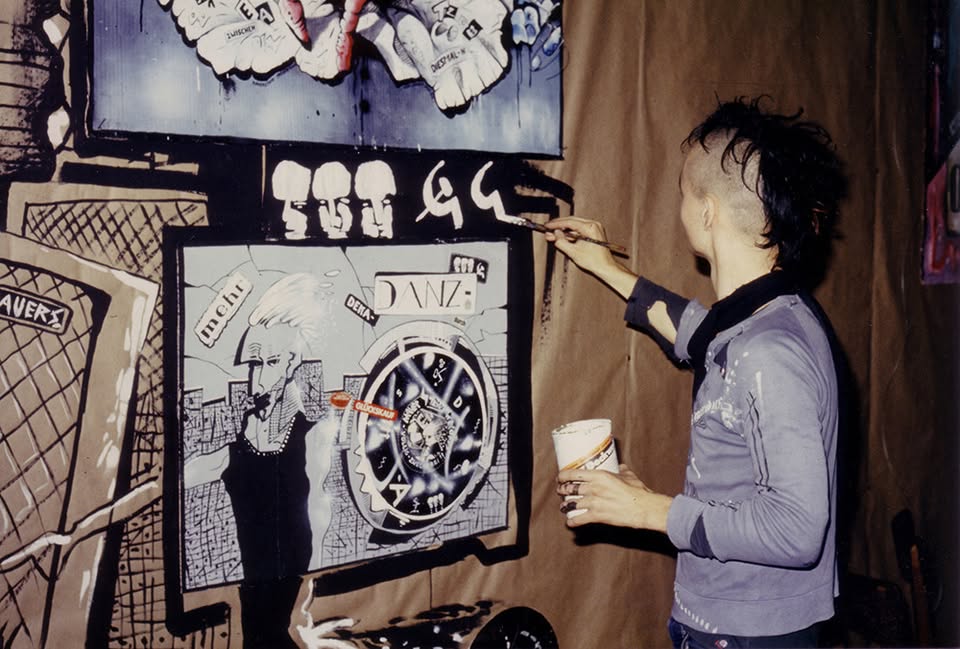
Photo: Mauerstein East Berlin 1987 Archive © Igor Tatschke
nine days old (TT 020) and L’Ambassadeur des ombres (TT 022).
nintage old and L’Ambassadeur des ombres belonged to the East Berlin subculture of the 1980s. Both bands were not forbidden, but ultimately undesirable children of a system that distracted darker tones as a criticism of the prescribed cheerfulness. Her cassettes "Waif" and "Star of Evil" circulated in small runs of approx. 10 copies and remained unpublished for 35 years. Years.
Juliane Liebig
Author (Suhrkamp) and journalist (Süddeutsche, Die Zeit, Spiegel and others)
René Glofke
Musiker. In the 1980s in East Berlin bands such as Mahlsdorfer Wohnstuben Orchestra, Nintage Alt, Fellini Prostitutes or L’Ambassadeur des Ombres active.
Jörg "Joggy" Müller
in the 1980s in East Berlin bands such as Koma Kino, Mahlsdorf Wohnstuben Orchester, the vision or the vision or L’Ambassadeur des ombres active.
Henryk Gericke
Author, editor, DJ (Verlag, Tapetopia and others). Reproduction).
Abel Lindner
Director. Abel Lindner took the publication of nine days old and L’Ambassadeur des Ombres on Tapetopia/ A+W as an opportunity to implement five tracks of the bands in videos. Premiere.
+++
Program:
Alexander Pehlemann and Juliane Liebert Read their texts on the two record releases. with Henryk Gericke, René Glofke (nine days old/ l'ambassadeur ...) and joggy Müller (L'Ambassader des ombres). Moderation Kirsten Seigmüller.
Demonstration of five videos by director Abel Lindner for five songs of the newly published releases.
+++
more:
The underground tape scene of the 1980s worked similarly in the two sound systems East and West. In West German as well as in East Germany, like -minded and largely non -commercial, some consciously over the market were produced for a circle, the others without an idea of the market. In terms of ideas, there were definitely bridges between the sound worlds, but the production-related conditions were derived from the separate ideology cycles of two world is men. On the one hand, there was only a limited extent to produce a song, on the other hand, it was simply impossible to copy tapes in relevant editions. Tapedecks from the West looked like bronze in the Stone Age and were acted high. Cassette recorder made in Eastgermany, such as star, sonnet, minet, Anett, Babett or the tapedeck from the state manufacturer RFT, were exorbitant and is rarely on offer according to a moody economy. The GDR-Taperecorder was rightly considered extremely maintenance-intensive, a repair took an unpredictable 4 to 8 weeks, and the sense of achievement often failed. The GDR production did not produce tapes that would have been affordable and were suitable for duplication. The Orwo cassettes from the VEB Filmfabrik Wolfen were only cheap with regard to their quality, as well as susceptible band salads. In relation to the monthly income, e.g. an apprentice, about 250 GDR marks, the 20 marks per cassette did not exactly seduce for sale. In order to further illustrate the disproportion: the monthly rent of a 1-room apartment apartment cost around 25 marks. Therefore, used Amiga tapes were preferably covered by irrelevant stars and thus subjected to band washing. So names such as Les Humphries Singers or Mireille Mathieu were already found as a palimpsest among those of GDR UNDERBROUNDBANDS.
Unless you had "Westgeld" and no private trade routes in the western sectors of Berlin or Germany, to smuggle equipment and tapes about the inner-German city or national border, proved the possibilities of Tap productions therefore limited as extremely limited. Quite apart from the fact that publications of all kinds without state permission and the ideological exploitation chain, if not illegal, were not so non-legal, the smuggling was partially punished in large quantities and beyond certain Valuta boundaries as "foreign exchange offices" and persecuted by Kripo and State Security with interest and criminal. Because of sales structures or independent record stores, the GDR only heard from another, more German world. Available throughout the GDR was created in a period from 1984-89. Even if the extent of productions on which in the west of Germany cannot be measured, as was circulating, mostly in small runs of 20 to 50 copies, some tapes that made it to a legendary reputation; The so-called "Rotmaul" cassette of the freakwave formation ornament & crime or "AIDS delicate" of the Noise-Kombo Klick + published. Mauerstadt scene in East Berlin. Over three decades after their first "publication", these tapes have so far not been listened to on vinyl or CD, but they interfered in the canon of the GDR subculture. In contradiction to the small places at that time, many of the bands were considered to be a cult in opposite cultural circles, but in informed circles as highly suspicious.
Date:
Friday, September 19, 2025, from 7 p.m. 79
10435 Berlin
Free - no registration required
Supported by: Dock 11/Dockdigital
Photo: Mauerstein East Berlin 1987 Archive © Igor Tatschke