This event has been ended!
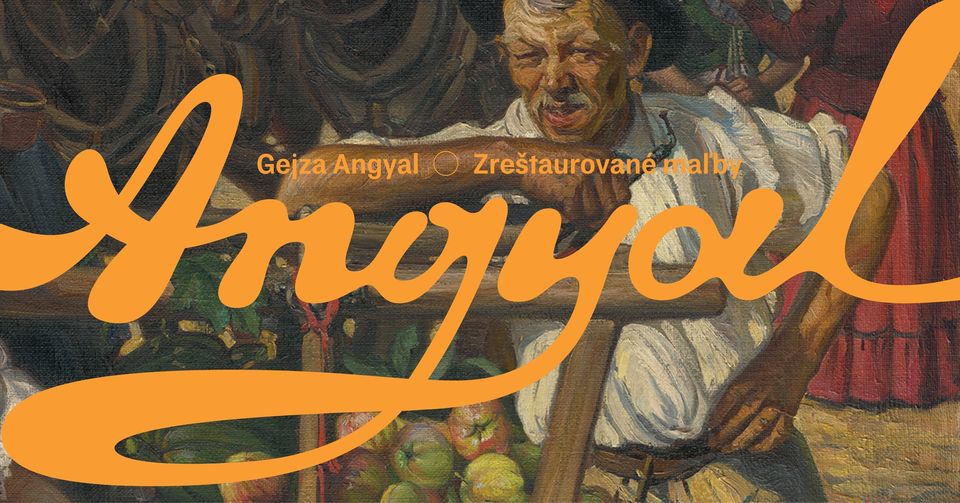
Vernisáž výstavy: Gejza Angyal - Zreštaurované maľby
Opening of the exhibition: Gejza Angyal - Restored paintings
Event by: Stredoslovenská galéria / Central Slovak Gallery
Location: ZŠ s MŠ Štefana Moysesa, Námestie Š. Moysesa 23, Banská Bystrica
About event
Opening: 13/11/2024 at 17:00 / Wednesday / Pretorium, Nám. Štefana Moysesa 25, Banská Bystrica
Duration of the exhibition: 13/11/2024 – 30/3/2025
Curator: Mgr. Katarína Minka Baraníková
Professional cooperation: Mgr. Daniela Čarná, PhD.
Co-organizer: Národná banka Slovenska – Museum of Coins and Medals Kremnica
The exhibition premieres a restored selection of paintings by Gejza Angyal (1888 – 1956) from the collection of Národná banka Slovenska – Museum of Coins and medals in Kremnica. Its collection includes the extensive legacy of the cosmopolitan Angyal family of artists active in Kremnica since the end of the 19th century. The selection tour also includes unique large-format to monumental paintings by Angyal, which were not exhibited for a long time and were carefully deposited, rolled up in large bales, which required their delicate restoration.
Painter Gejza Angyal worked in Banská Bystrica at the beginning of his artistic career. career, during World War I, as a drawing professor at a local industrial school. He completed his previous art studies in Budapest and during a supplementary stay in Munich. The local environment, like his hometown Kremnica, provided him with stimulating subjects for the early creation of graphics and definitive works in painting. In them, he was able to capture the specific character of originally mining towns, their social structure, traditional work and craft focus, historical architecture and the surrounding mountainous landscape. After his initial work in Banská Bystrica, Angyal permanently returned to his family's Kremnice area and devoted himself mainly to painting. He was actively involved in cultural events, exhibited in domestic and foreign art centers, won prizes, developed artistic contacts and memberships (e.g. in the Societé Nationale des Beaux Arts in Paris), often undertook study trips to Italy, France, and Scandinavia. His artistic development was firmly anchored in realism. But he was gradually subject to current influences such as Luminism (the so-called Central European variant of Impressionism), his early graphic work showed an even more naturalistic tendency, and in the peak period a more modern expression and a more analytical construction of landscape painting began to prevail.
The current exhibition of selected paintings also offers a look at lesser-known locations of Angyal's work, such as the ideologically preferred work theme of miners in the past, or popular city views and landscape paintings. At the same time, from an early period he devoted himself more intensively to the creation of nudes and full-figure female portraits, often stylized in the form of Spanish dancers, which he also impressively composed in the surrounding natural scenery. He found direct inspiration in the work of the Spaniard Ignacio Zuloaga (1870-1945), whose works he followed since his studies and later established closer contact with him during his stay in Paris (as Angyal's monograph published during his lifetime describes). From this stimulus, Angyal gradually developed the creation of large-format genre compositions, in which he monumentalized characteristic types of figures against the background of the attractive scenery of his home country.
Another represented thematic range of the author's already mature work, following the local work theme, describes and connects global themes and fundamental historical events such as the economic crisis and the threats of the 2nd World War. There are more and more images of women and mothers working hard, later despairing, against the background of the sufferings of war. The final subjects of the bombing conclude Angyal's special set of monumental paintings with a social message. In them, he touches upon essential civilizational themes, from religious themes, through work and environmental themes, to the contrast between the themes of motherhood and destructive war.
The selection of restored paintings is suitably complemented by related artist's works from the collection of the domestic Central Slovak Gallery. The exhibition is carried out in cooperation with the Central Slovak Gallery, the National Bank of Slovakia - Museum of Coins and Medals in Kremnica and the Slovak National Gallery - Zvolen Castle, where the restoration took place.
Duration of the exhibition: 13/11/2024 – 30/3/2025
Curator: Mgr. Katarína Minka Baraníková
Professional cooperation: Mgr. Daniela Čarná, PhD.
Co-organizer: Národná banka Slovenska – Museum of Coins and Medals Kremnica
The exhibition premieres a restored selection of paintings by Gejza Angyal (1888 – 1956) from the collection of Národná banka Slovenska – Museum of Coins and medals in Kremnica. Its collection includes the extensive legacy of the cosmopolitan Angyal family of artists active in Kremnica since the end of the 19th century. The selection tour also includes unique large-format to monumental paintings by Angyal, which were not exhibited for a long time and were carefully deposited, rolled up in large bales, which required their delicate restoration.
Painter Gejza Angyal worked in Banská Bystrica at the beginning of his artistic career. career, during World War I, as a drawing professor at a local industrial school. He completed his previous art studies in Budapest and during a supplementary stay in Munich. The local environment, like his hometown Kremnica, provided him with stimulating subjects for the early creation of graphics and definitive works in painting. In them, he was able to capture the specific character of originally mining towns, their social structure, traditional work and craft focus, historical architecture and the surrounding mountainous landscape. After his initial work in Banská Bystrica, Angyal permanently returned to his family's Kremnice area and devoted himself mainly to painting. He was actively involved in cultural events, exhibited in domestic and foreign art centers, won prizes, developed artistic contacts and memberships (e.g. in the Societé Nationale des Beaux Arts in Paris), often undertook study trips to Italy, France, and Scandinavia. His artistic development was firmly anchored in realism. But he was gradually subject to current influences such as Luminism (the so-called Central European variant of Impressionism), his early graphic work showed an even more naturalistic tendency, and in the peak period a more modern expression and a more analytical construction of landscape painting began to prevail.
The current exhibition of selected paintings also offers a look at lesser-known locations of Angyal's work, such as the ideologically preferred work theme of miners in the past, or popular city views and landscape paintings. At the same time, from an early period he devoted himself more intensively to the creation of nudes and full-figure female portraits, often stylized in the form of Spanish dancers, which he also impressively composed in the surrounding natural scenery. He found direct inspiration in the work of the Spaniard Ignacio Zuloaga (1870-1945), whose works he followed since his studies and later established closer contact with him during his stay in Paris (as Angyal's monograph published during his lifetime describes). From this stimulus, Angyal gradually developed the creation of large-format genre compositions, in which he monumentalized characteristic types of figures against the background of the attractive scenery of his home country.
Another represented thematic range of the author's already mature work, following the local work theme, describes and connects global themes and fundamental historical events such as the economic crisis and the threats of the 2nd World War. There are more and more images of women and mothers working hard, later despairing, against the background of the sufferings of war. The final subjects of the bombing conclude Angyal's special set of monumental paintings with a social message. In them, he touches upon essential civilizational themes, from religious themes, through work and environmental themes, to the contrast between the themes of motherhood and destructive war.
The selection of restored paintings is suitably complemented by related artist's works from the collection of the domestic Central Slovak Gallery. The exhibition is carried out in cooperation with the Central Slovak Gallery, the National Bank of Slovakia - Museum of Coins and Medals in Kremnica and the Slovak National Gallery - Zvolen Castle, where the restoration took place.
More events: Stredoslovenská galéria / Central Slovak Gallery
Events in Banská Bystrica today · Events in Banská Bystrica this weekend