This event has been ended!
Weltschmerz - Lyrikabend anlässlich des 175. Todestages von Nikolaus Lenau
Weltschrei - poetry evening on the occasion of the 175th anniversary of Nikolaus Lenau's death
Event by: Deutsches Kulturforum östliches Europa
Location: Haus für Poesie, Berlin - Bezirk Pankow
Talks & discussions
About event
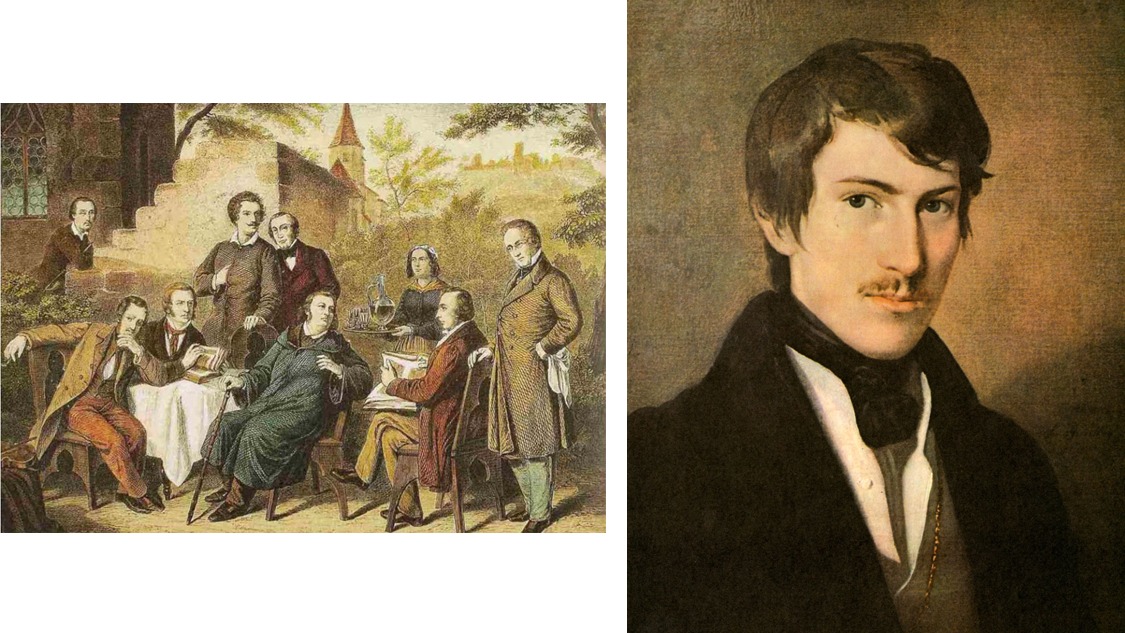
His melancholy was legendary, but no less so was his passionate commitment against injustice and arbitrariness, paternalism and spying. Freedom and progress, intellectual education and perfection were not empty phrases for him, but rather life desiderata: Nikolaus Lenau, the world-weary poet, was an open-minded, cosmopolitan-minded and politically liberal-minded personality.
Born in 1802 as Nikolaus Franz Niembsch Edler von Strehlenau in Tschadat/Csatád – a town in Banat that is now called Lenauheim in honor of the poet – he was drawn to the wide world. The extensive travels through Europe were followed by those to distant North America. He returned from his excursions disillusioned. He couldn't shake the feeling of being an "unsteady person on earth" until his early death. Lenau died in 1850 in a sanatorium in Oberdöbling near Vienna. Not far from there, he found his final resting place in the Weidling cemetery in Klosterneuburg.
On the occasion of the 175th anniversary of his death, the Germanists Georg Aescht and Olivia Spiridon present the multi-faceted work and impact of the late romantic and pre-March poet.
Admission 8 euros | 5 euros reduced
Contributors:
Dr. Olivia Spiridon, born in 1971 in Sibiu (Romania), studied German, Romanian studies, psychology and history in Sibiu, Passau and Heidelberg. Doctorate at the University of Passau, German teacher, etc. at the Goethe Institute Mannheim/Heidelberg, since November 2008 responsible for the literary studies research area at the Institute for Danube Swabian History and Regional Studies in Tübingen (IdGL) and lecturer at the German Seminar at the Eberhard Karls University in Tübingen. Research focus: German literature from southeastern Europe, literature and migration, the Danube in literature. Collaboration on several research projects, including: The First World War in literary texts and periodicals, literary communication in German minority literature from Romania, literature and migration - varieties of arrival. German literature from Romania after moving to the Federal Republic, migrants, smugglers, borders and border residents. A Danube “from below”, The Danube and its borders. Literary and filmic insights into the Danube region, identity concepts of Germans from the south of the Habsburg Monarchy in newspapers, calendars and literary evidence from 1890 to the end of the First World War. Author and editor, among other things: The Danube and its borders. Literary and filmic insights into the Danube region; together with Edit Király: The Danube. A Danube anthology of a different kind, which has now been translated into Serbian and Hungarian.
Georg Aescht, born in 1953 in Zeiden/Codlea (Romania), studied German and English at the Babeș-Bolyai University in Klausenburg/Cluj, teacher at the German-speaking George Coșbuc Lyceum there, left for the country in 1984 Federal Republic of Germany, editor-in-chief of the Cultural Political Correspondence, in addition to his active feature writing and journalistic work, he has published books by Carmen-Francesca Banciu, Norman Manea, Gellu Naum, Alexandru Papilian, Mihail Sebastian, Filip Florian, Gabriela Adameșteanu, Ioana Pârvulescu and others. translated and published from Romanian.
An event organized by the German Cultural Forum for Eastern Europe in collaboration with the Institute for Danube-Swabian History and Regional Studies and the Berlin House of Poetry
The Cultural Forum is supported by the Federal Government Commissioner for Culture and Media.
Born in 1802 as Nikolaus Franz Niembsch Edler von Strehlenau in Tschadat/Csatád – a town in Banat that is now called Lenauheim in honor of the poet – he was drawn to the wide world. The extensive travels through Europe were followed by those to distant North America. He returned from his excursions disillusioned. He couldn't shake the feeling of being an "unsteady person on earth" until his early death. Lenau died in 1850 in a sanatorium in Oberdöbling near Vienna. Not far from there, he found his final resting place in the Weidling cemetery in Klosterneuburg.
On the occasion of the 175th anniversary of his death, the Germanists Georg Aescht and Olivia Spiridon present the multi-faceted work and impact of the late romantic and pre-March poet.
Admission 8 euros | 5 euros reduced
Contributors:
Dr. Olivia Spiridon, born in 1971 in Sibiu (Romania), studied German, Romanian studies, psychology and history in Sibiu, Passau and Heidelberg. Doctorate at the University of Passau, German teacher, etc. at the Goethe Institute Mannheim/Heidelberg, since November 2008 responsible for the literary studies research area at the Institute for Danube Swabian History and Regional Studies in Tübingen (IdGL) and lecturer at the German Seminar at the Eberhard Karls University in Tübingen. Research focus: German literature from southeastern Europe, literature and migration, the Danube in literature. Collaboration on several research projects, including: The First World War in literary texts and periodicals, literary communication in German minority literature from Romania, literature and migration - varieties of arrival. German literature from Romania after moving to the Federal Republic, migrants, smugglers, borders and border residents. A Danube “from below”, The Danube and its borders. Literary and filmic insights into the Danube region, identity concepts of Germans from the south of the Habsburg Monarchy in newspapers, calendars and literary evidence from 1890 to the end of the First World War. Author and editor, among other things: The Danube and its borders. Literary and filmic insights into the Danube region; together with Edit Király: The Danube. A Danube anthology of a different kind, which has now been translated into Serbian and Hungarian.
Georg Aescht, born in 1953 in Zeiden/Codlea (Romania), studied German and English at the Babeș-Bolyai University in Klausenburg/Cluj, teacher at the German-speaking George Coșbuc Lyceum there, left for the country in 1984 Federal Republic of Germany, editor-in-chief of the Cultural Political Correspondence, in addition to his active feature writing and journalistic work, he has published books by Carmen-Francesca Banciu, Norman Manea, Gellu Naum, Alexandru Papilian, Mihail Sebastian, Filip Florian, Gabriela Adameșteanu, Ioana Pârvulescu and others. translated and published from Romanian.
An event organized by the German Cultural Forum for Eastern Europe in collaboration with the Institute for Danube-Swabian History and Regional Studies and the Berlin House of Poetry
The Cultural Forum is supported by the Federal Government Commissioner for Culture and Media.