Это мероприятие завершено!
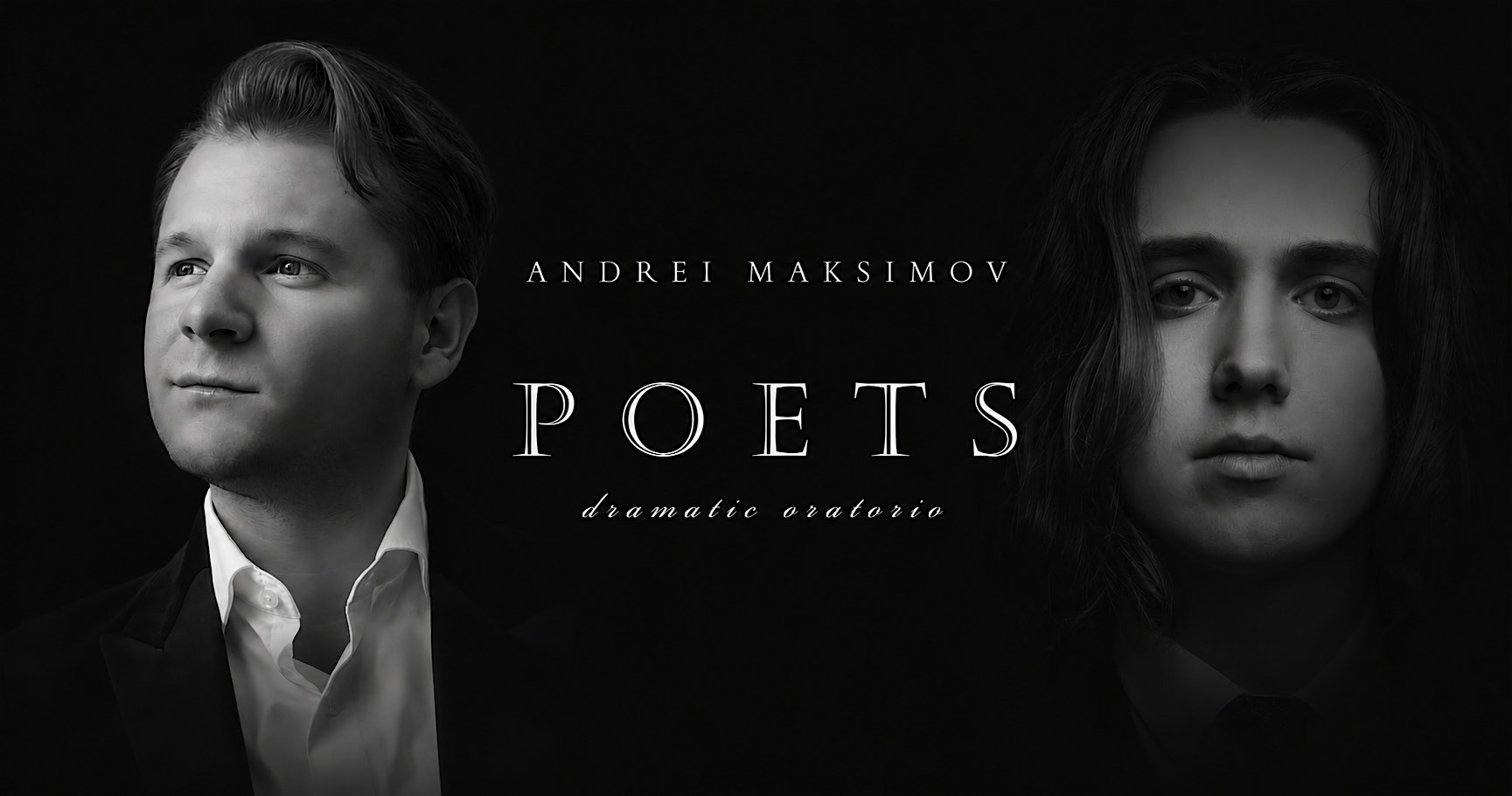
POETS - Dramatic Oratorio by Andrei Maksimov
Мероприятие от: Creators Classics
Концерты, Театр
О мероприятии
POETS is a dramatic oratorio by Andrei Maksimov for three soloists, chamber orchestra, and conductor. Based on the poetry and letters of Wilfred Owen and Siegfried Sassoon, interwoven with ancient Catholic prayers, it presents a deeply moving meditation on war, friendship, memory, and compassion.
The work unfolds through the memories of an aging Siegfried Sassoon, who reflects on his extraordinary friendship with fellow poet Wilfred Owen during their time together at Craiglockhart War Hospital in 1917. Historical accounts suggest that their relationship may have carried romantic undertones, lending an additional emotional depth to their artistic bond. Both poets were passionate opponents of war, and their writings reject any romanticization of combat, exposing instead its devastating human cost.
At its heart, POETS is a universal anti-war statement. Although rooted in the First World War, its message extends to every conflict since: Why do we continue to destroy one another when love exists within every human being?
Cast
- Andrei Maksimov – Siegfried Sassoon (baritone)
- Evan Myles Byrne – Wilfred Owen (tenor)
- Doron Eshkol – The Maiden (soprano)
- Chamber Orchestra conducted by Neil McCalmont
Synopsis
The oratorio opens with Owen's famous preface, sung by Wilfred Owen, declaring that his work is "not about heroes," but about "the pity of war." His uncompromising words dissolve into the radiant yet mournful Salve Regina, sung by The Maiden, whose voice represents the collective grief of mothers, sisters, wives, and lovers left behind.
In Act I, Wilfred and Siegfried communicate through one another's poetry, revealing the emotional intimacy of their brief but transformative friendship. Their first duet, All sounds have been as music to my listening, evokes an almost surreal harmony amid the chaos of war. Wilfred's monologue, Ask what I long for most..., reflects on both the necessity and the futility of conflict, while Siegfried responds with I too saw God through mud, expressing their shared disillusionment. The act culminates in the haunting battlefield duet The Last Laugh before concluding with The Maiden's monumental setting of the Stabat Mater, a ten-minute meditation on grief and maternal suffering.
Act II begins with an orchestral prelude followed by A Ballad, based on an unpublished poem by Sassoon. Beneath its dance-like surface lies the painful awareness that this will be Wilfred and Siegfried's final day together. Wilfred's Topography of Golgotha draws a powerful parallel between soldiers marching to battle and Christ's journey to Calvary, while Siegfried finds solace in Owen's On My Songs, affirming poetry as an act of survival.
As The Maiden intensifies the drama with Sub tuum praesidium, the emotional heart of the work arrives in a tender duet drawn from Owen's letters to Sassoon, including the unforgettable words: "You have fixed my life, however short it may have been." Wilfred's A Testament foreshadows his approaching death. In mourning, Siegfried and The Maiden sing As Bronze May Be Beautified, before Siegfried delivers Owen's iconic Dulce et Decorum Est as a warning to future generations.
The oratorio concludes with Ave Maria, sung by Wilfred and The Maiden. Their final prayer for peace ends not in despair, but with a luminous major-key Amen - offering a fragile yet enduring hope for a world beyond war.